
April 2009, Volume 20, Issue 2
Singapore: Does Authoritarianism Pay?
The same policies that fostered decades of prosperity in Singapore have also led to longer-term economic ills that might have been averted in a freer society.
3264 Results
April 2009, Volume 20, Issue 2
The same policies that fostered decades of prosperity in Singapore have also led to longer-term economic ills that might have been averted in a freer society.
April 2009, Volume 20, Issue 2
A fan of Mario Puzo’s Godfather novels will see the Putin government for what it is: a mafia.
April 2009, Volume 20, Issue 2
Will Hugo Chávez’s victory in the 15 February 2009 vote to end term limits enable him to drive Venezuela toward “Bolivarian socialism”? There are reasons to doubt this, but for now democracy’s prospects do not look encouraging.
January 2009, Volume 20, Issue 1
The color revolutions illustrate both the prevalence of diffusion and the potential limits of its impact on political change.
January 2007, Volume 18, Issue 1
Does the nature of an authoritarian regime affect the potential for democratic transition? Data since 1972 indicate that some kinds of authoritarian regimes are more likely to democratize than others.
October 2006, Volume 17, Issue 4
The Belarusian presidential election of March 2006 appeared to be an exercise in meaninglessness, while the protests against manipulation by the Lukashenka regime seemed a study in futility. But appearances can deceive.
July 2006, Volume 17, Issue 3
Much like other institutions in post-Soviet Russia, the intelligence and security services have yet to make a transition to real democratic control, and remain infused with the authoritarian tendencies of their Soviet predecessors.
January 2006, Volume 17, Issue 1
The successful completion of yet another general election should dispel any residual doubts about Bulgarian democracy. But the election results made clear that the country now faces a new set of challenges.
July 2005, Volume 16, Issue 3
Many saw the election of Workers' Party leader Luiz Inácio "Lula" da Silva to the Brazilian presidency in October 2002 as the beginning of an era. Two years into his first term, Lula has yet to live up to that expectation.
July 2004, Volume 15, Issue 3
Russia's liberal-democratic parties have failed. It is time for a new movement that can gain the trust of the Russian people by putting forward a full reform program based on liberal and democratic principles.
January 2004, Volume 15, Issue 1
Since the fall of the Berlin Wall, the involvement of NATO and the EU with their prospective new members has worked strongly in favor of democratic governance in Central and Eastern Europe.
January 2004, Volume 15, Issue 1
The fall of the Berlin Wall gave East Europeans a euphoric sense that they were about to give European democacy a new direction. But as many of their countries prepare to join the EU, little has worked out as expected in those heady days.
October 2003, Volume 14, Issue 4
The EU was founded partly for the purpose of strengthening democracy, but it has been created in a way that is intrinsically not democratic.
April 2003, Volume 14, Issue 2
Liberal Islam remains marginal because it is politically suppressed; in truth, it represents the predominant political hopes of Muslims around the world.
January 2003, Volume 14, Issue 1
Successful institutionalization will help the regime survive the pressures of advanced modernization and integration with the global economy.
October 1999, Volume 10, Issue 4
Post-apartheid South Africa’s democratic quest resembles a good thriller–just as the plot seems clear, a twist appears in the tale.
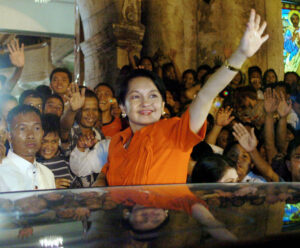
October 2004, Volume 15, Issue 4
Gloria Macapagal-Arroyo’s election as president in her own right capped a campaign that spoke well of Philippine democracy, but yawning gaps in the rule of law obstruct the road to consolidation.
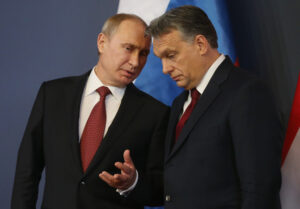
January 2020, Volume 31, Issue 1
In recent years competitive authoritarianism has emerged in some countries with relatively strong democratic traditions and institutions.
July 2007, Volume 18, Issue 3
Excerpts from: the Berlin Declaration; an interview with Thich Quang Do—winner of the 2006 Thorolf Rafto Memorial Prize for Human Rights Defenders; a speech delivered by Romanian president Traian Băsescu.
October 2021, Volume 32, Issue 4
Can we recognize the symptoms of backsliding before it’s too late? Though the signals are sometimes faint, a new study of sixteen cases around the world reveals key dynamics common to all.