
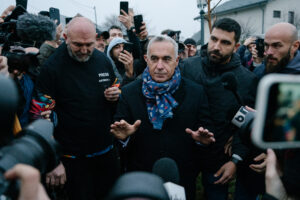
Why Romania Just Canceled Its Presidential Election
The Romanian government is trying to guard against Russian election interference. But such a drastic, unexpected, and last-minute move risks undermining people’s faith in democracy.
3264 Results
The Romanian government is trying to guard against Russian election interference. But such a drastic, unexpected, and last-minute move risks undermining people’s faith in democracy.
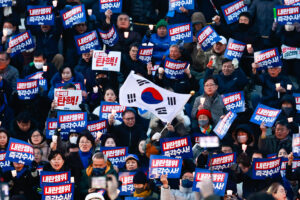
The quick reversal of President Yoon’s martial-law order is being celebrated as a democratic victory. But the problems run deeper than one man. What comes next?

Romania’s democracy just survived a near-death experience, but it may be more vulnerable going forward. How far can leaders go in defending democracy without compromising their claim to represent the people?

It may be the best weapon we have for holding autocrats accountable for their crimes, and the world’s democracies are beginning to rally behind it.

Syria is at a critical juncture. It’s up to the new government — and the people — to chart a more inclusive, transparent, and prosperous way forward. The Journal of Democracy essays below examine the challenges and opportunities Syria now faces.

Authoritarians are developing new tools to project their malign influence across the globe. The world of sports can teach us a lot about the games they play.

Autocrats around the world have been innovating new ways to steal elections, manipulating rules and revising laws to keep themselves in power for as long as possible.
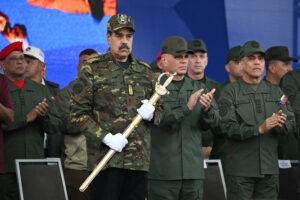
“As U.S. military assets accumulate in the Caribbean and diplomatic pressure on the Nicolás Maduro regime intensifies,” writes José Ramón Morales-Arilla in a new Journal of Democracy online exclusive, “two starkly different visions of Venezuela’s future dominate policy discussions.”

On 8 December 2024, a coalition of Islamic militants toppled the brutal Syrian dictator Bashar al-Assad, whose family had ruled the country for more than half a century.

Vladimir Putin has become a one-stop shop for authoritarians around the world, providing them whatever they need to advance their cause. Democracy’s defenders don’t get the same support — but it’s time for that to change.

Steadfast, nonviolent movements are often the most effective way to counter an authoritarian. These essays explain how to start, sharpen, and sustain a movement.
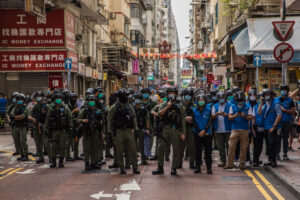
A Hong Kong court just handed out heavy sentences to 45 democracy activists. The pro-Beijing government is taking a hard line against anyone who would challenge it.
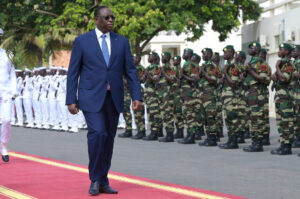
President Macky Sall has called off his country’s presidential election just weeks ahead of the vote. His unconstitutional decree will not only keep him in power, but threatens to throw Senegal into violent chaos.

After losing a confidence vote and triggering snap elections, can Olaf Scholz lead mainstream parties back to power, or will more radical forces prevail?
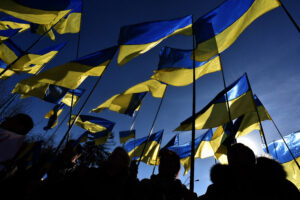
Ukrainians’ first priority is defending their country from Russia’s invasion. They would rather hold fair, free, and inclusive elections than vote for the sake of voting.

With democracy in trouble across the globe, it’s easy to forget how and why a steady succession of dictatorships fell in the last half of the twentieth century. Democracy’s strengths, and its record, should give cause for hope at a moment when autocracy appears ascendent.
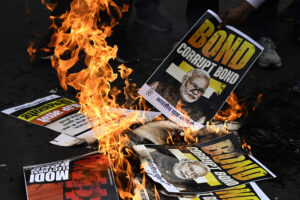
“Electoral bonds” were supposed to make political contributions transparent. Instead they became a form of legalized corruption, funneling huge sums and making the political playing field even more uneven.
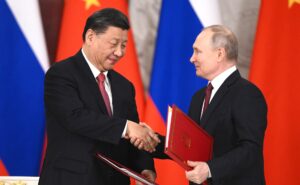
Authoritarians are evolving — becoming more unconstrained and repressive at home, and more destructive on the global stage. The following essays unpack the authoritarians’ toolkit, revealing their strategies for taking power and upending the liberal world order.
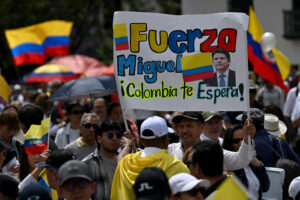
Colombia’s drug war has ravaged the country — leaving tens of thousands dead, disappeared, or displaced and entire communities broken. Democracy is among the casualties.