
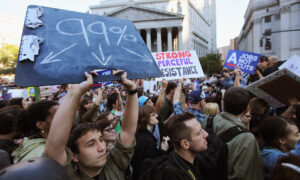
Has Liberalism Failed?
Our rising levels of inequality have put its ideals in crisis. These are the simple principles that can help bring it back from the edge.
1951 Results
Our rising levels of inequality have put its ideals in crisis. These are the simple principles that can help bring it back from the edge.
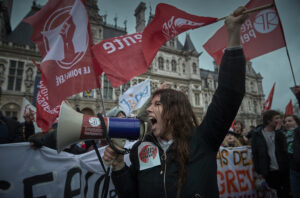
Why are the French protesting this time? Emmanuel Macron is imposing deeply unpopular reforms, and it’s one of the only ways left to check an arrogant and tone-deaf president.
On 4 June 1989, hundreds, perhaps thousands, of peaceful pro-democracy protesters were killed when the Chinese military opened fire on them in Tiananmen Square. The following are some of our most powerful essays on the meaning of the massacre.
Samuel Huntington’s classic theory offered a new way of understanding democracy’s global trajectory. But amid rising populism and increasingly aggressive authoritarian leaders, has Huntington’s thesis outlived its usefulness?

Masoud Pezeshkian won’t be a “reformer” in any genuine sense. Like all Iranian presidents, he has pledged his loyalty to Iran’s supreme leader. What he really offers is a softer version of Iran’s grim repression.
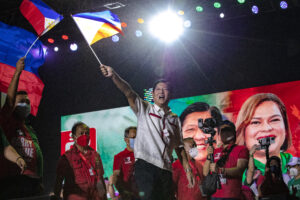
The struggle between the Marcos and Duterte clans isn’t just a battle between two houses. It is becoming a proxy fight between the United States and China for the future of the Indo-Pacific.
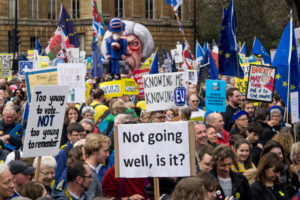
Francis Fukuyama, one of the world’s leading scholars of democracy, has written for the Journal of Democracy more than two-dozen times over the last thirty-two years. The following essays include some of his most incisive, offering bold insights into the relationship between democracy, modernization, and political culture.
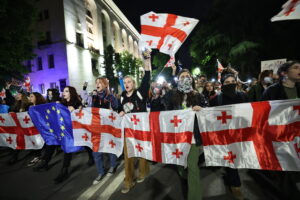
Georgia’s opposition is facing a pivotal election. But it isn’t enough to win: They need to be prepared to move quickly, mobilize the public, and force the regime to concede.

Georgians have returned to the streets to fight for their country’s future. They refuse to let it slip quietly into the autocracy the ruling party seeks.
Elections in nearly eighty countries around the world captured headlines throughout 2024. Meanwhile, NATO turned 75, Viktor Orbán ramped up his repression, and Bitcoin became the currency of choice for democracy activists under threat. These ten essays were the JoD’s most-read online exclusives of 2024.
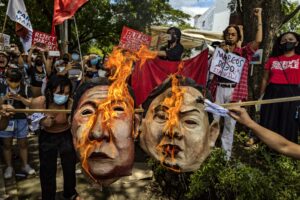
The May 2025 Philippine midterms are just the latest chapter in a yearslong feud between the Marcos and Duterte clans. These essays below plot the twists and turns of the political drama, and explain why it’s really a diversion from meaningful democratic reform.
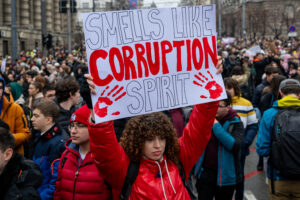
They have been smart, creative, leaderless, and transparent. And they aren’t targeting any one politician or party. They aim to change the entire system.
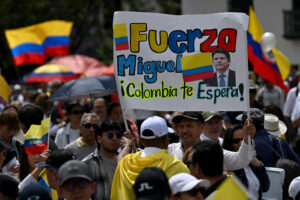
The international drug trade has ravaged Latin America. Drug cartels and organized crime groups have grown powerful enough in some countries to infiltrate and even challenge the power of the state. As demand for drugs and profits soars, violence, death, and displacement rain down upon communities, leaving democracy and the economy in shambles.
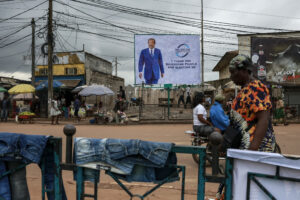
Cameroonians just reelected the 92-year-old Paul Biya in an election that voters rightly view with suspicion. The tensions under the surface don’t bode well for the country or its people.
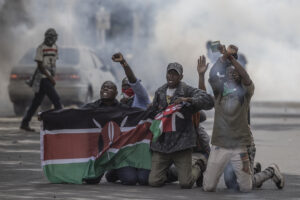
The country’s young people are no longer willing to accept politics without accountability, and the government’s repressive crackdown is only fueling their movement. Gen Z is reshaping the future of Kenyan democracy.
On Sunday, Hondurans voted for their next president and vice-president, members of Congress, and municipal mayors. But the country’s vote-tally system failed.
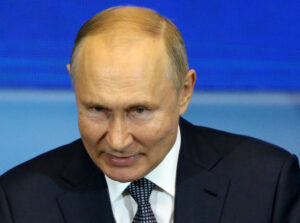
The more determined democracies are to avoid war, the greater the risk that autocracies will wage it.
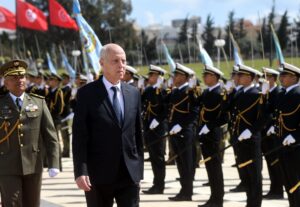
If you want to understand why generals support a presidential power grab, then you need to understand the logic that motivates them. Why they leave the barracks — and what we must do to get them to stand down.
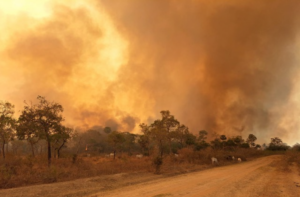
Bolivia’s Amazon forests are becoming scorched earth, with millions of acres lost each year to raging fires. Worse, this disaster is being caused by a government more interested in corrupt profits than protecting its people and wildlife.

Moscow and China pose a great danger to the democratic world. But they pose threats that need to be managed, not won. Every great foreign-policy battle doesn’t end with a decisive victory.