
July 1996, Volume 7, Issue 3
Democratization in the Middle East: Quandaries of the Peace Process
Read the full essay here.
3081 Results
July 1996, Volume 7, Issue 3
Read the full essay here.
Winter 1990, Volume 1, Issue 1
Read the full essay here.
Winter 1990, Volume 1, Issue 1
Over the past several years, the world has come to see the crisis in Panama mainly as a confrontation between the United States and Panama's military strongman, General Manuel Antonio Noriega. But this perception – reinforced lately by press reports on last October's failed coup attempt – is badly mistaken.
April 2005, Volume 16, Issue 2
Thanks to a disputed presidential election and a narrowly divided parliament, Taiwan's politics remains tense. Yet the worst of the conflicts that gripped the island seem to have eased, and the difficult political events of the last few years may have some beneficial effects after all.
April 2001, Volume 12, Issue 2
One key source of the weakness of democracy in the Andean region is the isolation of the “political class” from the rest of society. There are growing signs that this problem is becoming more serious in Bolivia.
April 2007, Volume 18, Issue 2
By most theoretical accounts, Indian democracy should not even exist. Yet, despite serious challenges, it shows signs of enduring and even deepening.
January 2004, Volume 15, Issue 1
The fall of the Berlin Wall gave East Europeans a euphoric sense that they were about to give European democacy a new direction. But as many of their countries prepare to join the EU, little has worked out as expected in those heady days.
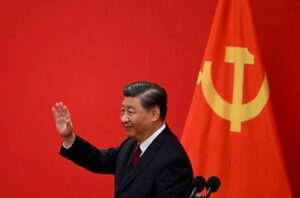
Beijing’s focus has been on strong and steady economic growth for decades. But China’s leader has just put an end to that era. For Xi, it’s only about power—at home and abroad.
October 2008, Volume 19, Issue 4
Since its founding out of the partition of British India in 1947, Pakistan has labored in the shadow of critical choices made at that time.
October 2013, Volume 24, Issue 4
A long-ruling strongman president has been unseated by popular unrest and a negotiated transition is under way, but to many Yemenis this all appears to be a change more of appearance than of substance.
January 2009, Volume 20, Issue 1
A review of The West and Islam: Religion and Political Thought in World History by Antony Black
July 1999, Volume 10, Issue 3
Read the full essay here.
July 1999, Volume 10, Issue 3
Review of Democracy and Its Alternatives: Understanding Post-Communist Societies, by Richard Rose, William Mishler, and Christian Haerpfer.
January 2002, Volume 13, Issue 1
The year 2001 saw modest gains in the strengthening and consolidation of democracy worldwide, but in predominantly Muslim countries—especially the Arab states—the status of freedom and democracy lags far behind the rest of the world.

He is rude, foul-mouthed, and one of the most popular politicians in the world. Like it or not, Argentina’s chainsaw-wielding president is the new face of populism.

January 2013, Volume 24, Issue 1
Although Olivier Roy and others argue that current circumstances will push ascendant Islamist parties in a democratic direction, Egypt’s Muslim Brotherhood remains committed to the revolutionary goals that have animated it since its beginnings.
January 2007, Volume 18, Issue 1
A crucial requirement of government by consent is the willingness of defeated candidates and parties to concede when the voters' verdict goes against them. Events in Mexico following its July 2006 presidential election have sorely tested that country's young democracy in this regard.
October 2004, Volume 15, Issue 4
Responsiveness may be conceived as a series of linkages intended to ensure that governments respect the preferences of the governed.
April 2003, Volume 14, Issue 2
After enduring years of paternalism punctuated by trauma, Turkish voters have pointed their country in a new direction.