
July 2010, Volume 21, Issue 3
Political Attitudes in the Muslim World
A new look at the World Values Survey data reveals how the Muslim world’s religious context affects individual Muslims’ attitudes toward democracy.
1172 Results
July 2010, Volume 21, Issue 3
A new look at the World Values Survey data reveals how the Muslim world’s religious context affects individual Muslims’ attitudes toward democracy.
July 2009, Volume 20, Issue 3
Since 1996, eight postcommunist authoritarian rulers have been ousted by “electoral revolutions.” Why have these not succeeded in other postcommunist countries?
July 2024, Volume 35, Issue 3
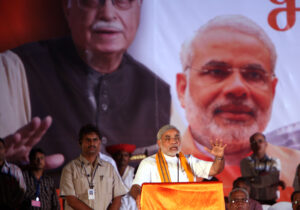
While he did not achieve the sweeping victory many predicted, Narendra Modi led his ruling coalition to a third consecutive victory. In so doing, he is laying the foundation for a new political order in which India is simultaneously more democratic and more illiberal.
October 2008, Volume 19, Issue 4
Since its founding out of the partition of British India in 1947, Pakistan has labored in the shadow of critical choices made at that time.
July 2008, Volume 19, Issue 3
Read the full essay here. Political Islam is often cited as the key challenge to democratization in Muslim nations, but deep currents of authoritarianism may prove more of an obstacle. Traditions of monarchy, military rule, and weak civic institutions block the path of democratic transition throughout the Muslim world. Political Islam does of course present…
October 2007, Volume 18, Issue 4
The countries of Central and Eastern Europe successfully transitioned to democracy. Do their ongoing political problems exist today because of or in spite of the European Union?
October 2006, Volume 17, Issue 4
In reelecting President Alvaro Uribe by a landslide, Colombia's voters opted for continuity. But they chose continuity with an administration that has carried out a major series of policy innovations.
October 2003, Volume 14, Issue 4
The principled separation of religious from political claims upon which Indian democracy depends may not be dead, but it is ailing badly. How did things reach this pass, and what is the prognosis for recovery?
October 2024, Volume 35, Issue 4
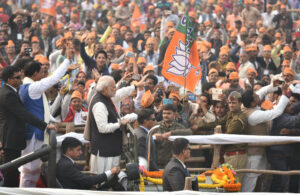
Majoritarian nationalism is a defining feature of our time. If we are to resist ethnonationalist leaders trying to recast our societies into imagined majorities, we must revise our conception of democracy and the exclusion inherent in majority rule.
April 2025, Volume 36, Issue 2
Democracy across the world is being undermined by the very forces that once made it possible: the liberal economic order and political competition. The global concentration of wealth has made democratic governance less effective and stripped the people of their power.
January 2019, Volume 30, Issue 1
Since their transitions, the democracies of the “third wave” have followed a range of trajectories beyond simple survival or breakdown. Many have stagnated at low levels of democracy and some have suffered democratic erosion, but there also have been cases of democratic deepening against the odds.
July 2025, Volume 36, Issue 3
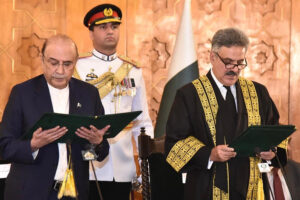
Authoritarian regimes are not lawless. Rather, autocrats take to the courtroom not only to enforce their will but to justify their rule. So how do they appeal to reason? How do they rationalize their undemocratic turn?

What the opposition did and how Erdoğan managed to escape outright defeat. | Murat Somer and Jennifer McCoy
What the opposition did and how Erdoğan managed to escape outright defeat. By Murat Somer and Jennifer McCoy May 2023 Turkey’s hotly contested May 14 presidential and parliamentary elections saw a record turnout of 88.9 percent. Heading into the election, polls had given opposition candidate Kemal Kılıçdaroğlu, who was supported by two alliances of opposition…
April 2003, Volume 14, Issue 2
Reports on elections in Armenia, Djibouti, Estonia, Kenya, Kiribati, Lithuania, Madagascar, Micronesia, Montenegro, Seychelles, and South Korea.
April 1999, Volume 10, Issue 2
Reports on elections in the Central African Republic, El Salvador, Estonia, Grenada, Guinea, Kazakhstan, and Nigeria.

April 2007, Volume 18, Issue 2
The Putin regime is plunging Russia into a deepening crisis. It is time to end the fiction that today's Russia is a democracy.
July 2008, Volume 19, Issue 3
Excerpts from: “Twelve Suggestions for Dealing with the Tibet Situation,” by 29 Chinese intellectuals; a speech given by European Commission president José Manuel Barroso at the formal launch of the European Foundation for Democracy through Partnership; the “State of the Nation” address delivered by the Movement for Democratic Change’s presidential candidate Morgan Tsvangirai; International Committee…
July 2009, Volume 20, Issue 3
Read the full essay here. Online activism is an integral part of the broader landscape of citizen activism in contemporary China. It assumes a variety of forms, from cultural and social activism to cyber-nationalism and online petitions and protests. Technological development and social transformation provide the basic structural conditions. A fledgling civil society of online…
January 2018, Volume 29, Issue 1
A tribute in remembrance of Alfred C. Stepan (1936–2017).