
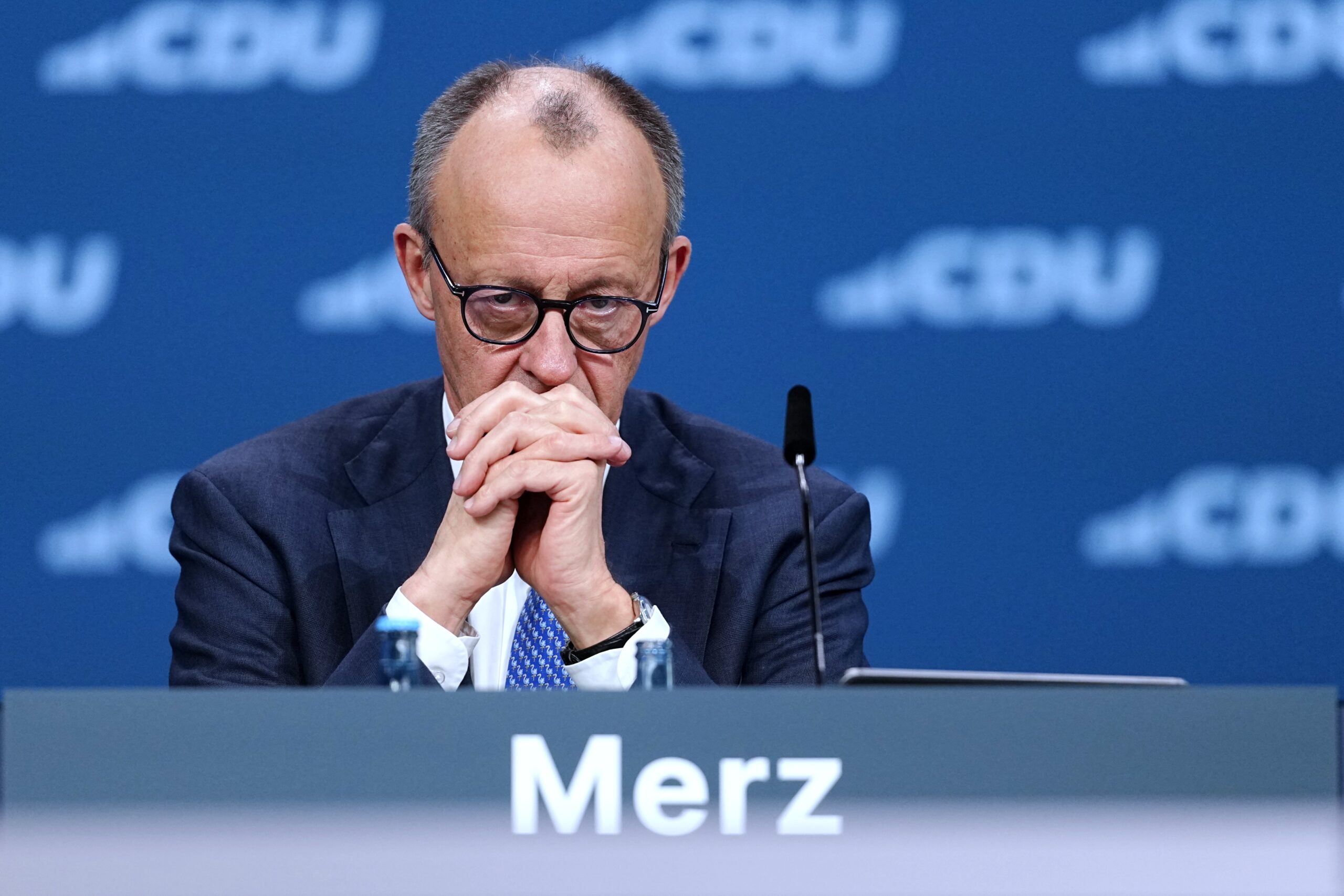
The country’s far right is connecting with voters where they live. Germany’s mainstream parties need to borrow from that playbook and become a presence in the communities they hope to lead.
By Justin Daniels and Luca Siepmann
September 2026
Two key state elections took place in Germany on Sunday — in the northeastern state of Mecklenburg–Western Pomerania and in Berlin. Two weeks after the far-right Alternative for Germany (AfD) trounced the political mainstream in Saxony-Anhalt, the party emerged with another huge victory in Mecklenburg–Western Pomerania. The AfD will now be the largest party in both states. In Berlin, The Left (Die Linke) party, the successor to the former East German ruling party, is poised to lead the capital for the first time. Meanwhile, the stalwart center-right Christian Democratic Union (CDU) failed to win a single seat in Mecklenburg–Western Pomerania. Chancellor Friedrich Merz of the CDU called Sunday’s results a “disaster.” Despite Merz’s vows to the contrary, it is unclear whether he can carry on.
Across these elections, infrequent voters turned out in droves for antiestablishment parties: In Saxony-Anhalt, the AfD gained 170,000 votes from people who had not cast ballots in the previous state election — exceeding the 120,000 votes the party picked up from supporters of other parties. The story is similar in Mecklenburg–Western Pomerania, where 29 percent of the party’s voters were previous non-voters. In Berlin, the Left gained the most from infrequent voters. These numbers reflect a pattern across Western democracies: Parties at the political extremes are reaching alienated voters who feel excluded from the political system.
In the eyes of many Germans, the AfD is the party that represents democracy. The AfD ridicules warnings that it is a threat to democracy, including from the country’s constitutional defense office. It has become a joke within the party: At rallies, many voters have asked Ulrich Siegmund, the party leader in Saxony-Anhalt, to sign copies of the Der Spiegel cover story branding him “Germany’s most dangerous man.” Copies now sell for several hundred euros online.
The leaders of Germany’s mainstream parties — the center-right CDU and the center-left Social Democratic Party (SPD) — say they need to better represent voters. But on the ground, their parties often do the opposite, closing branch offices, reducing investment, and writing off areas where support appears too weak. As they pull back, the AfD and other extremist parties have stepped in.
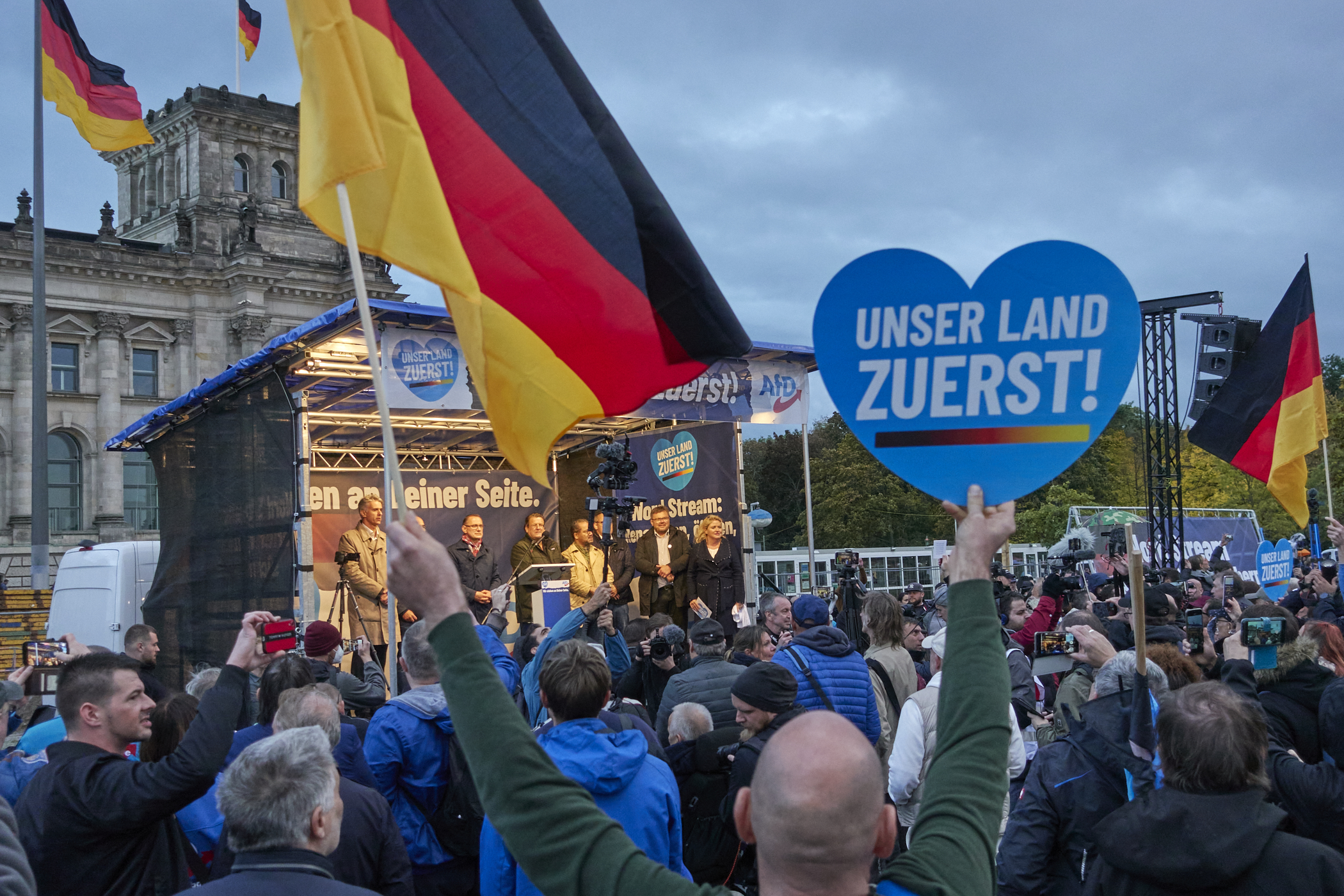
Over the past decade, the AfD has earned a reputation for making people feel heard. In many rural German communities, the party goes beyond organization in a conventional sense, from branch offices to campaign visits, to run a year-round operation to reach all people in nonelectoral settings — from fairs to beerhalls and more. While such efforts may seem frivolous, recent election results underscore that the AfD’s approach is working.
It is easy to forget that the AfD was once at the political margins, with policies universally derided as unacceptable. But by slowly building their presence on the ground and seizing political opportunities — particularly public hostility toward the handling of the 2013–15 refugee crisis — they have made themselves politically acceptable and earned a reputation for being open and accessible to voters. Mainstream parties must take lessons from the fringe about how to better reach voters.
Fun and Games
The AfD’s state-election campaigns are known for the freebies they hand out at their ostensibly nonpolitical “citizens’ festivals,” including no shortage of “free beer and bratwurst.” These, and other giveaways — including free rides on vintage East German motorcycles — make the AfD seem more approachable to broad segments of society. Such events help the AfD to seem like a “normal” party while giving disaffected citizens the opportunity to meet charismatic party representatives. Likewise, as communications expert Johannes Hillje argues, the AfD has managed to convey “a sense of community and a vision” in a way that more peripheral communities have not witnessed from mainstream parties. These also happen to be the places where increasing voter mobilization most strongly correlates with AfD success.
Calls for mainstream parties to improve their organizational presence during campaign season are on the right track. But so-called retail politics is about more than persuasion and mobilization. As crucially, it is about meeting voters in their communities as citizens, and making the practice of democratic representation something tangible and relatable. The AfD’s citizen festivals show the party as part of the community, and not just an election machine.
Local and state politicians have already begun calling for greater on-the-ground presence from mainstream parties. Eschwege is a small German town in Hesse, a state where the AfD made significant inroads last year. Reacting to the AfD’s huge win in Saxony-Anhalt, Eschwege’s former mayor, Alexander Heppe of the CDU, posted on X that politicians needed to head “back to where politics wins over people: at garden fences + bar counters, in clubs, churches, community festivals, marketplaces.” Stories, particularly from Germany’s East, suggest that the AfD understands this basic rule of politics.
In Hesse, the state’s Green Party made an unprecedented commitment to use its own funds to increase its presence there. It has used party funds to open an office just over the state border in Eisenach, Thuringia, where in 2024 the AfD first topped the polls and the Greens lost all their parliamentary seats. As a result, the Thuringia Green party lost access to state funding to keep offices open. Where other parties might have viewed the election result as a clue to withdraw, the Greens see an opportunity to reach out: Hesse MPs plan to use this office as a crucial outpost to connect with and listen to Thuringia’s voters. Democracy, they argue, relies on politics that is “accessible — everywhere.”
Increased mainstream-party presence in local communities could benefit how German democracy works more broadly. In a world where politicians are as inundated as their voters with information from social media and the internet, opportunities to bring politicians and voters back into direct contact have real impact.
The AfD has managed to build a reputation as the party committed to creating a different future for Germany. They are not simply trying to go “back to the good old days,” as Merz said in response to recent exit polls. Germany’s centrist parties must offer an inclusive vision for the future and convince voters that they can deliver on that promise to the benefit of everyone. But to do so, they will need to meet people where they are.
Real Representation
Mainstream parties ought to take voters seriously, but not literally. While parties should adapt to the will of their voters, trying to out-do antiestablishment parties by adopting their policies (or even more extreme versions) can mean only a race to the bottom, undermining principle and turning away stalwart supporters. Moreover, it is the antiestablishment parties that often reap the benefits of such accommodation by mainstream parties.
The way forward is challenging: Real leadership requires balancing voter’s opinions, feasibility, and principle. On migration, a bugbear of the far right, mainstream parties must show voters that it is possible to have a policy that is responsive to well-founded concerns about integration and economic anxiety while also not giving way to xenophobia. Part of the AfD’s success has been selling the narrative that the former is impossible without the latter.
But policies alone can ring hollow. Democracy is not all about policy delivery. Democracy should also be a “way of life,” a belief in a respect for human dignity, political pluralism, and due process, a combination which — more often than not — does lead to better economic and human development outcomes. There is evidence that politicians in nonelectoral settings can persuade people that democracy matters — even across party lines. Politicians should communicate about the value of democracy, and they need to say what they stand for.
What is needed is presence, both in a literal sense — politicians actually need to go where the voters are — and in how politicians conduct themselves. Far-right parties such as the AfD aren’t just getting votes because they harken back to a nostalgic past. Rather, their xenophobic offering is increasingly seen as a vision of the future — in which immigrants are “re-migrated” and Germany spends less time acknowledging its past sins. Through its strategy of “self-trivialization,” the party blends the femo- and homonationalism of its extreme platform into a seeming “politics of love and care.”
National Infrastructure
In the wake of the recent state elections, SPD and CDU leaders now have tough choices ahead of them. In Saxony-Anhalt, the only anti-AfD coalition with a majority would comprise all the other parties in the state parliament — the left-authoritarian BSW, the SPD and Greens, and the CDU — an ideologically incongruous bunch that would be politically unwieldy from the start, if it could even form. In Mecklenburg–Western Pomerania, the only option is a coalition of the left-wing bloc that leaves the AfD as the sole opposition party, fueling its narrative that a “cartel” of old parties keeps it from power.
But Germany’s mainstream should not let this grim picture keep it from addressing a key source of far-right support: party presence. It is not an immediate fix, but it is a nonetheless crucial element of rebuilding trust. The vitality of political parties represents a key part of how voters experience democracy. It is critical national political infrastructure.
Revitalizing Germany’s political parties cannot be left to the local level alone. It requires parties to devise national strategies that allow them to be present in communities — even those where they receive few votes — and present genuine and competing visions. If they don’t, the AfD’s shadow over Germany will only grow.
Justin Daniels is a doctoral candidate in international relations at Somerville College and a non-stipendiary lecturer at Lady Margaret Hall, both at the University of Oxford. Luca Siepmann is a PhD candidate at the London School of Economics studying representation and political parties. He served as a CDU town councillor in Eschwege, Germany from 2022-2026.
Copyright © 2026 JoD Productions Inc
Image Credit: Kay Nietfeld/picture alliance via Getty Images
|
FURTHER READING |
||

The Alternative for Germany Is Triumphant
|
Why Germany’s Far Right Is Winning Big |
Why Germans Are Rallying Against the Far RightHundreds of thousands of Germans are taking to the streets in protest against the country’s far-right parties. Will it shift the tide or leave Germany further divided? |