
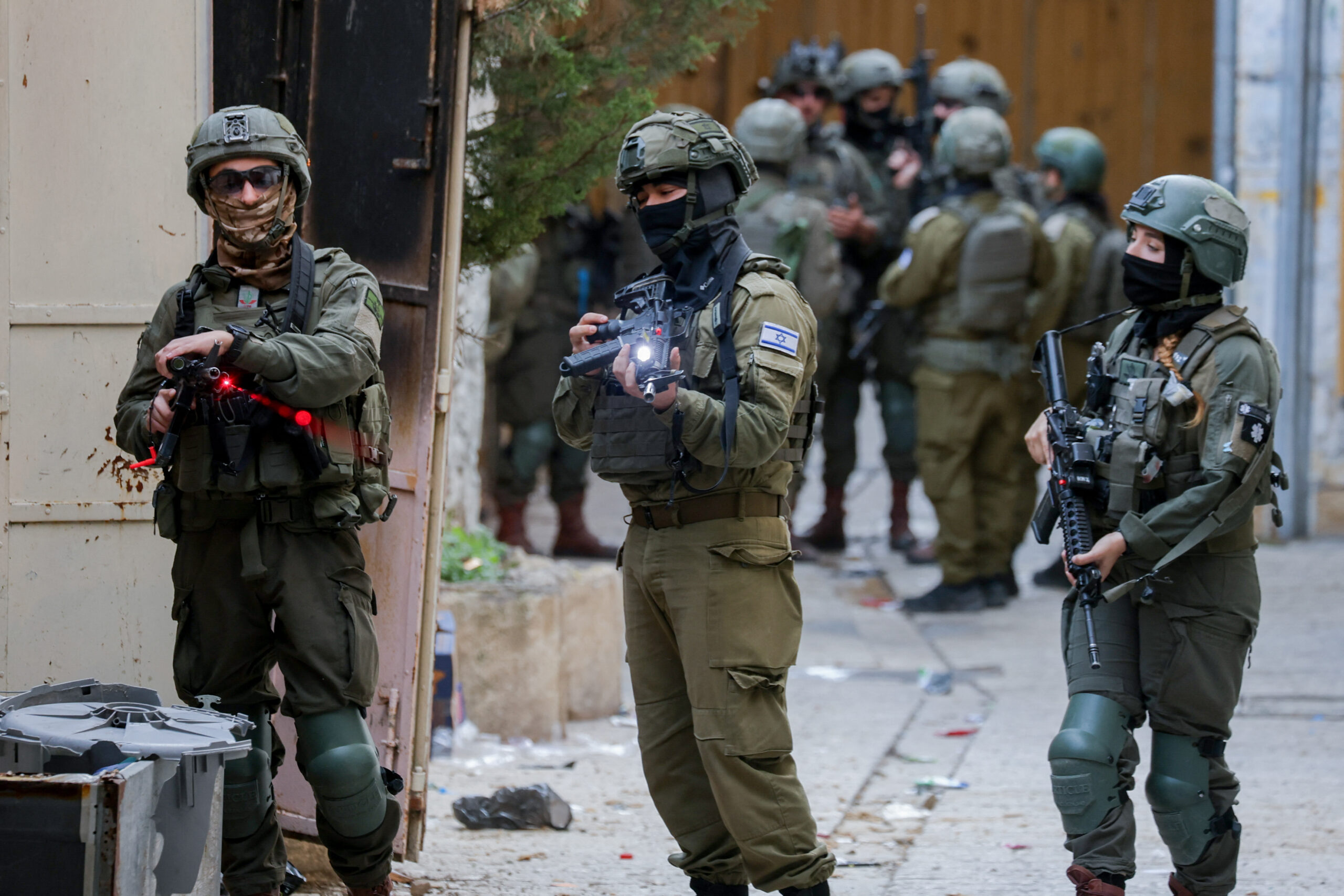
Extremist violence by Jewish Israelis in the West Bank is surging. But if you can’t articulate the threat you can’t combat it. Start with a basic principle: Name the ideology, not the demographic.
By Barak Sella
June 2026
How a democracy names an internal threat determines whether it can fight it. Israel and the international community are getting it wrong from both directions, and the consequences are compounding by the week.
In recent months, extremist violence by Jewish Israelis in the West Bank has surged to crisis levels. The Israel Defense Forces (IDF) recorded at least 867 incidents of “nationalist crime” in 2025, a 27 percent increase from the previous year. In the first three months of 2026, 254 attacks have already been reported, on pace to exceed a thousand this year. In the forty days following the start of the war with Iran in February, a watchdog NGO documented 378 attacks that claimed eight lives, caused hundreds of injuries, and destroyed homes and mosques. The violence is becoming more organized, more lethal, and more aggressive, and it is not being effectively contained by either the police or the IDF.
Last March, Israeli reservists from the Netzah Yehuda battalion, which the Biden administration had considered sanctioning over alleged abuses against Palestinians, detained a CNN news crew in a West Bank village. One soldier put a photojournalist in a chokehold. Another declared that the entire territory belongs to “the Jews.” Within 48 hours, the IDF chief of staff suspended the entire battalion. Days earlier, he had warned the security cabinet that the army risks “collapsing in on itself” and that extremist violence creates “extraordinary strategic damage” to the military’s efforts.
Violence in the West Bank can no longer be treated as a fringe disturbance to be dismissed or managed with routine policing. It has become a systemic ideological movement, and the dominant frameworks for describing this violence, from both the right and the left, are making it harder to solve.
The current Israeli government’s preferred story is simple: a handful of troubled youth, acting alone. In December 2025, when pressed by Fox News following a meeting with U.S. president Donald Trump, Prime Minister Benjamin Netanyahu dismissed the phenomenon as the work of “about 70 teenagers from broken homes.”
The IDF’s own data demolishes that claim, which the prime minister’s own commanders have contradicted to his face. In a meeting last May on Jewish terrorism, an IDF Central Command officer told Netanyahu that “up to 80 percent of incidents that Israeli troops in the West Bank record are Jewish attacks on Palestinians,” and that “arrests of wanted suspects and offensive operations are canceled because of these incidents,” according to a report by the public broadcaster Kan. Another officer reportedly observed that when he speaks of the duty to uphold the law, it is taken as a left-wing political statement.
Reality hasn’t prevented the “70 teenagers” myth from being endlessly recycled by right-wing pundits, but it’s starting to wear thin. Elisha Yered, a sort of “spokesperson” for the hilltop youth (“militant Jewish youths from the West Bank settlements and outposts”) and once a suspect in the killing of a 19-year-old Palestinian, acknowledged this himself: “It’s not 70 and not 700, it’s far more . . . You see the wide geographic spread of the incidents . . . these are core families in the settlement movement.” Even Israel’s ambassador to the United States, Rabbi Yechiel Leiter, a longtime settler, recently called the violence “a stain” on the entire state, and said it was costing Israel friends in Washington.
Israel’s political right has spent years minimizing, denying, or deflecting the problem, claiming that this is just another international campaign aimed at smearing Israel’s legitimacy. When condemnation does come, as it has in recent months from leading commentators like Amit Segal and even some settler rabbis, it is usually framed in terms of strategic self-interest: The violence hurts the settlement project, damages Israel’s image, and erodes American support. Rarely does the Israeli right articulate the simpler moral truth that attacking Palestinian civilians is wrong, and their lives deserve protection.
A sign that the mainstream establishment is finally treating this as a systemic problem came in late May, when President Isaac Herzog used the Jerusalem Unity Prize ceremony to condemn the perpetrators as a “lawless, anarchistic mob” whose acts “defile every basic moral, legal, and Jewish norm,” and to warn that Israel “must draw red lines.” Herzog, whose role as president is to serve as a unifying voice, opened by saying, “I wish I could speak today only about unity,” before drawing a hard line connecting violence in the West Bank, gun violence in the Arab sector, and attacks on Christians and Muslims — threats, he said, to “us all.”
Crucially, Herzog called out a behavior, not a population. Some of his words were aimed at National Security Minister Itamar Ben Gvir, and Ben Gvir’s reaction showed exactly why that distinction matters. He took to social media to call for the president’s removal, charging that a leader who “calls hundreds of thousands of Israeli citizens brutes is not fit to be president.” Yet Herzog had said nothing of the kind. Ben Gvir was not only denying the problem but lending it rhetorical cover, and, in doing so, performing the very conflation that makes this violence so hard to confront: collapsing an extremist fringe into an entire community, so that any attempt to name the former reads as an attack on the latter.
If the right’s failure is denial or deflection, the left’s is its chosen language and framing. Its dominant label, “settler violence,” carries serious problems of its own, ones that deserve closer scrutiny because they are less widely understood.
Some 700,000 Israelis live beyond the Green Line (the 1949 border established at the end of the Arab-Israeli War). Close to 40 percent of these are ultra-Orthodox; many more are there for quality of life rather than ideology; and more than 75 percent live west of the security barrier in areas widely expected to be annexed to Israel under any negotiated settlement. Even at the peak of the current crisis, incidents of extremist violence number in the hundreds, a tiny fraction of that population.
Why Naming Matters
In no other context do democracies name violence after the broader community from which the perpetrators happen to come. We speak of jihadist terrorism, not “Muslim violence,” and of far-right extremism, not “rural white violence” — even when the perpetrators are disproportionately Muslim or disproportionately white and rural. The principle is straightforward: Name the ideology, not the demographic. Doing otherwise does not clarify the threat, but obscures it, alienates potential allies, and forecloses the cross-partisan consensus that democratic counter-radicalization requires.
The vast majority of settlers are law-abiding, serve in the military at disproportionately high rates, and have suffered devastating casualties since October 7. This isn’t to say that the settler communities bear no responsibility. A December 2025 poll of settlers in the West Bank, excluding Haredi (ultra-Orthodox) and large suburban communities, found that 50 percent agreed that in the current moment, a violent struggle of Jews against Palestinians can be justified, while only 33 percent objected. Those numbers are alarming, but they reflect real internal opposition, even within ideological settler communities, that the “settler-violence” label erases. Branding an entire population with a term linked to extremism alienates the very community whose cooperation is essential to stopping it.
Moreover, the threat is not confined to settlements. In the 2022 elections, Ben Gvir’s Otzma Yehudit, the ideological heir to the outlawed Kach movement, won 15.7 percent in Beersheba, 14.2 percent in Jerusalem, and 13.3 percent in Ashkelon. Much of this support comes from young voters, many of them secular, responding viscerally to a deteriorating sense of security, a frustration that Ben Gvir has channeled not toward accountability but toward impunity, consistently blocking condemnation of extremist violence, even “calling [these] vigilantes ‘sweet kids’ who are turned into adults by being put in administrative detention.”
Using the term “settler violence” also obscures the fact that the challenge to state authority from religious extremists extends beyond the West Bank. As the government’s effort to legislate a Haredi draft exemption collapsed and enforcement against draft evasion intensified, violent incidents targeting state institutions and their representatives have escalated. In April, ultra-Orthodox antidraft rioters from the extremist Jerusalem Faction broke into the home of the IDF’s military police chief in Ashkelon “while his family was inside.” And in early June, sixty ultra-Orthodox rioters attacked the home of the High Court’s deputy president, Noam Sohlberg, smashing windows, damaging his car, and attempting to break in, in retaliation for a ruling he had authored. The rhetoric has escalated alongside the violence, with protesters assaulting police and, in one widely circulated incident, shouting “Itbah al-Yahud” — “slaughter the Jews” — at officers.
Whether the target is a Palestinian village, a military commander, or a sitting Supreme Court justice, the logic is identical: The state’s monopoly on force is treated not as the foundation of a shared political life but as an obstacle to a higher law. The threat is ideological, not geographic.
Internationally, the damage of using the term “settler violence” is even worse. The “settler” label has become a vector for escalating dehumanization. Anti-Israel activists now argue that every Israeli is a “settler” in a colonial entity, and that violence against any of them is legitimate resistance, rhetoric that surged after October 7 to justify the massacre of civilians at a music festival and in their homes. Some are even arguing that Israelis in the West Bank should be called not “settlers” but “invaders.” The trajectory is clear: from settlers to invaders, from the West Bank to all of Israel, from political label to license for violence.
Observing the linguistic gaps between how this issue is discussed in Hebrew in Israel compared to how it’s covered globally in English illustrates the problem. In Hebrew, two distinct words exist: mityashvim, which simply means “those who settle,” and mitnachlim, closer to “squatters,” carrying a stronger normative claim. Members of kibbutzim on the Gaza border also “settled,” but they are obviously distinct from ideological settlers beyond the Green Line. English flattens this distinction entirely. And the erasure of linguistic nuance inevitably leads to the erasure of the Green Line itself: no more Israel proper and occupied territories, just one illegitimate entity from the river to the sea.
The recent L’Espresso affair demonstrates this dynamic exactly. On April 10, the Italian weekly published a cover titled “L’Abuso” (The Abuse) showing a settler sneering while filming a distressed Palestinian woman. The image sparked an international controversy. Yet the deeper problem was not the photograph itself, but its framing. In reality, nothing was really happening in the photo. All it showed was an IDF soldier holding a phone and looking at a Palestinian woman. But instead of depicting an extremist movement within Israeli society, the cover’s composition and editorial language presented the scene as representative of Israel and of Jews as a whole. Many Jewish observers noted that the imagery evoked antisemitic tropes, portraying the “Ugly Jew.” This is precisely the trap: When the language of critique fails to distinguish between an extremist ideology and a demographic group, it does not condemn extremism, but feeds prejudice.
One telling instance of this blurring: This May, the Park Slope Food Coop in Brooklyn, New York, a members-only grocery known as a bastion of progressive politics, voted to boycott Israeli products, drawing no distinction between goods produced in West Bank settlements and goods produced inside the Green Line. The ban swept up Israeli food brands wholesale, among them Al Arz tahini and Equal Exchange olive oil, products made at least in part by Arab citizens of Israel, so that a measure ostensibly aimed at the occupation ended up boycotting the very people it claimed to defend. It is the logic of the “settler” frame followed to its conclusion: a label that began as a description of a specific population in a specific territory expands until it encompasses every Israeli, and the distinctions that make political judgment possible disappear.
The threat that Israel faces is an ideological ecosystem rooted in Kahanist theology, connected through extremist yeshivas, hilltop outposts, encrypted Telegram channels, rejectionist religious groups, and sympathetic politicians. This network provides theological license, social infrastructure, financial pipelines, and political cover for violence against Palestinians and, at times, against the Israeli state itself. Ido Yaron, an Israeli anthropologist who spent a decade embedded with the hilltop youth, recently argued on Israel’s most widely heard podcast that the movement meets the definition of a terrorist organization and should be designated as such. As long as this “Wild East” persists, he warned, it is difficult to imagine law and order in Israel.
When Israel identified the Iranian nuclear program as an existential threat, the government mobilized vast institutional resources — intelligence, diplomacy, military planning, multiyear budgets — to counter the threat. When it identified Hezbollah’s missile arsenal as a strategic danger, the government built Iron Dome and invested decades in preparation. Israel knows how to mobilize against threats it has clearly defined. The problem with Jewish extremism is not a lack of capability. It is a refusal to define the challenge in terms that can generate consensus across the left and right political camps.
Defining this threat correctly also requires a crucial democratic distinction. Israel’s fight over judicial reform has been its most divisive political crisis since the Oslo Accords in the early 1990s. But that fight, however bitter, is for the most part a fight within democracy. Both sides claim to defend democratic governance; they disagree about what it requires or who should hold which type of power. The extremist violence we’re witnessing in the West Bank, and now in antidraft protests, is something fundamentally different. It is not a political camp arguing for a different allocation of power within the democratic arena. It is a movement that rejects the arena itself, asserting religious-ethnic supremacy over the rule of law, treating the state’s monopoly on force as an obstacle, and viewing Palestinian life as undeserving of legal protection.
Israel is not on a path toward becoming a Western European liberal democracy. It is becoming, for better or worse, a Middle Eastern democracy: a hybrid blending tradition and innovation, Eastern culture and Western norms, religious identity and democratic governance. That project is viable, and even exciting, considering it could serve as an inspiring model for the broader region. But democracies in challenging regions can endure only if they maintain a firm boundary between legitimate political disagreement, however contentious, and movements that seek to erode the state’s foundational commitments from within.
Every society produces radical fringes that seek to challenge and unsettle the existing order. In this, Israel is not unique. What is distinctive is that Israel is a young democracy, still finding its footing in an unstable region where those antidemocratic and, more fundamentally, anti-statist fringes are growing in both strength and numbers. Since its founding in 1948, Israel has multiplied its population more than tenfold, and through waves of immigration and a high birth rate it continues to grow at a pace several times faster than that of any European democracy. Groups once relegated to the margins now command far greater numbers, and wield influence far beyond their due — and that is what makes the challenge not merely political but existential.
Israel should look to its own region. The United Arab Emirates, a key Abraham Accords partner, does not treat the Muslim Brotherhood as a law-enforcement nuisance. It treats it as a systemic threat to the state: designating the Muslim Brotherhood and local affiliates as terrorist groups, dismantling financial networks, coordinating intelligence and policing, and investing in counter-radicalization through education and moderate religious leadership. The first step in that approach was getting the name right, identifying a specific ideological movement, not indicting an entire demographic. Israel needs the same conceptual clarity, adapted for a democracy.
Palestinian terrorism in the West Bank remains far more prevalent, organized, and lethal, yet the IDF achieved a 78 percent reduction in Palestinian attacks in 2025. In the same period, Jewish extremist attacks rose by 27 percent. If the problem is comparatively small, why isn’t it solvable with a fraction of the effort? The answer is not capability. It is a refusal to define the challenge in terms that can generate consensus across Israel’s political camps. Without consensus, the resources will never follow.
As elections draw closer, Israeli support for cracking down on the country’s extremist fringe is growing. According to the Israel Democracy Institute, the largest share of Jewish Israelis now say security forces treat violent settlers too leniently, up from 39.5 percent in July 2025 to 46 percent in April 2026. Support for tougher enforcement understandably runs higher on the left and center, but even 29 percent of right-wing voters agree with this position.
Israel was forged in the 1948 decision to sink the Altalena, a weapons ship operated by a pre-state Jewish militia, to establish a foundational principle: In the State of Israel, the monopoly on force belongs to the state alone. That principle is now under siege. Defending it begins with getting the language right: Name the ideology, not the demographic.
Barak Sella is a senior research fellow at the Belfer Center for Science and International Affairs at Harvard Kennedy School, where he leads the Middle East Initiative’s Israel Program.
Copyright © 2026 JoD Productions
Image credit: Mosab Shawer / Middle East Images / AFP via Getty Images
|
FURTHER READING |
||
The Post-Traumatic Sovereignty Trap |
What Political Scientists Owe DemocracyHanna Lerner, Osnat Akirav, Liron Lavi, Yael Shomer, and Gayil Talshir When Israel’s democratic safeguards came under attack, Israeli political scientists felt they had a duty to spread a shared, nonpartisan understanding of the dangers of democratic backsliding. Here is how they organized, built channels of communication, and reached the public. |
Why Israeli Democracy Is in CrisisWhen Israel’s new government introduced proposals that threatened the judiciary’s independence, the country erupted in protest. These tensions will not soon end. Likud, once a center-right party, is now as populist as the European far right. |