
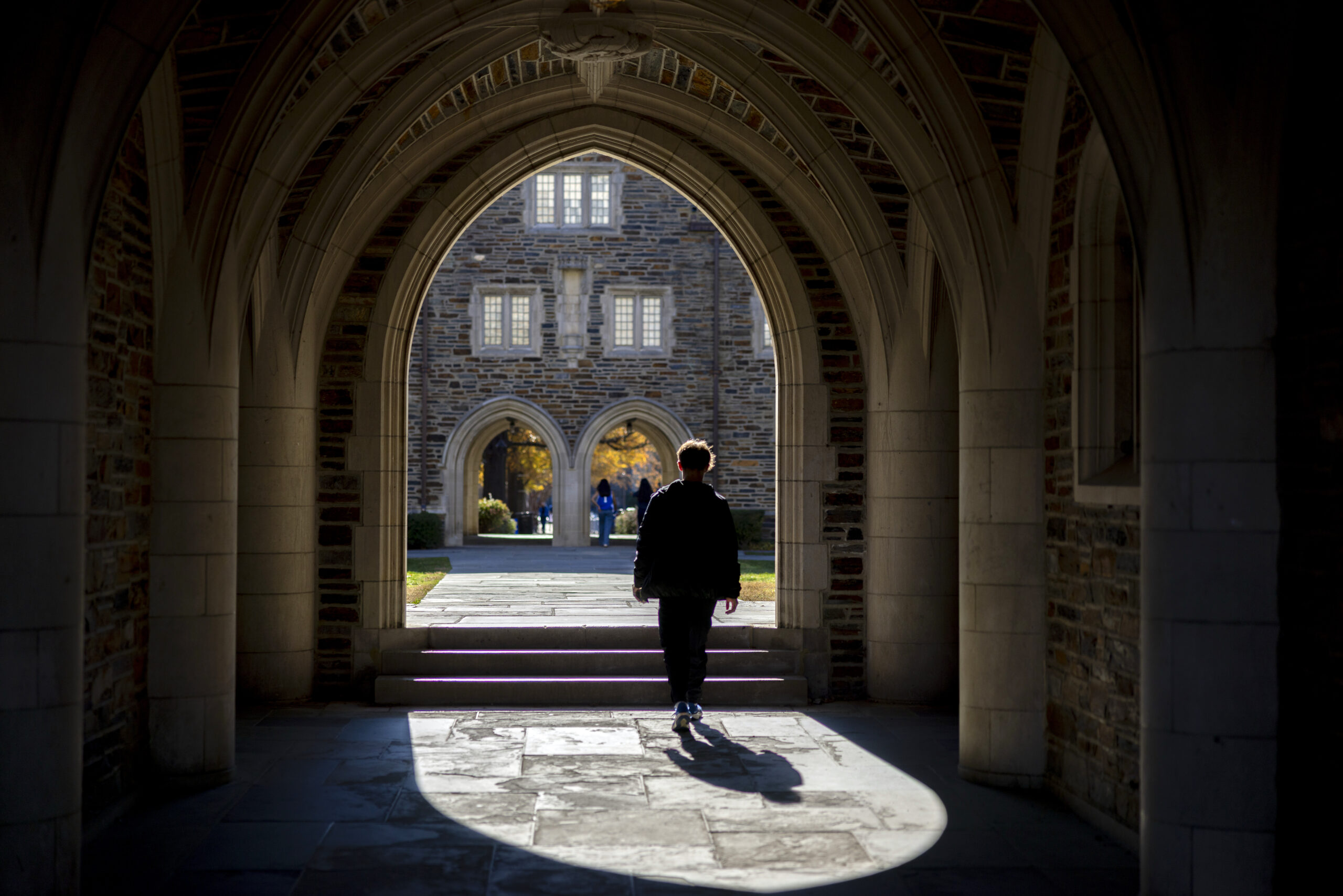
There are no heroes coming to save our democracy. If we are to mount a defense, it must begin with students learning the necessary skills in the classroom.
July 2026
Public-opinion surveys tell us that global support for democracy is as widespread as ever. Yet if democracy is so popular, why have democratic institutions around the world become so fragile?
To understand this paradox, we must distinguish between preferences and actions. Surveys tell us whether citizens support democracy in principle, trust institutions, or approve of democratic norms. Many citizens sincerely support democracy: They vote; they tell pollsters that democracy is important; they worry about democratic erosion. But desiring democracy is not the same as defending it.
In their influential 1963 comparative study The Civic Culture, Gabriel Almond and Sidney Verba examined the social structures on which democracies rest and rely. Many other scholars since then — including Samuel Huntington in his work on political order, democratization, and the cultural foundations of democratic development — have likewise tried to understand what makes democracy possible and keeps it strong. Until recently, these studies tended to focus on societies struggling to democratize. Yet the growing number of backsliding democracies today suggests that such questions should be directed toward more advanced democracies as well.
Democracy is more than just voting. In liberal democracies, most democratic life takes place between elections: by serving on juries, attending schoolboard or city-council meetings, volunteering in civic organizations, organizing with neighbors, following reliable news, engaging in public debate, and holding those in power accountable. But if we reduce democracy, in thought and action, to periodic trips to the ballot box, competitive authoritarianism can emerge even as many democratic procedures remain formally intact.
Citizens can support democracy while lacking the skills required to evaluate evidence, interrogate arguments, organize collectively, resist misinformation, or sustain engagement over time. They can also support democracy while remaining uncertain about their own agency.
Consider two citizens: Both tell pollsters that democracy matters. Both express concern about democratic decline. Both support democratic institutions in principle. Yet when democratic institutions come under pressure, the behavior of these two citizens diverges: One complains, signs petitions, and expresses frustration. The other spends evenings organizing, volunteers, attends meetings, confronts misinformation, and accepts professional or personal risk when necessary. Both support democracy. Only one actively defends it.
Democratic resilience depends on citizens standing up for democracy — citizens who possess the capabilities necessary to defend democratic institutions when doing so becomes difficult. As Democracy in Flight founder and Campaign for Hong Kong president Samuel Chu often reminds students in my Democracy Defenders in Exile course, democracy will not emerge or endure if we wait for heroes to save us. Ordinary people must believe they have power to do the saving themselves and act accordingly.
But no one is born knowing how to evaluate evidence, understand competing arguments, recognize constraints, revise mistaken assumptions, or engage in disagreement responsibly. These are capacities developed through practice, and they are necessary — along with a civic disposition — to act in defense of democracy under conditions of uncertainty. Without these skills, democracy can be stolen or degraded right under our noses.
Like any craft, democratic judgment is acquired through sustained engagement. Comedian Ronny Chieng, in his 2026 Harvard Class Day address, told the audience about a friend of his who tried to learn Buddhism by asking AI to summarize the book Buddhism Made Simple. The joke resonated because it exposed a broader temptation. If technology can provide the answer immediately, why endure the process? Chieng’s response was that “speed-running Buddhism” misunderstands what learning is for: “The journey is the point.”
Journalist Jodi Kantor recently offered similar advice to graduating students. Careers, she argued, are built through craft — durable skills developed through sustained practice and connected to genuine human needs. Craft cannot be downloaded or outsourced. It belongs to the person who develops it. Democratic citizenship is cultivated in much the same way.
The Lure of Optimization
The challenge facing democratic societies is not merely misinformation but the growing temptation to substitute optimization for reconstruction. By reconstruction I mean the disciplined process of engaging competing arguments, confronting contradictions, weighing evidence, and revising one’s assumptions before reaching a considered judgment. Where optimization seeks answers, reconstruction seeks understanding. Optimization asks: What answer satisfies the requirement? What summary captures the key points? What output appears competent? What choice preserves opportunity? Reconstruction asks: What is the argument actually saying? What evidence supports it? What assumptions does it challenge? What would make it fail? What would a fair-minded opponent see that I do not?
Optimization becomes especially attractive when understanding carries costs. Why wrestle with a difficult argument when a summary is readily available online, or engage a position you dislike when looking away is easier, or confront uncomfortable realities when familiar narratives provide reassurance? Optimization is not simply an individual tendency. It can become a social ethic.
In China, one of the most consequential political transformations of the late twentieth century was not merely economic reform but the redirection of civic energies. After Tiananmen in 1989, the Chinese Communist Party began encouraging citizens to focus on personal advancement and economic opportunity rather than collective political engagement. Deng Xiaoping’s phrase, “to get rich is glorious,” captured a broader redirection of civic energies. Citizens were encouraged to optimize.
This strategy proved remarkably effective at insulating the regime from dissent. A generation that might otherwise have been drawn toward political participation was increasingly rewarded for pursuing personal success — educational credentials, career advancement, consumption.
Democratic societies face a different but related challenge. Educational institutions and workplaces often reward optimization. Students learn how to maximize performance, accumulate credentials, build résumés, and adapt strategically to incentives. These skills are valuable. But democratic life sometimes requires something different, something more from citizens: the willingness to prioritize institutions over advantage, principles over expediency, and responsibilities over optimization.
Fareed Zakaria recently warned that the danger of the age of artificial intelligence is not that machines will become too human, but that humans may become “too machinelike.” The point extends beyond artificial intelligence. A society organized around optimization can train people to value efficiency over judgment, performance over experience, and advancement over responsibility. But human intelligence still matters because it is embedded in lived experience. It helps us to decide what we should value and what is worth protecting, building, and sacrificing for.
This distinction may seem abstract. Yet it appears in classrooms, workplaces, and public life. Many faculty members now report that students are relying on summaries, extracts, and synthesized materials rather than sustained engagement with complex texts to complete their assignments. These developments are not simply educational problems. They may also be democratic problems.
Civic Education and Democratic Citizenship
Democratic citizenship requires us to engage with arguments before judging them. It requires us to compare competing claims, follow causal chains across time, retain institutional memory, and understand opposing viewpoints well enough to disagree responsibly. The ability to distinguish faulty arguments, misinformation, or conspiracy theories from reality depends on such skills. None of these emerges automatically. These skills must be built and then honed through practice.
This is why the classroom is so critical — it remains one of the few institutions where democratic capabilities can be deliberately cultivated. In the classroom, students can be required to engage difficult texts, defend positions they do not initially hold, revise their arguments in response to evidence, and confront realities that resist easy answers.
Civic education is about more than simply acquiring knowledge. It is about learning how to revise one’s thinking when confronted with difficult realities.
I have seen this most clearly in my Democracy Defenders in Exile course, where students engage directly with democracy defenders, exiled dissidents, former political prisoners, and peace activists from places such as mainland China, Hong Kong, Tibet, Georgia, Nicaragua, and Venezuela. In this class, the students interview speakers, moderate discussions, and present analytical recommendations to people who have suffered surveillance, censorship, imprisonment, and exile.
The classroom changes under those circumstances.
Students quickly discover that optimizing performance is not enough. Generic answers become inadequate. Easy assumptions collide with difficult realities. Arguments that seemed plausible in the abstract become harder to sustain when confronted with the experiences of people who have borne the costs of democratic struggle.
Often, the strongest students are not those who sounded the most polished at the beginning. They are the ones who are willing to return to the evidence, rethink assumptions, and revise conclusions when reality challenges their preferred narrative.
That process is not merely educational. It is democratic. Real-life democracy defenders illustrate something that contemporary democratic societies often forget: Democratic commitment is costly. Defending democratic institutions can mean losing a job, sacrificing income, status, and opportunity, putting personal safety at risk, enduring surveillance, and even accepting exile. These are not abstract possibilities. They are realities routinely faced by democracy defenders around the world.
Students who enrolled expecting to learn about democratic struggles elsewhere came to realize that they were also learning the capacities necessary for democratic citizenship at home. Recent democratic backsliding has revealed the limits of the comfortable assumption that building and protecting democracy is only a challenge for societies struggling to democratize. To borrow Michael Davis’s formulation, freedom can be undone.
Hong Kong offers a vivid reminder. Civic freedoms, institutional protections, independent media, and political pluralism that took generations to develop were dismantled within a few years once those in power decided to remove them. Institutions that appeared durable proved surprisingly brittle.
As I have argued elsewhere, institutions resemble buildings. They must be imagined, planned, constructed, maintained, repaired, and defended. They often take decades to build, but they can be bulldozed overnight. They remain standing only when enough people possess the capabilities necessary to maintain and defend them. As New Yorker editor David Remnick recently observed on the “Political Scene” podcast, culture is fragile. It requires human tending. It requires attention to the ethos of a place and the rules of the game. And it requires introspection as well as courage.
In some respects, Remnick is describing what Almond and Verba meant by “civic culture.” Democratic institutions are not self-sustaining. The civic foundations beneath them require continual maintenance. This is why democracy is not merely a preference. Preferences are easily expressed in surveys. Capabilities are developed through practice. Commitments are tested under pressure.
Democracy defense begins before institutions come under attack. It begins with citizens learning how to reconstruct arguments they may later reject, revise assumptions in light of difficult realities, and take action to protect the institutions that keep them free. Ultimately, democracy defense begins in the classroom.
Victoria Tin-bor Hui is associate professor of political science at the University of Notre Dame.
Copyright © 2026 JoD Productions
Image Credit: Lance King/Getty Images
| FURTHER READING | ||
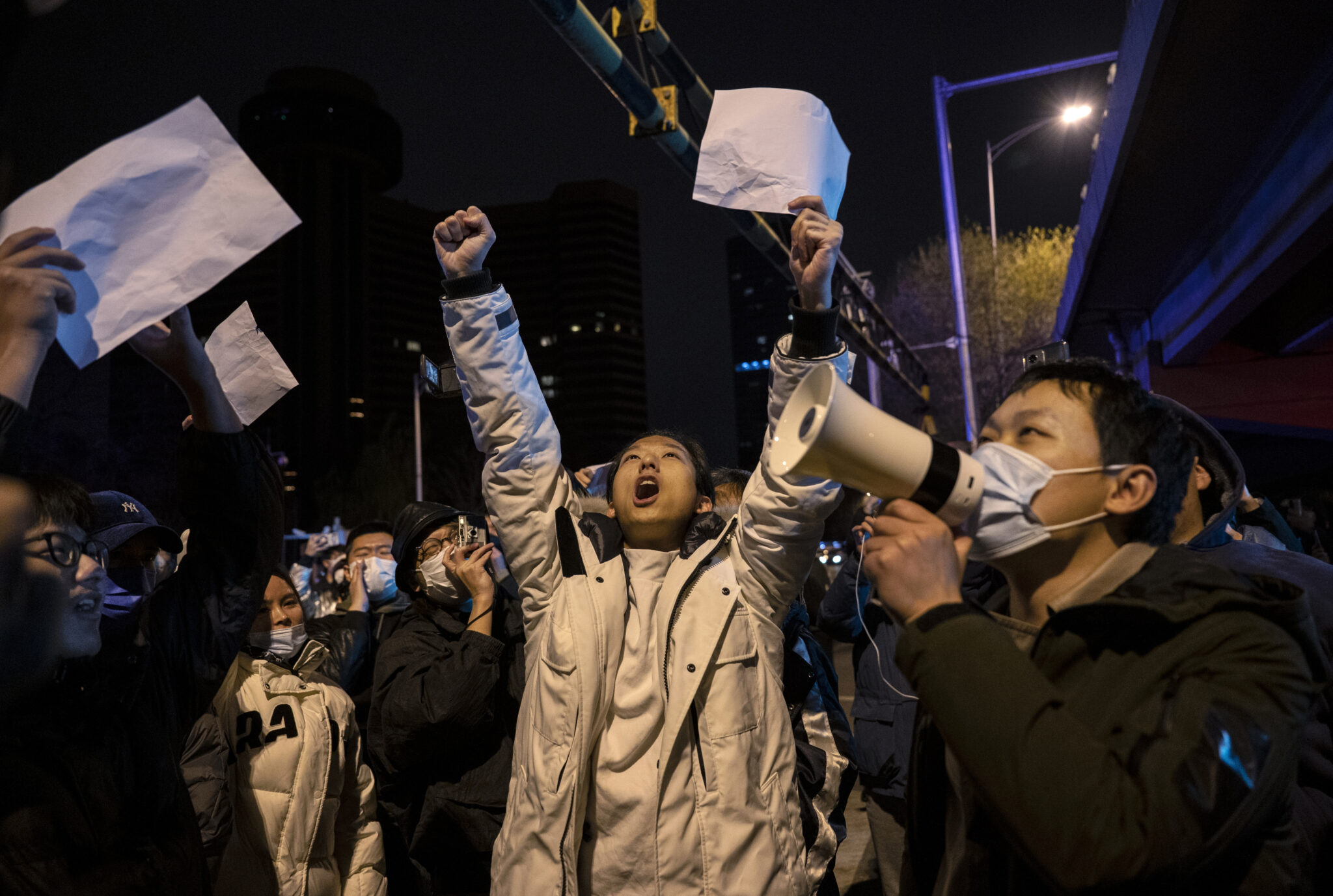
Crackdown: Hong Kong Faces Tiananmen 2.0Victoria Tin-bor Hui Liberty flourished in Hong Kong, but the Chinese Communist Party has crushed it. Beijing wants “capitalism without freedom” in the city, but can there be one without the other? |

How Civil Society Defeated OrbánHanna Folsz Viktor Orbán was ousted by an innovative, grassroots, nationwide campaign run by local civic groups called Tisza Islands. Their success offers a new playbook for civic mobilization against aspiring autocrats. |

How We Restore Turkey’s DemocracyJhanisse Vaca Daza In the lead up to elections, the country’s polarization deepened. But Bolivians showed how a massive civil society movement can organize to restore democracy. It’s a blueprint for nonviolent activists everywhere. |