
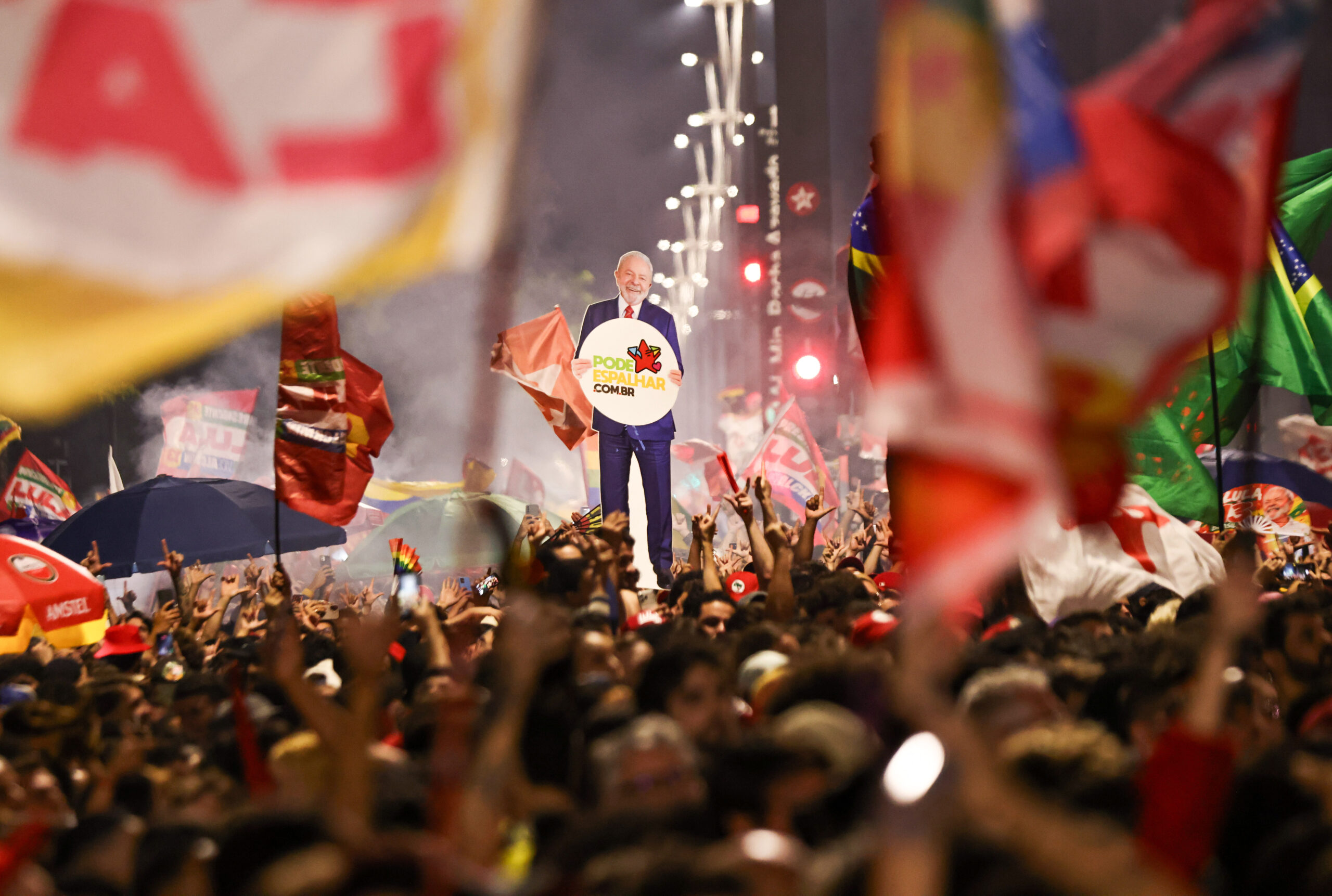
We have just witnessed a series of stunning democratic gains in a single day. We may look back to see October 25, 2026 as the beginning of the end of the democratic recession.
October 2026
Great political changes—revolutions and coups, democratic breakdowns and transitions—are often marked by dates when history turned. The “third wave” of global democratization is replete with such moments. It began in the early hours of 25 April 1974, when left-wing military officers in Portugal, fed up with corruption, stagnation, and debilitating wars to hang on to the country’s African colonies, overthrew the 48-year-old dictatorship. Portuguese flooded into the streets and placed carnations in the soldiers’ rifle barrels, giving the revolution its iconic name, the Carnation Revolution. On 23 February 1986, throngs of unarmed civilians, including nuns clutching rosaries, blocked the tanks that Philippine dictator Ferdinand Marcos had sent into the streets of Manila to crush days of protests—two-million strong—against his theft of the presidential election. The military split, the United States withdrew its support for Marcos, and two days later Corazon Aquino was inaugurated president, initiating a wave of democratic transitions in Asia.
On 5 October 1988, Chilean voters decisively defeated South America’s last military dictator, Augusto Pinochet, in his bid for eight more years in power, ending a decade and a half of repressive rule. Barely a year later, on 9 November 1989, freedom-loving East Berliners began pouring into West Berlin, accelerating months of human flight across other borders of the Iron Curtain. That evening, people began tearing down the Berlin Wall that had for decades divided freedom from tyranny, and Eastern Europe’s communist regimes embarked on a brisk succession of transitions to democracy. Four months later, on 11 February 1990, South Africa’s apartheid regime released Nelson Mandela from 27 years of imprisonment, paving the way for a negotiated passage to multiracial democracy and igniting a “second liberation” of democratic transitions across the continent. On 22 November 2004, Ukraine’s democratic opposition launched massive demonstrations against the authoritarian regime’s theft of the presidential election. Hundreds of thousands of citizens in Kyiv and other cities braved sub-freezing temperatures for weeks to demand that their victory be recognized. The Orange Revolution forced a new election in late December which the opposition clearly won, giving birth to a new democracy in January 2005.
A New Beginning?
Ukraine’s Orange Revolution was the last great gasp of democratization during the third wave. Two years later, the world started sinking into a democratic recession — or what some later termed a “third reverse wave” of authoritarianism. The subsequent two decades witnessed numerous popular mobilizations for freedom in countries such as Burma, Iran, Tunisia, Egypt, Turkey, Zimbabwe, and Ukraine again in 2014. Save for Ukraine (and briefly, Tunisia), none of these produced a transition to democracy. But in recent years, democratic forces have shown new vitality, driving a despot from power in Bangladesh in 2024 and defeating autocratic rulers or illiberal options in elections in Brazil in 2022, Poland in 2023, Moldova and Sri Lanka in 2024, Romania in 2025, and Hungary this past May.
For stunning democratic gains on a single day, however, nothing can compare with Sunday, October 25. That day saw three national turning points that might someday be viewed as the beginning of the end of the democratic recession. In Serbia, two years of peaceful student protests against corruption and authoritarianism culminated in a startling election defeat for President Aleksandar Vučić, ending his fourteen years of increasingly repressive rule. Hours after the Serbian result was announced, Brazil’s aging leftist incumbent president, Luiz Inácio Lula da Silva, defeated Flavio Bolsonaro, who promised to govern in the spirit of his father, Jair Bolsonaro, the imprisoned authoritarian populist president who nearly pulled off a coup against democracy four years earlier after he lost the presidential election. And that same day, the leader of Venezuela’s democratic opposition, Nobel Peace Prize winner Marina Corina Machado, returned to her country after being thwarted in at least seven previous attempts in recent months.
Each of these three developments followed months of extraordinary political effort to overcome difficult odds and recent national trauma. For Serbia, the trauma that ignited the movement was the death of sixteen people two years ago when a concrete and glass canopy collapsed over the train station of the country’s second largest city. Weekly protests by Serbian students against the venality and arrogance of the Vučić regime congealed into a broad-based national movement that mobilized more than 300,000 Serbians into the streets of Belgrade in March 2025, in what was reported to be the largest protest rally in the country’s history. Serbia’s youth-led movement succeeded (at least in securing a democratic election victory on Sunday) where other “leaderless” student movements either failed (as in Egypt following the Arab Spring protests) or opened the path to the return of dominant-party politics (as is now unfolding in Bangladesh). In a trenchant account in these pages, former Serbian student leader and democracy activist Srdja Popovic explains why. First, while Serbia’s student movement had no visible leaders, it had a deep structure of organization that rigorously prepared for Sunday’s parliamentary elections and managed to nominate a diverse and respected set of candidates for all 250 places on the Student List’s entry into the parliamentary election. Second, as with Péter Magyar’s remarkable campaign to end the sixteen-year electoral autocracy of Viktor Orbán in Hungary earlier this year, Serbian youth traversed the country patiently and tirelessly (though in a much more decentralized fashion) to hear citizen concerns and fashion a political platform that responded to popular disaffection. And third, as with the 2024 Venezuelan presidential election, the students mobilized tens of thousands of volunteers to monitor the polls.
Two other factors also aided the Serbian democratic breakthrough. First, the student movement managed to unite the opposition to Vučić behind their remarkable ticket. Serbia’s electoral system is virtually identical to Israel’s. Its unicameral parliament is elected by proportional representation from nationwide party lists, with a 3 percent threshold (in Israel it is 3.25 percent). In Israel, that system looks set to elect eleven party lists to parliament in the just concluded elections there. In Serbia, it elected only two, which shared 93 percent of the vote, with the Student List winning an absolute majority. Because it is not a political party, it still faces formidable challenges in governing, but perhaps less so than if it had to negotiate to form a government among disparate maneuvering parties. And second, Vučić almost immediately threw in the towel and conceded defeat. Among the plausible explanations for his doing so are the intensity of the public loathing of his corruption, the substantial (13-point) margin of the opposition victory, the precedent set by Orbán’s swift and unambiguous concession, and perhaps an expectation that the politically inchoate and inexperienced opposition will have trouble governing and dissolving the deep structures of Vučić’s autocracy, thus paving the way for his return.
For Brazil, the trauma that hung in the background of the 2026 election was the attempt of former president Jair Bolsonaro to disband the courts, seize power, and overturn his 2022 election defeat through a coup alliance with the military. For this crime against democracy, he was convicted by Brazil’s Supreme Court last year and sentenced to 27 years in prison—a sentence his son Flávio repeatedly promised to annul in a sweeping amnesty of all the coup plotters. But not wanting to wind up behind bars like his father, that son has now effectively conceded defeat and fled the country, sparing Brazil another polarizing postelection crisis.
In the simplest terms, Lula was able to come from behind in the first round to win in the second because he picked up the lion’s share (about 70 percent) of the additional fourteen-million votes cast between the two final contenders in the runoff. He was aided by a burst of “last-minute measures and proposals aimed at voters’ concrete concerns” and by a “tidal wave of [social-media] messages, memes, and reels.” These generated a surge in voter turnout and a margin of victory for Lula twice what he won over the elder Bolsonaro four years ago. In the end, it appears that many of the nine-million moderate conservatives who voted for minor parties in the first round defected to Lula in the runoff because they just couldn’t stomach another four years of the erratic, personalistic, and dubiously democratic brand of Bolsonaro leadership. Even if it comes in the form of a fourth term for a now 81-year-old president whose earlier administrations were dogged by corruption charges, that is a victory for democracy. But it may be short-lived if the longtime leftist cannot find a way to work with a Congress that will be dominated by right-of-center parties.
The challenge remains much more formidable for María Corina Machado, who returned to Venezuela on Sunday only after months of obstruction by the government of Delcy Rodríguez and the administration of U.S. president Donald Trump. Had Machado not been banned by the Venezuelan autocracy from running in the 28 July 2024 presidential election, she would have been the one overwhelmingly elected president instead of her loyal but colorless designee, Edmundo Gonzalez, a retired diplomat. But Venezuela’s long-ruling autocrat, Nicolás Maduro, had no intention of surrendering power to anyone, and despite convincing proof from a parallel vote tabulation that the opposition had won two-thirds of the vote, Maduro announced himself the winner.
That was only the latest in Venezuela’s longtime trauma. Since the left populist autocrat Hugo Chávez took power in 1999, and particularly since Maduro succeeded him in 2013, the country has experienced one of the most shocking economic and political freefalls in recent world history. A quarter of the population, some eight-million people, have fled economic collapse, hyperinflation, and predatory corruption, crime, and repression. These conditions, which have decimated oil production and commerce in general, cannot be relieved by a change of ruling autocrats, which is what Trump achieved with his January 3 military strike capturing Maduro and passing power on to his vice-president, Delcy Rodríguez. Only a transition to a legitimate government and the rule of law—which is to say, democracy—will attract major new investment, revive the oil industry, and bring back a large slice of Venezuelan talent from abroad.
For the eleven months in 2025 that she was forced into hiding in Venezuela for her own safety and her subsequent ten months abroad until Sunday, Machado was robbed of the opportunity to engage and organize the people of Venezuela directly. Still, she maintained a commanding hold on popular sentiment. Now, from her new position on the ground, Machado will be able to rally opposition forces to demand timely, free, and fair national elections. She is ready to negotiate directly or indirectly with the regime. She is ready to make the kind of painful concessions on accountability for past crimes that will probably be necessary to induce regime elites to leave. Among all opposition leaders, she is uniquely capable of persuading Venezuelans to keep their “eyes on the prize” (in the famous refrain of the U.S. civil rights movement)—namely, getting to a democratic transition. Not surprisingly, she made her first public appearance in Venezuela among worshippers at a Sunday church service. Machado is, for the broad bulk of the population, the embodiment of hope for Venezuela’s redemption and the key to the country’s renewal and reconciliation. Since January 3, the Trump administration has had it backwards in insisting that stability must return to Venezuela before elections—particularly national elections—are held. Only free, fair, and independently administered and monitored national elections can produce a government capable of restoring stability and reviving the economy.
In recent years, a growing number of countries have restored democracy from the grip of illiberal populism and competitive authoritarianism, as in Sri Lanka, Poland, Hungary, and now hopefully Serbia. But since 2006, no democratic movement has managed to displace a full-blown dictatorship like Venezuela’s. One hopes that the resistance succeeds in forcing the military dictatorship in Burma to the negotiating table, and that when the U.S. war with Iran ends and its regime must reckon with a decimated country, some organic process of change can reignite. We should not write off any country — certainly not Belarus or Uganda (where aging, unpopular dictators stole the presidential elections in 2020 and 2026, respectively), and not even, in the long run, Russia and China. But today, no country is nearly so well positioned to make a stunning breakthrough from dictatorship to freedom (of the kind we saw repeatedly during the third wave) as Venezuela, which was for decades one of Latin America’s most successful democracies. Keeping our eyes on the prize of advancing freedom in the world requires a different focus than cornering Venezuela’s oil reserves. It demands that Washington use its now-considerable leverage to help broker the understandings that will lead to a free and fair election for a new national government in Caracas, as soon as possible.
Larry Diamond is a postdoctoral fellow at Stanford University’s King Center on Global Development. His research examines development and political economy in India, with particular emphasis on political representation, identity, conflict, and political mobilization.
Copyright © 2026 JoD Productions Inc
Image Credit: Rodrigo Paiva/Getty Images
|
FURTHER READING |
||
Power, Performance, and Legitimacy |
Democracy’s Arc: From Resurgent to Imperiled
|
Facing Up to the Democratic Recession |