
Read the full essay here.
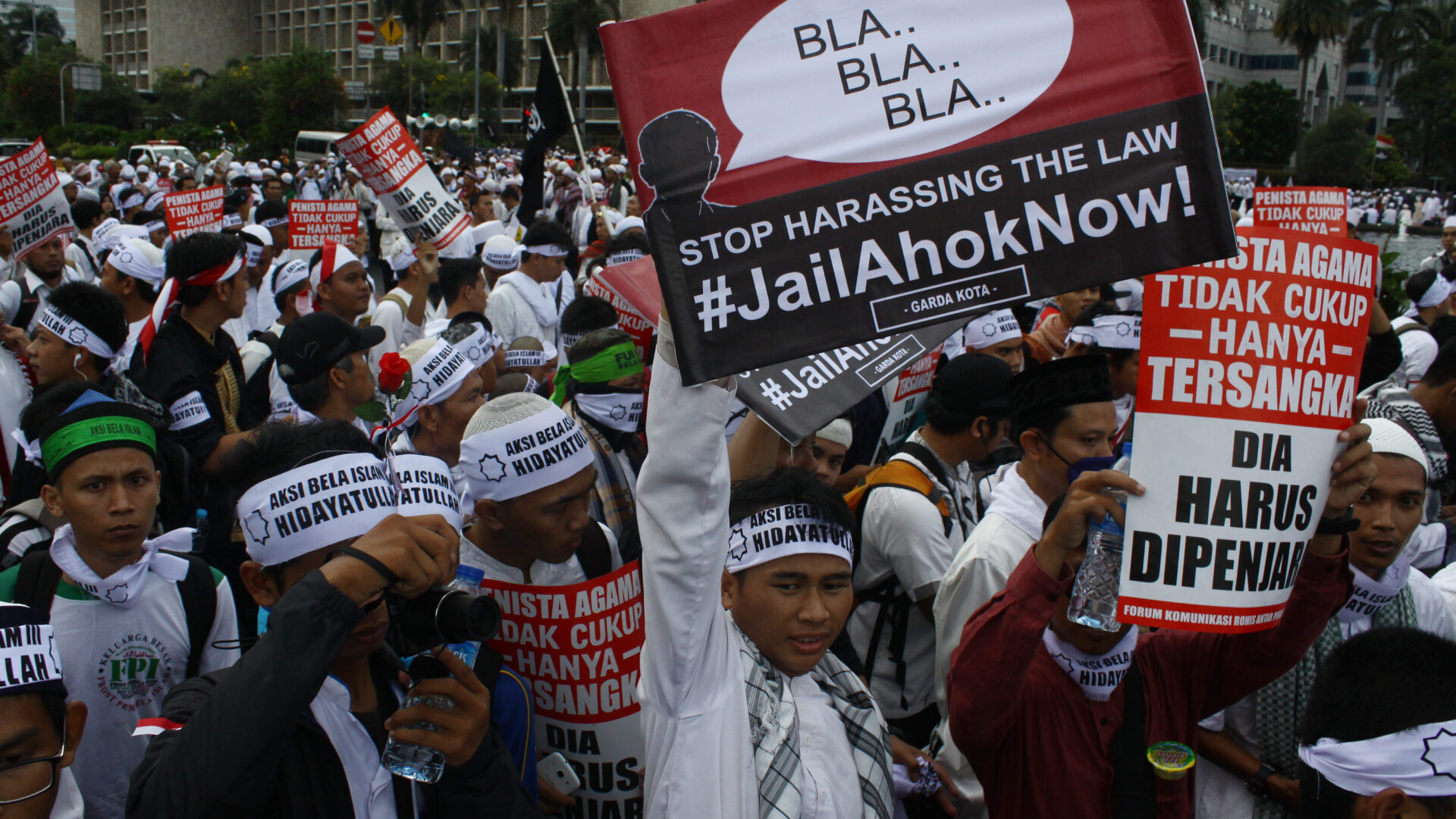
This essay theorizes decentralization’s “double movement’’—the simultaneous potential to accommodate pluralism and provoke polarization in a digital information environment. Indonesia serves as the empirical focus: Nationwide protests over Jakarta governor Basuki “Ahok” Tjahaja Purnama’s 2017 blasphemy case, largely driven by citizens from outside his jurisdiction, exemplify how forms of digital-era political voyeurism amplify local conflicts. New survey evidence further links political voyeurism to heightened polarization and illiberal attitudes. The findings underscore a broader paradox for decentralized democracies worldwide, highlighting how digital connectivity can transform local diversity into fuel for national polarization.
Image Credit: Tubagus Aditya Irawan/Pacific Press/LightRocket via Getty Images