
October 2019, Volume 30, Issue 4
Insights from Europe’s History
A review of Democracy and Dictatorship in Europe: From the Ancien Régime to the Present Day by Sheri Berman.
October 2019, Volume 30, Issue 4
A review of Democracy and Dictatorship in Europe: From the Ancien Régime to the Present Day by Sheri Berman.


July 2019, Volume 30, Issue 3
In both Eastern and Western Europe, social-democratic parties have shifted to the center on economic policy, not only sapping the electoral strength of these parties, but also opening up political space for the populist right.

July 2019, Volume 30, Issue 3
Why do ordinary people vote to return to office undemocratic incumbents? New survey experiments in several countries suggest that many voters are willing to put their partisan interests above democratic principles—a finding that may be key to understanding democratic backsliding.

July 2019, Volume 30, Issue 3
A comic actor’s triumph in Ukraine’s free and competitive 2019 presidential race reflects distrust of establishment elites and a deep desire for change.
July 2019, Volume 30, Issue 3
Within Ukraine, Russia’s 2014 invasion has generated unprecedented pressures to impose restrictions on speech. While international norms allow some censorship during wartime, some of Ukraine’s new media and cultural policies raise risks not only for its democracy, but for its security as well.
July 2019, Volume 30, Issue 3
The norm of ballot secrecy, although widely accepted in principle, is often downplayed and loosely defined in practice. As policy makers weigh new electoral options such as postal and internet voting, a better understanding is needed of secrecy’s many aspects and requirements.
July 2019, Volume 30, Issue 3
Three decades after sub-Saharan Africa joined the “third wave,” democracy’s ability to endure has been established in many countries, but its quality remains a grave concern.
July 2019, Volume 30, Issue 3
Data from the latest wave of the Afrobarometer survey show that Africans’ demand for liberal democracy remains high. The problem lies in lagging supply.
July 2019, Volume 30, Issue 3
In Senegal, voters, civil society, and the media remain active and engaged, but as the reelection of Macky Sall showed, the president’s ability to limit competition and centralize power remains formidable.
July 2019, Volume 30, Issue 3
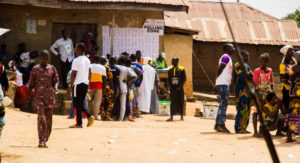
Election officials made strides toward secure voter identification, and a two-party system appears to be emerging, but the 2019 elections revealed continuing problems with vote-buying and violence.
July 2019, Volume 30, Issue 3
Stymied in his effort to secure a third term, President Joseph Kabila manipulated the electoral process in order to secure a compliant successor.

July 2019, Volume 30, Issue 3
Popular dissatisfaction and tensions within the long-ruling EPRDF have led to the rise of a young reformist leader who has begun a course of bold reversals in favor of greater freedom and openness.
July 2019, Volume 30, Issue 3
The military-backed regime of President al-Sisi seems secure, but study of the Egyptian internet reveals that the regime has failed to win over the young.
July 2019, Volume 30, Issue 3
Following the settlement of the revolutionary conflicts that long plagued the region, the left was able to reach power through elections. But the results have been discouraging.
July 2019, Volume 30, Issue 3
A review of Responsible Parties: Saving Democracy from Itself by Frances McCall Rosenbluth and Ian Shapiro.

April 2019, Volume 30, Issue 2
In May 2018, the people of Malaysia transcended distinctions of class, religion, and ethnicity in order to vote for democracy and reform against a long-ruling party riddled with corruption.
April 2019, Volume 30, Issue 2
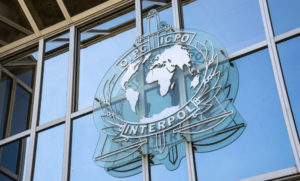
Globalized authoritarian regimes are increasingly abusing Interpol’s notice system to go after political opponents based abroad. These regimes seek not only to punish their critics, but also to legitimate their own acts of repression.
April 2019, Volume 30, Issue 2
The Editors’ introduction to “30 Years After Tiananmen.”

April 2019, Volume 30, Issue 2
China’s 1989 democracy movement was brutally suppressed, but a former student leader argues that it also planted the seeds for the growth of Chinese civil society and for future democratization.
April 2019, Volume 30, Issue 2
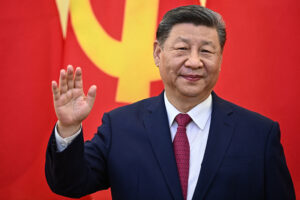
Xi reads Tiananmen as a cautionary tale, and he has sought to centralize power and reverse years of ideological atrophy. By controlling the past, he is trying to determine how the Chinese will view their present and future.