
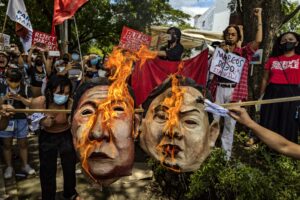
How the Duterte Clan Is Remaking the Marcos Playbook
Strongman nostalgia, conspiracy theories, and lies. It’s a powerful blend that keeps populists in power. In the Philippines, political clans have weaponized these messages against each other.
783 Results
Strongman nostalgia, conspiracy theories, and lies. It’s a powerful blend that keeps populists in power. In the Philippines, political clans have weaponized these messages against each other.
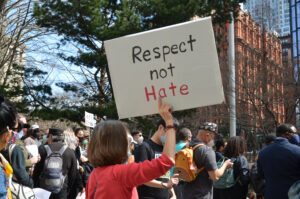
The world increasingly appears afflicted by “us-them” divides that breed anger, resentment, and violence. But across the globe small local groups are mounting a thoughtful resistance against polarization and hate.

Vladimir Putin has become a one-stop shop for authoritarians around the world, providing them whatever they need to advance their cause. Democracy’s defenders don’t get the same support — but it’s time for that to change.
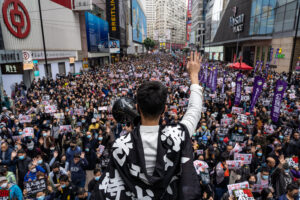
What are the true lessons from Tiananmen Square? Why does nonviolent resistance offer the best chance of challenging the CCP? Hu Ping, a leading Chinese dissident, reflects on the mistakes that were made and what it will take to succeed next time.
In 2022, we began publishing shorter, exclusively online pieces. No topic mattered more to you than Russia’s disastrous war in Ukraine. We also published essays from the sharpest minds on protests in China and Iran, instability in Pakistan, and more.
The Journal of Democracy has analyzed democracy’s fortunes across the globe, from Ukraine to Afghanistan and the Philippines, from Hungary to Tunisia. Here are our top-ten most-read essays from 2022.
Reports on elections in India, Marshall Islands, and Netherlands.
The ten most-read online exclusives this year focused on the Russia-Ukraine war as well as events in China, Iran, Western Europe, and Latin America.

The world’s liberal democracies are deeply polarized. Here’s how we could help rebuild the political center.
The world’s biggest democracy and its brand of Hindu nationalism were top of mind for our readers in 2024. Meanwhile, this “year of elections” raised questions about liberalism, civic virtue, and democratic resilience across the world. The Journal of Democracy covered all of these ideas — plus the biggest stories of the year.
Elections in nearly eighty countries around the world captured headlines throughout 2024. Meanwhile, NATO turned 75, Viktor Orbán ramped up his repression, and Bitcoin became the currency of choice for democracy activists under threat. These ten essays were the JoD’s most-read online exclusives of 2024.
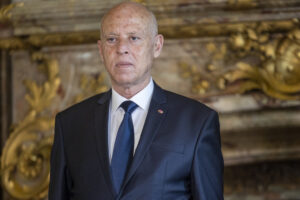
Kais Saied is claiming a landslide election win. The truth is he was never willing to face a real competition. Just how insecure he feels will likely determine how much more repressive he will become.
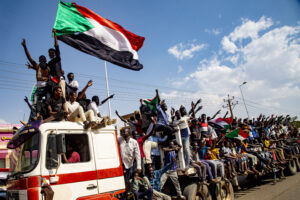
The country just got a new chance to restore its democratic transition. Here’s how they can ensure that Sudan stays on the right path.

The far-right AfD surged ahead in the European Union elections. It is now one of Germany’s dominant parties, and not just part of the fringe.
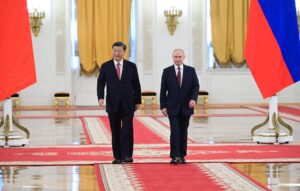
They are benefiting from a world that has grown more hostile for democracy and human rights. But it doesn’t need to be the case. Democracies need to double down on their own competitive advantage.
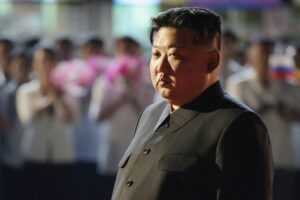
South Korea is about to elect a new president. North Korea has changed in recent years. Seoul’s approach to the Kim regime must change to reflect new risks — and Korea’s democratic strength.
"The Authoritarian Resurgence: China, Russia, Saudi Arabia, and Venezuela" panel discussion featuring JoD authors Javier Corrales, Andrew J. Nathan, Lilia Shevtsova, and Frederic Wehrey. (4/23, 12-2 pm, at NED)
April 14, 2015
Reports on elections in Bangladesh, Bhutan, Comoros, Democratic Republic of the Congo, Egypt, Serbia, Sint Maarten, and Taiwan.

Alexei Navalny was one of the bravest and most influential political leaders of our time. His assassination should be a wake-up call for Western democracies.