
The State of India’s Democracy
The essays in The State of India's Democracy focus on India's economy, society, and politics, providing illuminating insights into the past accomplishments—and continuing challenges—of Indian democracy.
485 Results
The essays in The State of India's Democracy focus on India's economy, society, and politics, providing illuminating insights into the past accomplishments—and continuing challenges—of Indian democracy.
"[This] elegantly written and rigorously structured volume … constitutes an important landmark in the comparative study of democratization."—Carlos Santiso, Forum for Development Studies
"Liberation technology" can help mobilize citizen protest and oust autocracies. Authoritarians can also use technology to stifle protest and target dissenters. Who will win the technological race between "netizens" demanding freedom and authoritarians determined to stay in power?

Is the challenge of building and consolidating democracy under postcommunist conditions unique, or can one apply lessons learned from other new democracies? The essays collected in this volume explore these questions, while tracing how the countries of Eastern Europe and the former Soviet Union have fared in the decade following the fall of communism.

"This valuable collection is essential for all."—Choice
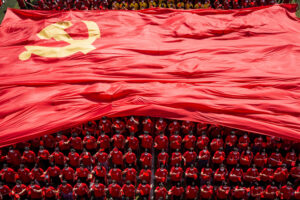
China’s totalitarian regime is built on surveillance, censorship, and repression, with harsh penalties for anyone who dares to defy it. Xi Jinping and the Chinese Communist Party have ambitions that extend beyond China’s borders. The following Journal of Democracy essays explore how China undermines democracy both at home and abroad. Read for free now.

DeepSeek’s new frontier AI model is the CCP’s most powerful tool yet for surveillance and control. The following Journal of Democracy essays show how authoritarian governments leverage emerging tech to enhance repression. Read free for a limited time.
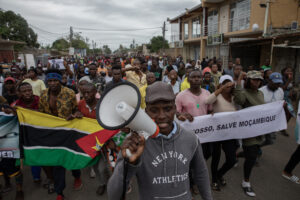
People are calling for a so-called unity government to stem the violence in Mozambique. But there is a better way to set the country on the right course.

The country has a long history of power-sharing deals that are sealed with a handshake. The truth is that this type of political bargaining typically does more harm than good.
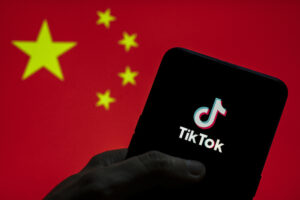
The popular Chinese-owned app is enabling Beijing to collect data on people nearly everywhere. Not only can such platforms track people’s preferences and whereabouts, but they give the Chinese government control over a powerful tool for shaping people’s worldview.

On Tuesday, Georgia’s Parliament passed a controversial new law that would brand NGOs and media organizations receiving foreign funding as “foreign agents.” Countries across the globe are following the Russian model and painting liberal-democratic values as malign foreign interference. Read about the strategies autocrats are devising to repress civil society and stifle dissent.
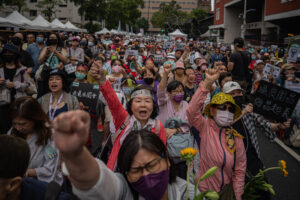
Beijing assaults Taiwan with a nonstop barrage of conspiracy theories and lies to undermine people’s faith in democracy — and China’s efforts are getting more sophisticated. Taiwan must do even more to fight back.
The popular social media app, owned by the Chinese company ByteDance and used by 170 million Americans, is raising national security questions about data privacy and malign foreign influence.

The latest issue of the Journal of Democracy covers important and alarming global trends, including political polarization and rising illiberalism, as well the struggle between autocrats and democrats in Africa, Latin America, South Asia, and beyond. Read it before it goes behind a paywall.

The president wanted to remain in power, but the people’s demands prevailed in the end.

Organized criminal groups in Latin America have money, firepower, and a stranglehold on political life — making them incredibly difficult to defeat. How can countries in the region curb the violence and revive democracy?
The Journal of Democracy essays below, free for a limited time, chart the trials and triumphs of Kenya’s democracy over the last two decades — plus key essays on the theory and practice of political power sharing.
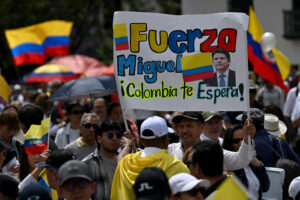
The international drug trade has ravaged Latin America. Drug cartels and organized crime groups have grown powerful enough in some countries to infiltrate and even challenge the power of the state. As demand for drugs and profits soars, violence, death, and displacement rain down upon communities, leaving democracy and the economy in shambles.