
2036 Results

men that don't produce testosterone

April 2013, Volume 24, Issue 2

Southeast Asia: Sources of Regime Support

Data from the latest wave of the Asian Barometer Survey show commonalities and variations in the sources of regime support in Southeast Asian countries. Most regimes—democracies and nondemocracies alike—draw political legitimacy from perceptions of effective and upright governance.

October 2012, Volume 23, Issue 4

European Disintegration? The Sources of Extremism

The EU is experiencing a somewhat paradoxical phenomenon: On the one hand, it has been a tremendously successful club, promoting democracy and open societies within its borders and in its neighborhoods. On the other hand, the language of national rivalry and of class struggle is re-entering public discourse, especially within the eurozone. 

October 2012, Volume 23, Issue 4

European Disintegration? A Way Forward

The present crisis of the Euro is a near perfect example of how causal complexity, unanticipated consequences, and decisional uncertainty can have a significant and cumulative impact on regional integration. In theory, this should be the crisis that will drive the EU from economic to political integration. In practice, the outcome—at least, so far—has been…

July 2011, Volume 22, Issue 3

Poverty, Inequality, and Democracy: Growth and Hunger in India

Despite India’s impressive achievements in democracy, economic development, and the rule of law, it remains home to a third of the world’s poor. Although it has successfully averted famine since independence, it still struggles to prevent chronic hunger.

January 2010, Volume 21, Issue 1

Twenty Years of Postcommunism: The Other Transition

Read the full essay here. The recent history of Eastern Europe can best be understood as a transition to a new social contract between the postcommunist state that emerged from its communist predecessor and the postcommunist citizen who evolved from the communist subject. It is the relationship between state and society under communism that best…

July 2024, Volume 35, Issue 3

Why Mexico Is Not on the Brink

Claudia Sheinbaum won Mexico’s presidency in a landslide, but celebration of her election as the country’s first female president was blunted by a deeper concern: Mexico’s deteriorating democracy. In truth, the country’s democratic institutions are highly resilient, and there is reason to be optimistic about what lies ahead.

July 2024, Volume 35, Issue 3

The Rise of India’s Second Republic

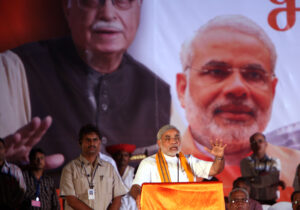
While he did not achieve the sweeping victory many predicted, Narendra Modi led his ruling coalition to a third consecutive victory. In so doing, he is laying the foundation for a new political order in which India is simultaneously more democratic and more illiberal.

July 2008, Volume 19, Issue 3

Islamist Parties and Democracy: Participation Without Power

Read the full essay here. The debate on the compatibility of Islamism and democracy has tended to focus on two main scenarios. In the first, Islamist political parties become agents for democratization through their participation in freely held elections. In the second, Islamists use the democratic process to gain control and establish an antidemocratic regime—the…

July 2008, Volume 19, Issue 3

Islamist Parties and Democracy: Why They Can’t be Democratic

Read the full essay here. This article makes a case of the basic distinction between Islam and Islamism and presents three central arguments: 1. through religious reforms and a rethinking of the Islamic doctrine, the cultural system of Islam can be put in harmony with democracy, 2. this (first) argument does not apply to Islamism…