

Why Putin Isn’t Forever
The Kremlin’s political theater shouldn’t be mistaken for an election or symbol of stability. It’s a sign of Putin’s weakness and the country’s descent into a deeper tyranny.
2772 Results
The Kremlin’s political theater shouldn’t be mistaken for an election or symbol of stability. It’s a sign of Putin’s weakness and the country’s descent into a deeper tyranny.

Tunisia’s president is looking to strengthen his chokehold on the country.
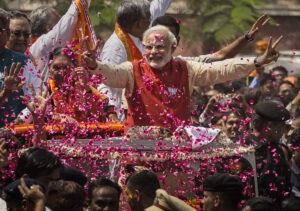
Democratic institutions, norms, and practices have been under threat in India. Should the country’s democracy fail, it will affect not only the lives of 1.4 billion Indians, but also democracy movements around the world.
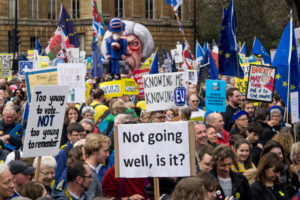
Francis Fukuyama, one of the world’s leading scholars of democracy, has written for the Journal of Democracy more than two-dozen times over the last thirty-two years. The following essays include some of his most incisive, offering bold insights into the relationship between democracy, modernization, and political culture.

In the 1991 classic, The Third Wave: Democratization in the Late Twentieth Century, Samuel P. Huntington offered a new way of understanding democracy’s global trajectory. Amid rising global populism and increasingly aggressive authoritarian leaders, has Huntington’s framework outlived its usefulness?

The Venezuelan strongman lost the election and everyone knows it. He has nothing left to offer but violence and repression. It will be his undoing.

In the shadow of Gaza’s destruction, the Jordanian regime has quietly repressed one of the main sources of the country’s political activism.

“Every opportunity must be used to speak out . . . I love Russia. My intellect tells me that it is better to live in a free and prosperous country than in a corrupt and impoverished one.”
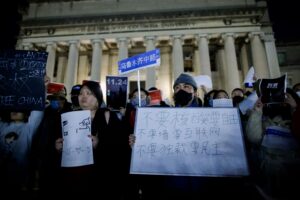
China’s recent protests marked a crucial milestone: The mainstream Chinese public, at home and abroad, finally spoke up for the Uyghurs and their plight.
ForeignPolicy.com's Democracy Lab includes Abdou Filali-Ansary's essay "The Languages of the Arab Revolutions" among its recommended reads for the week.
April 24, 2012
At a Feb.7 event at the NED, JoD authors will discuss whether evidence points to a coming period of political change in China.
February 1, 2013
The Aug. 22 Washington Post editorial "China’s Half-Measure on the Rule of Law" cites Carl Minzner's JoD essay "China Tipping at Point: The Turn Against Legal Reform."
August 28, 2013
CFR has listed the new JoD essay "Breaking the News: The Role of State-Run Media" by Christopher Walker and Robert W. Orttung among its "must reads."
January 15, 2014
Marc Plattner tackles this question in an interview with the Levada Center's Denis Volkov.
April 6, 2015
In "The Year of Democratic Decay," Daniel Drezner cites "The Danger of Deconsolidation: The Democratic Disconnect" by Roberto Stefan Foa & Yascha Mounk in the July JoD.
July 20, 2016
Drawing on her thought-provoking article "The Pipe Dream of Undemocratic Liberalism" from our July issue, Berman discusses the history of illiberal democracy, the relationship between technocracy and populism, and why liberalism and democracy still need one another.
July 20, 2017
For the first time, JoD content is available on iTunes. Browse our listing of articles currently ready for download, and keep an eye out for additional content to follow soon.
July 17, 2018
Drawing on his October-issue contribution “Latin America’s Shifting Politics: The Lessons of Bolivia,” Jean-Paul Faguet explains why the collapse of Bolivia’s party system may offer “an analytical window into the future” for Western countries.
January 15, 2019
An editorial on China’s digital repression highlights the work of JoD contributor Xiao Qiang, who in our January issue warns that the integration of new digital technologies and mass information collection may soon enable Chinese authorities to preemptively crush opposition.
January 16, 2019
“To understand why liberal democracy is on the defensive,” writes William A. Galston, “there is no better place to start than the 30th-anniversary edition of the Journal of Democracy.” Read more in Galston’s full article on “Liberal Democracy’s Threats From Within.”