
October 1993, Volume 4, Issue 4
The Challenge of Ethnic Conflict
The Editors’ introduction to “The Challenge of Ethnic Conflict.”
3272 Results
October 1993, Volume 4, Issue 4
The Editors’ introduction to “The Challenge of Ethnic Conflict.”

July 2006, Volume 17, Issue 3
Successfully fighting corruption in developing and postcommunist countries requires far more than instituting best practices from advanced democracies. Corruption first must be properly diagnosed; in some cases it can be effectively treated only by attacking the distribution of power itself.
October 2020, Volume 31, Issue 4
A review of Hidden Hand: Exposing How the Chinese Communist Party Is Reshaping the World, by Clive Hamilton and Mareike Ohlberg.
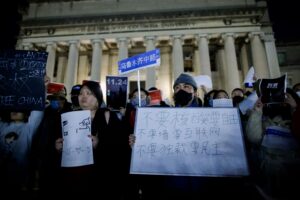
China’s recent protests marked a crucial milestone: The mainstream Chinese public, at home and abroad, finally spoke up for the Uyghurs and their plight.
April 2019, Volume 30, Issue 2
Globalized authoritarian regimes are increasingly abusing Interpol’s notice system to go after political opponents based abroad. These regimes seek not only to punish their critics, but also to legitimate their own acts of repression.
October 2007, Volume 18, Issue 4
The paradox of East-Central Europe is that the rise of populism is an outcome not of the failures but of the successes of postcommunist liberalism. *This is a corrected text of the print and original online version of this essay, which lacked proper citation for some of its sources. This is the only version that…
We’re Sorry… The page you’re looking for can’t be found. Please update your links. About Articles Current Issue Gratis/Free Articles Tables of Contents Books Commentary Supplemental Material News and Events Subscribe to the Journal The Journal is published by the Johns Hopkins University Press and is available online through Project MUSE. If you or your institution…
January 2008, Volume 19, Issue 1
Senegal's 2000 presidential election marked the end of forty years of one-party rule. But the reign of President Wade has been a severe disappointment, dashing hopes for democratic consolidation. *This is a corrected text of the print and original online version of this essay, portions of which drew heavily on Tarik Dahou and Vincent Foucher's…
July 2004, Volume 15, Issue 3
Excerpts from: the Alexandria Declaration, a document emanating from a March 2004 conference on Arab reform convened under the auspices of Egyptian president Hosni Mubarak; an initiative on political reform issued by the first Arab Civil Forum on March 22; the Tunis Declaration, issued at the end of the Arab Summit; a response from 34…

Climate change poses a grave and urgent threat to the entire planet. The consequences — natural disasters like the Los Angeles wildfires, rising food insecurity, violent conflict, increased migration — are intensifying before our eyes. How can we confront these challenges? Are “eco-authoritarian” responses the best way forward, or is more democracy the answer?
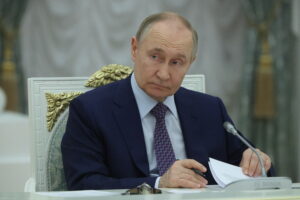
April 2015, Volume 26, Issue 2
A review of Putin’s Kleptocracy: Who Owns Russia? by Karen Dawisha.

January 2022, Volume 33, Issue 1
Whether democracy regains its footing will depend on how democratic leaders and citizens respond to emboldened authoritarians and the fissures within their own societies.
July 2007, Volume 18, Issue 3
The Editors’ introduction to the first of two clusters on “The Democracy Barometers.”
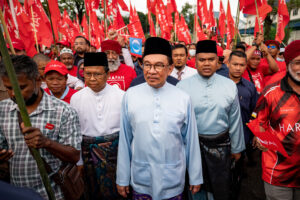
The democratic icon’s path to prime minister has been tortuous and long. But is Malaysia’s pluralism slipping away precisely when Anwar is getting his shot to lead the nation? | Sophie Lemière
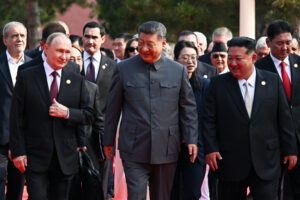
America’s promotion of democracy has always been highly imperfect. But the superiority of democracy—and the ideas that animate it—make it essential to securing America’s future.
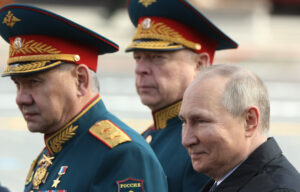
The Russian autocrat forgot an age-old truth about working with common criminals and soldiers for hire.

The African National Congress can no longer call all the shots, and opposition parties will have more sway. Will this lead to a more inclusive democracy or gridlock and division?
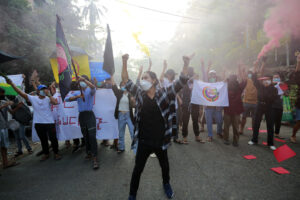
Burma’s democratic resistance has made impressive gains against the country’s corrupt junta. But they need help from the world’s democracies if they are to succeed and create an enduring peace.

The economy is spiraling, public frustration is mounting, and the regime is becoming more repressive. The next time Egyptians come to the streets, they will be looking for more than promises and free elections.