

April 2019, Volume 30, Issue 2
Confronting Authoritarianism
In May 2018, the people of Malaysia transcended distinctions of class, religion, and ethnicity in order to vote for democracy and reform against a long-ruling party riddled with corruption.
3272 Results
April 2019, Volume 30, Issue 2
In May 2018, the people of Malaysia transcended distinctions of class, religion, and ethnicity in order to vote for democracy and reform against a long-ruling party riddled with corruption.
July 2008, Volume 19, Issue 3
Read the full essay here. Political Islam is often cited as the key challenge to democratization in Muslim nations, but deep currents of authoritarianism may prove more of an obstacle. Traditions of monarchy, military rule, and weak civic institutions block the path of democratic transition throughout the Muslim world. Political Islam does of course present…
October 2003, Volume 14, Issue 4
The principled separation of religious from political claims upon which Indian democracy depends may not be dead, but it is ailing badly. How did things reach this pass, and what is the prognosis for recovery?
April 2002, Volume 13, Issue 2
Argentina made headlines around the world last December as its presidency changed hands no fewer than four times in less than two weeks. Lost amid the chaos, however, were hopeful signs that the country has now turned the corner of democratic consolidation.

October 2018, Volume 29, Issue 4
What factors help a democracy to survive a crisis? A study of cases in which democracy suffered a steep decline, yet ultimately recovered and endured, offers new insights. In moments of crisis, unelected and nonmajoritarian actors can play a pivotal role.
July 2022, Volume 33, Issue 3
The more determined democracies are to avoid war, the greater the risk that autocracies will wage it.
April 2022, Volume 33, Issue 2
The country’s struggles with crime and corruption led many to tag it as a near-failed state. Yet the Rainbow Nation is in fact an unexpected success story, with a political landscape that is growing more vibrant and diverse.
July 2019, Volume 30, Issue 3
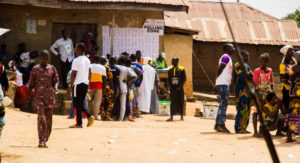
Election officials made strides toward secure voter identification, and a two-party system appears to be emerging, but the 2019 elections revealed continuing problems with vote-buying and violence.
April 2019, Volume 30, Issue 2
The Chinese Communist Party wields highly effective means to quash dissent, but Chinese intellectuals and interest groups continue to push for change.
April 2019, Volume 30, Issue 2
Spain’s system of Autonomous Communities had functioned fairly smoothly for decades following the country’s democratic transition, but events in Catalonia are putting it under unprecedented strain.
April 2017, Volume 28, Issue 2
Two of the Arab world’s more liberal regimes, the kingdoms of Jordan and Morocco, are sometimes said to be evolving toward democracy. Is this true, and what are the longer-term prospects for these two monarchies?
January 2017, Volume 28, Issue 1
This sparsely populated, landlocked country sandwiched between much larger authoritarian neighbors has nonetheless managed to maintain a fairly robust democracy. The secret lies in its energetic civil society.
October 2016, Volume 27, Issue 4
Post-1945 Western Europe benefited greatly from center-left parties offering real solutions to real problems. Where has that left gone?
January 2014, Volume 25, Issue 1
Improving governance in the EU’s new member states remains a huge challenge for the European project. Why has the EU succeeded in promoting democracy among its postcommunist members but failed in promoting good governance?
October 2012, Volume 23, Issue 4
The “Arab Spring” has been very hard on autocratic presidents but so far has left the Arab world’s monarchies intact. How and why have Arab royals been able to resist the tide of protest?
April 2012, Volume 23, Issue 2
Does recourse to the ballot box spur violence and instability in the world’s poorest countries? Despite the worries of modernization theorists such as Paul Collier, the evidence indicates that, over time, elections are not associated with higher levels of political violence.
April 2011, Volume 22, Issue 2
In late 2010, not long before seismic political change was to erupt across the Middle East, Jordan held parliamentary elections. Officials were eager to present these as a fresh start, but a closer look tells a different tale.

July 2024, Volume 35, Issue 3
Voters in democratic countries often favor political candidates whose relatives were in office before them. When citizens can choose anyone, why in so many of the world’s democracies do they opt for political dynasties?
July 2007, Volume 18, Issue 3
For more than two decades, President Yoweri Museveni has been building an authoritarian regime that answers closely to his personal will.
October 2006, Volume 17, Issue 4
Over the past decade, a series of "electoral revolutions" has taken place from Slovakia to Kyrgyzstan. Why has this path to democratization been especially common in the postcommunist region?