
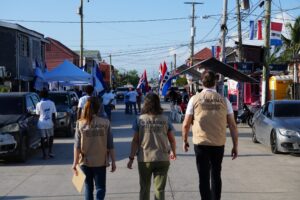
Why Election Observers Are Human-Rights Defenders
Election observers are the first line of defense for democratic rights and freedoms, and they work in some of the most challenging places. They deserve the same protections as human-rights defenders.
3272 Results
Election observers are the first line of defense for democratic rights and freedoms, and they work in some of the most challenging places. They deserve the same protections as human-rights defenders.
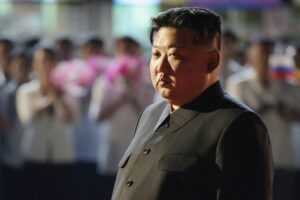
South Korea is about to elect a new president. North Korea has changed in recent years. Seoul’s approach to the Kim regime must change to reflect new risks — and Korea’s democratic strength.

El Salvador’s Nayib Bukele may be overwhelmingly popular, but he wasn’t going to let his electoral ambitions hinge on being well-liked. Instead, he rigged the playing field before the first vote was cast.
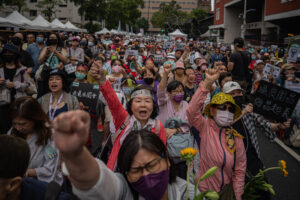
China’s efforts to sway the Taiwanese people with conspiracy theories and lies are starting to resonate, undermining their faith in democracy and deepening polarization. In a new Journal of Democracy online exclusive, Tim Niven argues that defending against China’s information war will require tireless resistance from the whole of society.

The country’s military brass has a larger role governing Mexico than at any time in the past eighty years. It’s creating a dangerous dependency that won’t be easy to break. Can the generals be reined in?
Reports on elections in Botswana, Bulgaria, Georgia, Ghana, Lithuania, Mauritius, Moldova, Mozambique, Namibia, Palau, Romania, Senegal, Sri Lanka, Uruguay, and Uzbekistan.

Ecuador’s presidents have a history of asking the public to back their initiatives rather than building political coalitions to accomplish their goals. The country’s current president is no different — and it comes at a high cost.
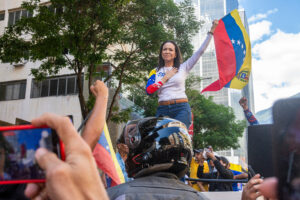
María Corina Machado’s Nobel Peace Prize has made her the face of the struggle for democracy in Venezuela. But throughout the opposition, women are the backbone of the fight against Nicolás Maduro’s corrupt authoritarian regime.
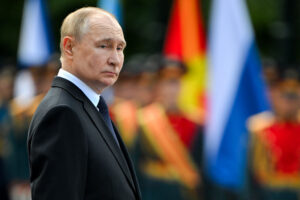
Monday, February 24, marks the third anniversary of Russia’s full-scale invasion of Ukraine. Hundreds of thousands have been wounded or killed, Ukrainian arsenals are drained, and Western allies are divided. Even so, Putin’s effort to stir support for his war has fallen flat. New evidence shows that the Russian people don’t support the fight.
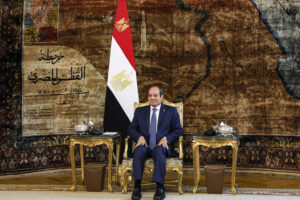
What might the sudden collapse of Syria’s dictatorship mean for Egypt? As Shady ElGhazaly Harb explains in a new Journal of Democracy online exclusive, the military — long Sisi’s strongest backer — may now be more tempted to turn against the autocrat.

The popular Chinese-owned app is enabling Beijing to collect data on people nearly everywhere. Not only can such platforms track people’s preferences and whereabouts, but they give the Chinese government control over a powerful tool for shaping people’s worldview.

By choosing Javier Milei, Argentinian voters didn’t just reject the status quo. They have sent their country hurtling in an unknown direction.
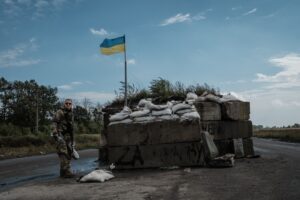
Two years ago, Vladimir Putin launched an unprovoked full-scale invasion of Ukraine. Hundreds of thousands have been wounded or killed in this war of attrition. The following Journal of Democracy essays reveal the impulses that led Putin to launch this brutal campaign and the resilience of those fighting to stop him.
JoD editorial board member and Forum research council member Ivan Krastev asks if democracy can survive without popular trust in elected leaders in In Mistrust We Trust.
February 5, 2013
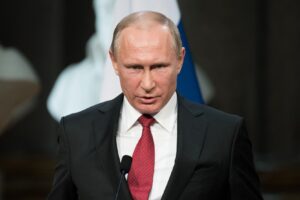
In a matter of weeks, the Russian autocrat has erased his country’s prosperity in a feckless attempt to rebuild a doomed empire.
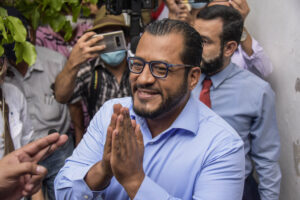
Economic freedom is one of a tyrant’s first targets. My family and I have experienced this firsthand. But tools like Bitcoin offer a lifeline for activists fighting repressive states.
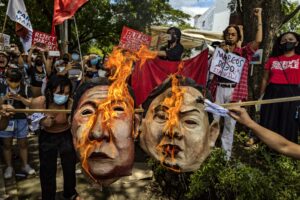
The May 2025 Philippine midterms are just the latest chapter in a yearslong feud between the Marcos and Duterte clans. These essays below plot the twists and turns of the political drama, and explain why it’s really a diversion from meaningful democratic reform.

The country’s 2024 presidential contest was a big surprise, as voters elected a new party for the first time. Despite decades of dominant-party rule, a strong democratic culture has long been ingrained in Botswana.