
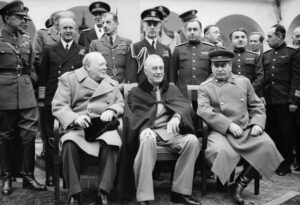
Democracy’s Most Dangerous Assumptions
It is tempting to believe the horrors of the past will not haunt our future. Vladimir Putin is proving that we hold such beliefs at our peril.
1256 Results
It is tempting to believe the horrors of the past will not haunt our future. Vladimir Putin is proving that we hold such beliefs at our peril.

Last month Rio’s police conducted the deadliest police operation in Brazil’s history, killing 117 people. It is one episode in a long history of state violence. Not only are such iron-fisted methods ineffective, they pose a danger for democracy itself.

For years, the Venezuelan opposition has fought hard against a corrupt regime — and come up short. But this time, with four key ingredients in place, we are on the cusp of a historic victory.

Authoritarians weaponize LGBT+ rights to undermine pluralism and cement their rule. Can democracy still protect and advance these rights? Read about how LGBT+ rights have been both expanded and resisted around the world, and offer ideas for how democracies can defend them.
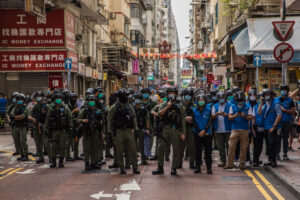
On November 19, a Hong Kong court sentenced 45 prominent prodemocracy activists to years in prison in the biggest crackdown yet under the city’s draconian, Beijing-imposed National Security Law. The Journal of Democracy essays below, free for a limited time, detail Hong Kong’s decades-long fight for freedom, and the CCP’s unrelenting repression.

“As U.S. military assets accumulate in the Caribbean and diplomatic pressure on the Nicolás Maduro regime intensifies,” writes José Ramón Morales-Arilla in a new Journal of Democracy online exclusive, “two starkly different visions of Venezuela’s future dominate policy discussions.”

Moscow and China pose a great danger to the democratic world. But they pose threats that need to be managed, not won. Every great foreign-policy battle doesn’t end with a decisive victory.
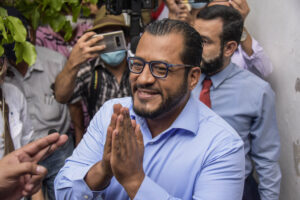
Economic freedom is one of a tyrant’s first targets. My family and I have experienced this firsthand. But tools like Bitcoin offer a lifeline for activists fighting repressive states.
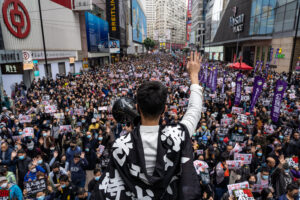
What are the true lessons from Tiananmen Square? Why does nonviolent resistance offer the best chance of challenging the CCP? Hu Ping, a leading Chinese dissident, reflects on the mistakes that were made and what it will take to succeed next time.
The ten most-read online exclusives this year focused on the Russia-Ukraine war as well as events in China, Iran, Western Europe, and Latin America.
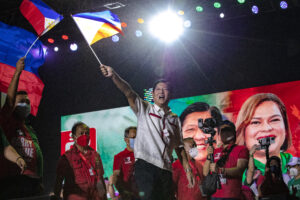
The struggle between the Marcos and Duterte clans isn’t just a battle between two houses. It is becoming a proxy fight between the United States and China for the future of the Indo-Pacific.

Marine Le Pen has remade her image to obscure her far-right populism. There is a real risk French voters won’t see through it.

The Mexican military has a larger role governing the country than at any time in the past eighty years. The following Journal of Democracy essays uncover and analyze the democratic and antidemocratic forces at work within Mexico’s institutions.

Coups are a direct assault on democracy. And militaries can be pivotal to whether a coup succeeds or fails. The following Journal of Democracy essays examine what makes coups more likely, and how democracies can keep the military brass from seizing power.
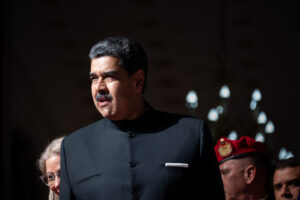
The strongman lost in a landslide, and the Venezuelan people are paying the price.
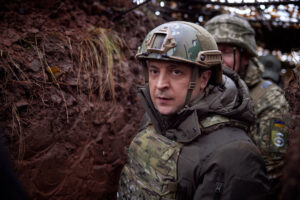
The war in Ukraine, stolen elections, student revolutions, and the climate crisis: The latest issue of the Journal of Democracy offers incisive analysis and illuminating debates on some of today’s biggest challenges.
What explains democracy’s declining fortunes — governments’ failure to deliver or institutions’ failure to stop power-hungry leaders? Why Ukraine’s defeat would jeopardize the entire liberal-democratic order. And how Syria must navigate the complexities of transitional justice and sectarian violence now that the hard work of rebuilding has begun.
Reports on elections in Azerbaijan, Belarus, Finland, Indonesia, Iran, Pakistan, Portugal, Russia, and Zimbabwe.
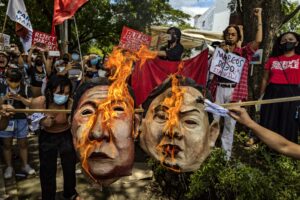
Strongman nostalgia, conspiracy theories, and lies. It’s a powerful blend that keeps populists in power. In the Philippines, political clans have weaponized these messages against each other.