
October 2004, Volume 15, Issue 4
The “Alteration Effect” in Africa
Surveys show that Africans’ commitment to democracy fades over time, but also that their support can be refreshed by alternations in power via elections.
2494 Results
October 2004, Volume 15, Issue 4
Surveys show that Africans’ commitment to democracy fades over time, but also that their support can be refreshed by alternations in power via elections.
July 2004, Volume 15, Issue 3
As 2004 began, Afghanistan approved a new constitution that represents a key step forward in its political reconstruction. But it is not yet clear whether this new constitution will enable the country to surmount the many challenges that lie ahead.
July 2004, Volume 15, Issue 3
Russia's liberal-democratic parties have failed. It is time for a new movement that can gain the trust of the Russian people by putting forward a full reform program based on liberal and democratic principles.
July 2004, Volume 15, Issue 3
Since the end of the Cold War, Central America has seen a regionwide diminution of military influence that bodes well for democratic governance and healthier civil-military relations.
April 2004, Volume 15, Issue 2
Long wary of the modern state as such, the Roman Catholic church became a champion of democratic government around the time of Vatican II, and helped to set off the Thrird Wave of democratization.
April 2004, Volume 15, Issue 2
That modern democracy first arose with the ambit of Western Christianity is far from an accident. Today, the major Christain communions largely support democracy, even while necessarily retaining the right to criticize democratic decisions in the name fo religious truth claims.
January 2004, Volume 15, Issue 1
One of the most important events in post-Cold War international affairs, NATO enlargement is even more of a democratic milestone for the countries of Eastern Europe than is the expansion of the EU.
January 2004, Volume 15, Issue 1
The fall of the Berlin Wall gave East Europeans a euphoric sense that they were about to give European democacy a new direction. But as many of their countries prepare to join the EU, little has worked out as expected in those heady days.
April 2003, Volume 14, Issue 2
Decentralization, heralded as a means of increasing state efficiency and improving representation, has fragmented Latin America’s already weak party systems
April 2003, Volume 14, Issue 2
The recent election of political outsider Lula da Silva as president is a sign of hope for the future of democracy in Brazil.
January 2003, Volume 14, Issue 1
The Chinese state is much weaker than most people realize, which bodes ill for the country’s democratic prospects.
January 2003, Volume 14, Issue 1
Holding regular, free elections may not be enough to stop turbulence that threatens both the quality of democracy and the coherence of the state.
October 1999, Volume 10, Issue 4
Post-apartheid South Africa’s democratic quest resembles a good thriller–just as the plot seems clear, a twist appears in the tale.

October 2024, Volume 35, Issue 4
When an epidemic of Koran burnings swept Denmark and Sweden, the Danish government criminalized the practice. It is a misguided response that misses the opportunity to protect both minorities and the right to free speech.

July 2020, Volume 31, Issue 3
Although South Korea is praised for its success at fighting covid-19, the triumph came at a cost to rights and privacy, and is drawing attention away from a larger drift toward illiberalism and bitterly factionalized politics.
April 2025, Volume 36, Issue 2
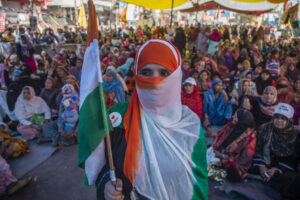
The ruling BJP has long sought to sideline Indian Muslims. But even the opposition is opting to exclude them politically. Muslims’ chances at greater representation remain dim.
April 2025, Volume 36, Issue 2
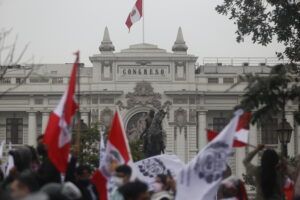
Democratic backsliding is usually seen as something driven by presidents, but under certain circumstances elected legislatures can cause it, too. Legislative hegemony is a growing danger.
July 2025, Volume 36, Issue 3
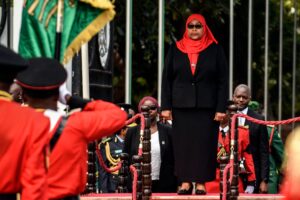
President Samia Suluhu Hassan came into office promising democratic reforms. Four years later, it is clear she is more of a performer than a reformer. Far from delivering on her promises to unwind Tanzania’s authoritarian machinery, she is relying on the repressive tools we know so well.

July 2012, Volume 23, Issue 3
In Hungary’s 2010 general elections, Fidesz won 68 percent of the seats in parliament—allowing it to impose a wholly new constitutional order.
April 2008, Volume 19, Issue 2
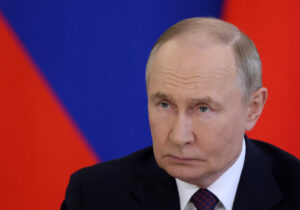
Just as Russia's leaders pretend that they are ruling over a democracy, they also pretend that they are ruling over an empire.