2116 Results

Miami Times Black Wall Street March 11 2025 article opening quote

April 2000, Volume 11, Issue 2

Women in East European Parliaments

A major question in the consolidation of Eastern Europe’s new democracies is whether women will participate fully in the political process. One key indicator is the representation of women in the region’s parliaments.

July 1998, Volume 9, Issue 3

Documents on Democracy

Excerpts from: imprisoned Chinese dissident Wang Dan’s first press conference; the Declaration of Santiago; “Strategic Initiatives of the Federal Republic of Yugoslavia: Fundamentals for a New Beginning”; speeches on “Human Rights and Asian Values” given at the 54th session of the UN Commission on  Human Rights; a postelection statement by Martin Lee, leader of the…

Free

January 2017, Volume 28, Issue 1

Turkey: How the Coup Failed

When parts of the Turkish military attempted a coup in July 2016, the competitive authoritarian AKP regime was able to bring both its competitive and its authoritarian features to bear, stopping the coup and launching a crackdown.

July 2008, Volume 19, Issue 3

The Crisis in Kenya

For years Kenya was regarded as one of Africa’s sturdiest democracies. The fraudulent 2007 presidential election, however, exposed the fragility of Kenya’s democratic framework.

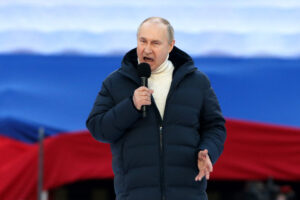
Why Putin’s Days Are Numbered

The system that Russia’s autocrat built wasn’t designed to survive the pressures it is now facing. March 2022  By Vladimir Milov The world’s attention is focused on the immense suffering of the brave Ukrainian people, and rightly so—no words can describe the misery and damage that Vladimir Putin has inflicted upon Ukraine with his unprovoked…

October 2010, Volume 21, Issue 4

Election Watch

Reports on elections in Burundi, Colombia, Ethiopia, Guinea, Philippines, Poland, Rwanda, São Tomé and Príncipe, Slovakia, and the Solomon Islands.

July 2012, Volume 23, Issue 3

Documents on Democracy

Excerpts from: former Senegalese president Abdoulaye Wade’s concession speech; newly elected Senegalese president Macky Sall’s first national address; the Ottawa Declaration on Tibet issued on April 29 at the conclusion of the Sixth World Parliamentarians Convention on Tibet.

Privacy Policy

Who we are Our website address is: https://www.journalofdemocracy.org. What personal data we collect and why we collect it Comments When visitors leave comments on the site we collect the data shown in the comments form, and also the visitor’s IP address and browser user agent string to help spam detection. An anonymized string created from…

January 2011, Volume 22, Issue 1

Constraining Government Power in Africa

African politics is often characterized as a realm of “informality,” but formal rules and institutions actually loom large, especially with regard to overweening executive power and the reforms that may help to rein it in.

Botswana’s Misunderstood “Miracle”

The country’s 2024 presidential contest was a big surprise, as voters elected a new party for the first time. Despite decades of dominant-party rule, a strong democratic culture has long been ingrained in Botswana.

Free

July 2014, Volume 25, Issue 3

Gay Rights: Why Democracy Matters

The year 2013 featured unprecedented strides for gay rights in some parts of the world, particularly in Western Europe and the Americas, but also startling setbacks elsewhere, as in Russia and some countries in Africa.

October 2017, Volume 28, Issue 4

Iran’s 2017 Election: Waning Democratic Hopes

Wrongly viewed by many media sources as a victory for “reform” and “openness,” the recent presidential election in Iran actually reflected the demoralization and disengagement of the country’s prodemocratic opposition.

October 2020, Volume 31, Issue 4

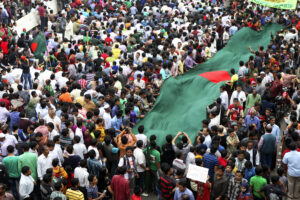
The Bangladesh Paradox

Despite impressive achievements in socioeconomic development, Bangladesh has struggled with establishing democracy and is now effectively under one-party rule.

October 2024, Volume 35, Issue 4

Liberal Democracy in an Age of Immigration

Immigration threatens to erode liberalism, as far-right parties and migrant communities with illiberal views gain power. Mass publics have shouldered the blame. But should political elites be held responsible?