
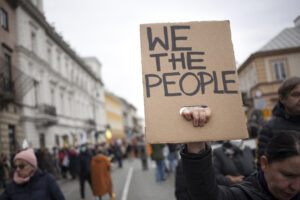
Can There Be Democracy Without Liberalism?
In a new online exclusive, Journal of Democracy cofounder Marc Plattner examines both what unites and distinguishes liberalism and democracy — and what liberal democracies must do to remain free.
2893 Results
In a new online exclusive, Journal of Democracy cofounder Marc Plattner examines both what unites and distinguishes liberalism and democracy — and what liberal democracies must do to remain free.
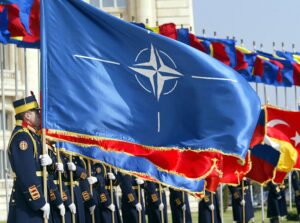
For 75 years, NATO has played a crucial role in defending democracy across the West. The following Journal of Democracy essays track NATO’s role in supporting democracy’s fight against autocracy.
Larry Diamond, the leading scholar of democracy, helped to found the Journal of Democracy more than 32 years ago. “Democracy’s Arc: From Resurgent to Imperiled,” published on the eve of the war in Ukraine, was his final essay as our coeditor. But Larry penned numerous pieces for the Journal. Ten of these landmark essays are…
As political polarization deepens in the world’s democracies, political violence is on the rise. And in the wake of these acts, conspiracy theories often bloom. We offer three essays that look at these forces that threaten to upend democracy, and what must be done to overcome them.
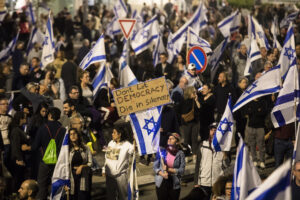
Prime Minister Benjamin Netanyahu’s plan to overhaul the country’s judiciary has sparked unprecedented protests across Israel. Two experts explain the roots of the crisis and what it could mean for the future of Israeli democracy.
Pulitzer-Prize winning historian and Journal of Democracy editorial board member Anne Applebaum delivered the 19th Annual Seymour Martin Lipset Lecture, and then sat down for a conversation with Journal coeditor William J. Dobson. Read more here.
December 1, 2022
We have long assumed democracy and liberalism went hand in hand. But in truth there have always been tensions between them, and the rise of illiberal democracy cannot be ignored.

The attack on Donald Trump is one of the worst instances of political violence in recent years. Such violence is the result of a moment in which people begin to see their political opponents as enemies instead of citizens of a different political stripe.
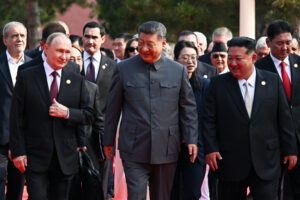
America’s promotion of democracy has always been highly imperfect. But the superiority of democracy—and the ideas that animate it—make it essential to securing America’s future.
For background on Ghana, read “Oil, Politics, and Ghana’s Democracy” in the July issue of the Journal.
July 25, 2012
In "Vladimir Putin Is Bringing Back the 1930s," Washington Post columnist George Will discusses the Authoritarianism Goes Global: The Challenge to Democracy.
October 18, 2016
Defending Democracy in an Age of Sharp Power explores how authoritarian regimes are deploying “sharp power” to undermine democracies from within by weaponizing universities, institutions, media, technology, and entertainment.
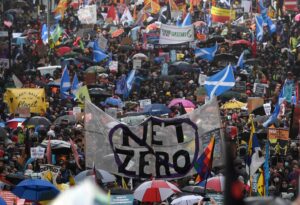
Climate change poses a grave and urgent threat to the entire planet. The consequences — natural disasters like the Los Angeles wildfires, rising food insecurity, violent conflict, increased migration — are intensifying before our eyes. How can we confront these challenges? Are “eco-authoritarian” responses the best way forward, or is more democracy the answer?
In a year marked by high political drama, economic unrest, and rising assaults on democracy, we at the Journal of Democracy sought to provide insight and analysis of the forces that imperil freedom. Here are our 10 most-read essays of 2021.
The Times of India‘s Neelam Raja interviewed JoD coeditor Will Dobson about the 5-essay package on the state of Indian democracy in the July issue of the Journal of Democracy.
JoD editorial board member and Forum research council member Ivan Krastev asks if democracy can survive without popular trust in elected leaders in In Mistrust We Trust.
February 5, 2013

Romania is the latest example of rising far-right populism across Europe. The essays below examine the forces driving these illiberal political movements.
The biggest election in this “year of elections” is finally over. In contests across the world, voters have spoken. But what do their choices tell us about the state of democracy globally?