
October 2014, Volume 25, Issue 4
India’s Watershed Vote: The Risks Ahead
Will the Modi government focus on the economy, or will it seek to implement a transformational Hindu-nationalist agenda?
2195 Results
October 2014, Volume 25, Issue 4
Will the Modi government focus on the economy, or will it seek to implement a transformational Hindu-nationalist agenda?
January 2006, Volume 17, Issue 1
Whether ethnic, sectarian, or some combination of the two, communalsim is one of the massive realities of Middle Eastern life and politics. It is usually seen as an obstacle to democracy, but need that always be the case?
Russia’s dictator lives in fear. He knows the Russian people don’t support him. He can’t even muster a street rally without bribes or threats. No number of fake elections will change that.
April 2011, Volume 22, Issue 2
In late 2010, not long before seismic political change was to erupt across the Middle East, Jordan held parliamentary elections. Officials were eager to present these as a fresh start, but a closer look tells a different tale.
April 2019, Volume 30, Issue 2
Reports on elections in Bangladesh, Comoros, Democratic Republic of Congo, El Salvador, Estonia, Guinea-Bissau, Madagascar, Moldova, Nigeria, Senegal, and Togo.
April 2014, Volume 25, Issue 2
After a decade of upheavals, Nepal elected in November 2013 its Second Constituent Assembly, but it is still unclear whether elites will accept reforms that empower wider sections of society.
October 2003, Volume 14, Issue 4
Four years after his bloodless coup, Pervez Musharraf is executing a military “exit strategy” from politics that involves lots in the way of problematic strategy and little in the way of real exit from political power.


January 2019, Volume 30, Issue 1
Chinese authorities are wielding facial-recognition software, big-data analytics, and other digital technologies to control China’s citizens by monitoring and assessing their activities, both online and off.
October 1993, Volume 4, Issue 4
A review of The New Cold War? Religious Nationalism Confronts the Secular State, by Mark Juergensmeyer.
Spring 1990, Volume 1, Issue 2
Reports on elections in Brazil, Chile, Costa Rica, Grenada, Nicaragua, the Union of Soviet Socialist Republics, and Zimbabwe.

The regime tilted the playing field to its advantage, but it didn’t matter. Thailand’s opposition won with creativity, shrewd tactics, and a strategy that united the people. | Srdja Popovic and Steve Parks

April 2021, Volume 32, Issue 2
China’s fast economic rise has not dented its dictatorship, but Xi Jinping’s neo-Stalinist strategy has unleashed new challenges and tensions for the Communist Party’s long-term prospects for survival.
April 1998, Volume 9, Issue 2
Excerpts from: remarks and homily of Pope John Paul II given during his visit to Cuba; South Korean president Kim Dae Jung’s inaugural address.
July 2015, Volume 26, Issue 3
A review of The Nature of Asian Politics by Bruce Gilley.
January 2016, Volume 27, Issue 1
The surprising electoral defeat of President Mahinda Rajapaksa in January 2015 was reinforced by his failed comeback in August parliamentary elections.
April 2010, Volume 21, Issue 2
The 2009 electoral victories of Indonesia’s incumbent president Susilo Bambang Yudhoyono (SBY) and his party reveal a growing sophistication among the electorate and a robust presidency, but also a dangerously weak, highly personalistic party system.
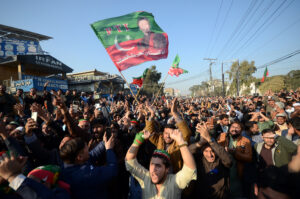
The country’s polls were marred by delayed results and charges of rigging. Worse, they might plunge Pakistan into an even deeper political crisis.