
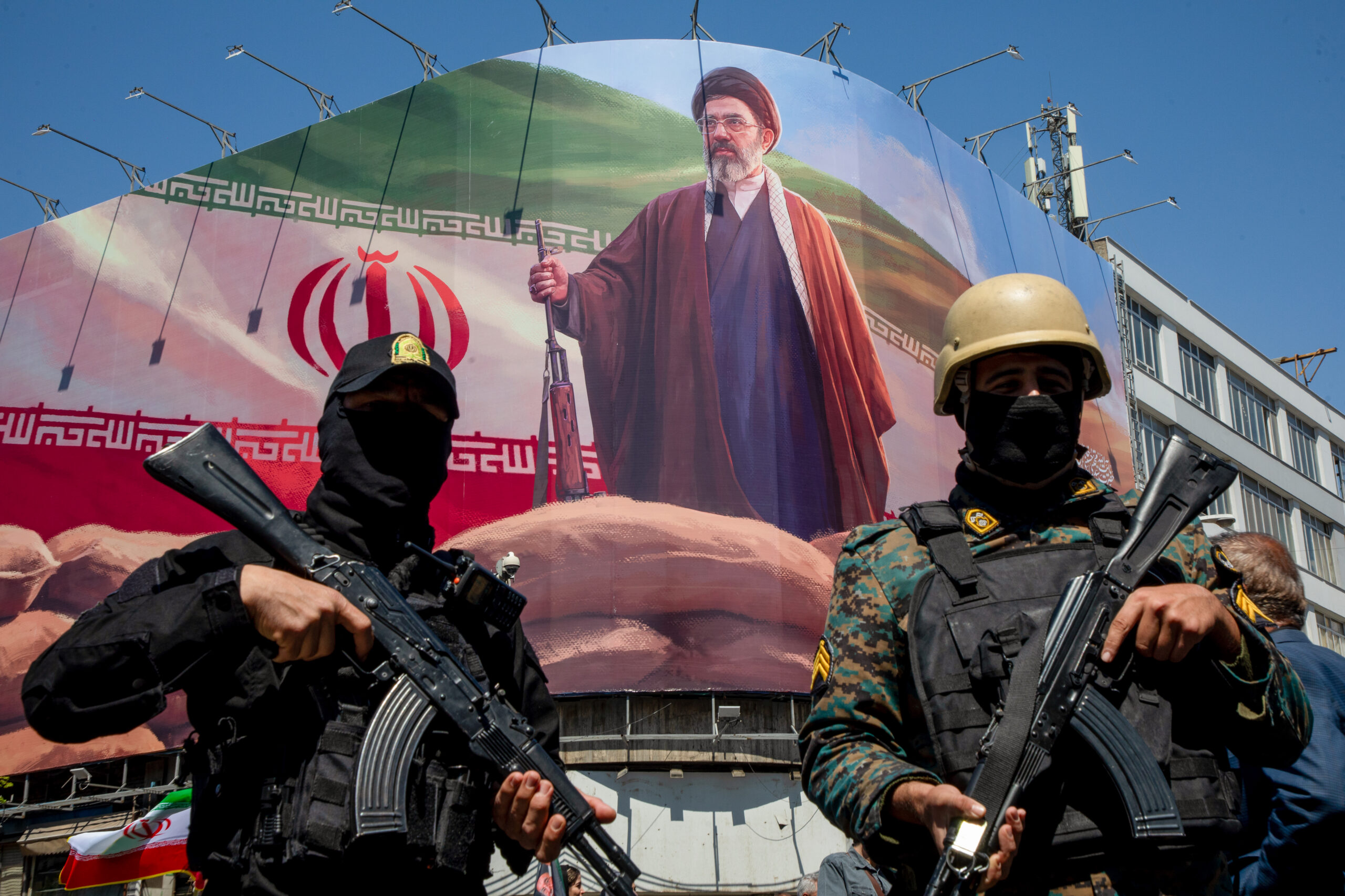
If one of the goals of the war was to decimate the Islamic Revolutionary Guard Corps, it has had the opposite effect. The IRGC will come out of the conflict stronger and more embedded in Iranian politics.
By Roya Izadi
April 2026
As the war with Iran enters its second month and amid a tenuous ceasefire, there is little indication that the Iranian government is near collapse. The United States’ aim to decimate Iran’s Islamic Revolutionary Guard Corps (IRGC) is producing the opposite effect. In fact, the IRGC is likely coming out of the war stronger and more embedded within Iranian politics and society. Despite the killing of many senior leaders through sustained airstrikes, the IRGC remains combat-effective and, in critical ways, is becoming more entrenched. The U.S. war with Iran will likely militarize Iranian politics by concentrating power in coercive institutions and military figures. This is an outcome that the institutions of the Islamic Republic had long managed to avoid.
The Islamic Republic’s Balance of Power
Even as the IRGC’s importance grew over the years, it never dominated Iran’s domestic politics. In fact, the system was deliberately built to keep the armed forces out of politics. The IRGC originated as a loose coalition of militant groups formed in the aftermath of the 1979 revolution, expanded in size and capacity during the Iran-Iraq War, and became Iran’s second military besides the conventional armed forces (Artesh). The IRGC was not intended to play a formal role in domestic politics; rather, it was tasked with safeguarding the state against internal and external threats, contributing to postwar reconstruction through building infrastructures in rural and underdeveloped areas of the country, and overseeing key strategic capabilities such as Iran’s missile program.
Both Ayatollah Khomeini and Ayatollah Khamenei kept the armed forces institutionally subordinate, excluded from key civilian decisionmaking bodies, barred from entering or manipulating elections, and largely confined to defense roles and security decisions. Power in Iran has long been fragmented across competing civilian institutions. Khomeini and Khamenei explicitly warned the IRGC and the Artesh to stay out of politics, and both leaders publicly spoke out against the military becoming politically involved in state matters at least thirteen times in total between 1979 and 2014.
That position was backed by formal rules barring military personnel from factional and electoral activity. Under the 1979 Constitution, the armed forces were formally placed under civilian authority, including that of the president, the cabinet, and the supreme leader. Any interference, participation, or activity by personnel of the armed forces in political factions, political disputes, or electoral campaigning was prohibited and constituted a criminal offense resulting in imprisonment. For much of the Islamic Republic’s history, governance ran primarily through civilian institutions. The IRGC has been unquestionably important. It fought the Iran-Iraq War, protected the government, and later expanded into reconstruction and major economic projects that helped it accumulate influence and evade civilian control. However, the IRGC’s role in politics remained limited, contested, and uneven.
At certain points, such as the 2004 seizure of Imam Khomeini airport, and especially during the Mahmoud Ahmadinejad presidency (2005–13), the IRGC gained momentum and became more involved in economic policymaking and electoral politics, but such involvements were uneven and faced meaningful pushback. Former IRGC commanders were selected as cabinet members. The IRGC later was accused of electoral involvement by presidential candidates in 2005 and 2009, particularly through media outlets affiliated with the force that supported hardline candidates. However, this was accompanied by warnings and a formal directive issued by the supreme leader, according to which all armed forces and security agencies were barred from partisan electoral activity or supporting specific candidates. Again, in March 2017, Khamenei reiterated that he would block any attempts to interfere in the presidential election and emphasized that the results must be respected regardless of faction. Ayatollah Ali Khamenei largely maintained a balance of power across civilian institutions and kept the IRGC in check. Even President Hassan Rouhani (2013–21) pushed back against the IRGC’s political involvement. In a June 2017 speech for example, he stated that the IRGC should “focus on their duty, which is ensuring security, and refrain from intervening in partisan affairs and ‘political games.’”
To be sure, the IRGC had accumulated significant economic and political influence over time, particularly in shaping key security decisions such as the nuclear and missile programs. However, Iran was never an “IRGC state.” Its political order has historically been structured by civilian institutions that constrained the military, even as those constraints have eroded in recent years. But the U.S.- Israeli war with Iran will go further in militarizing Iranian politics than anything we have seen within Iran itself.
War and the Militarization of Iranian Politics
A wartime environment empowers the military and expands its influence as security concerns are elevated above all else. When foreign military threats are high, political leaders and the public become more willing to defer to military expertise, grant broader authority, and tolerate a greater role for security institutions in decisionmaking. War also redirects resources toward defense and reduces space for civilian oversight, as survival takes precedence over institutional constraints. Over time, these shifts do not remain confined to national security and spill into politics. Signs of the militarization of politics in Iran are already visible.
Israel and the United States have assassinated key political figures who had long kept the institutions of the Islamic Republic under civilian rule. The killing of Ali Larijani, an experienced and key political figure who helped hold together competing factions within the Islamic Republic’s elite for decades, has created opportunities for more military-aligned leaders. One such figure is Mohammad Bagher Ghalibaf, a rising political player with close ties to the IRGC. Ghalibaf has previously sought the presidency and may emerge as a future contender with the backing of both the IRGC and Ayatollah Mojtaba Khamenei. Ghalibaf is also a key interlocutor in efforts to negotiate with the United States.
Mojtaba Khamenei’s close ties to the IRGC is another sign of the growing militarization of Iranian politics. Unlike previous leaders who balanced among competing institutions, Mojtaba’s rise has been tied to the support of the IRGC. There is suggestive evidence that Mojtaba Khamenei has built a strong base of support among more hardline factions of the IRGC. He has cultivated extensive ties within the Guard’s networks and acted as a conduit between the supreme leader’s office and the IRGC over the years. He is unlikely to act as a check on the IRGC in the same way his father did.
Next is the appointment of Mohammad Bagher Zolghadr, a former IRGC commander, as secretary of the supreme national security council. He replaces Ali Larijani, moving the position away from a figure associated with political mediation toward one rooted in the security apparatus. Zolghadr is a longtime hardliner with deep ties to the IRGC, and his appointment suggests a growing willingness to place military figures directly at the center of Iran’s decisionmaking apparatus.
Another sign of this shift is the expanding role of the IRGC’s Khatam al-Anbiya Central Headquarters (KCHQ). As civilian decisionmaking has weakened, the IRGC has increasingly stepped in to fill the gap and override civilian channels of communication. The KCHQ is an operational body responsible for coordinating joint military activity across Iran’s armed forces. As the conflict has intensified and senior figures have been killed, authority has increasingly flowed through this command structure. For example, Ebrahim Zolfaghari, Khatam’s spokesperson, has become a visible wartime figure, issuing daily videos directed at the United States and Israel. This is not a typical role for a military spokesperson and reflects how the line between military and civilian domains is blurring.
Finally, public clashes between the civilian leadership and the military point to military’s upper hand in decisionmaking. Following strikes in the region for example, President Masoud Pezeshkian issued an apology to neighboring countries, stating that “the armed forces were acting autonomously in the absence of their leadership.” The IRGC quickly pushed back and publicly criticized his statement. The criticism led Pezeshkian to issue another statement rescinding his apology. The episode shows a breakdown in civilian control and a growing willingness of the armed forces to openly challenge civilian rule.
Public Acceptance of Growing Militarization
The war is also militarizing politics by raising the Iranian public’s acceptance of the military’s role in political life. External existential threats intensify security concerns, which come to dominate public priorities and make the military’s involvement in policymaking appear more legitimate. In this context, militarization is reinforced from below through shifting public attitudes toward the appropriate role of the military in society. That such a shift could occur now is supported by evidence from the 2024 confrontation between Israel and Iran.
On 13 April 2024, Iran launched a direct missile attack on Israel in retaliation for the April 1 Israeli strike on the Iranian consulate in Damascus, which killed two senior Iranian generals. This marked the first open military confrontation between Iran and Israel. While the episode was far more limited than the current war, survey responses from before and after the attack show a clear shift in public attitudes. Iranians became more supportive of a greater political role for the IRGC and the Artesh.
In 2024, I ran a survey of 2,667 Iranian adults, conducted between February 20 and June 4. The survey is representative of Iranian adults by gender, age, education, income, and region. Respondents were asked to what extent they agree or disagree (on a scale from strong disagreement to strong agreement) with the following statement: “Increased involvement of IRGC/Artesh figures as political leaders is beneficial for the country.” The results suggest that after the April 13 attack, public opinion in Iran shifted significantly toward stronger support for a political role for both the IRGC and Artesh, but support for the IRGC’s political role was larger than support for the Artesh. On a scale from strong disagreement to strong agreement, the share who strongly opposed IRGC’s political role fell by 35 percentage points, while the share who agreed rose by 19 points and the share who strongly agreed increased by 17 points. In other words, when grouping responses more simply, support for a political role for the IRGC rose by roughly 35 percentage points. The pattern for the Artesh is similar, but less pronounced. Using the same scale, from strong disagreement to strong agreement, the share of respondents who strongly disagreed with a political role for the Artesh declined by about 8.5 percentage points. This is because the Artesh already enjoyed higher baseline support for a political role than the IRGC. But public opinion had moved significantly in favor of the IRGC.
In other words, although the conventional military began from a position of greater public acceptance, the confrontation produced a much stronger shift toward the IRGC. One important implication is that external conflict legitimizes more ideological and controversial forces like the IRGC and expands its political appeal even among a previously skeptical public.
If a short-lived confrontation in 2024 was enough to move public opinion toward the armed forces, the current war is likely to deepen that shift and entrench the political role of the IRGC.
Moreover, militarization is likely to persist even after the war ends. The conflict has already strengthened the political position of military leaders, and such gains are unlikely to be easily reversed. Indeed, many of those who have long demanded political change in Iran are now supporting the government in the face of foreign aggression. That support matters. The future of domestic stability in Iran will depend in large part on the nature of state-society relations. If the IRGC relies on a narrow support base, it is likely to face increasing challenges to its authority. By contrast, in the wake of the war, the government may be able to draw not only on the coercive power of the state but also on wider public support.
Roya Izadi is an Assistant Professor of Political Science at the University of Rhode Island, Director of the Security Forces, Rights, and Society Lab, and Associate Director of the Center for Nonviolence and Peace Studies. She is also a Research Associate at the Gender and Security Sector Lab at Cornell University.
Copyright © 2026 National Endowment for Democracy
Image credit: Majid Saeedi/Getty Images
|
FURTHER READING |
||
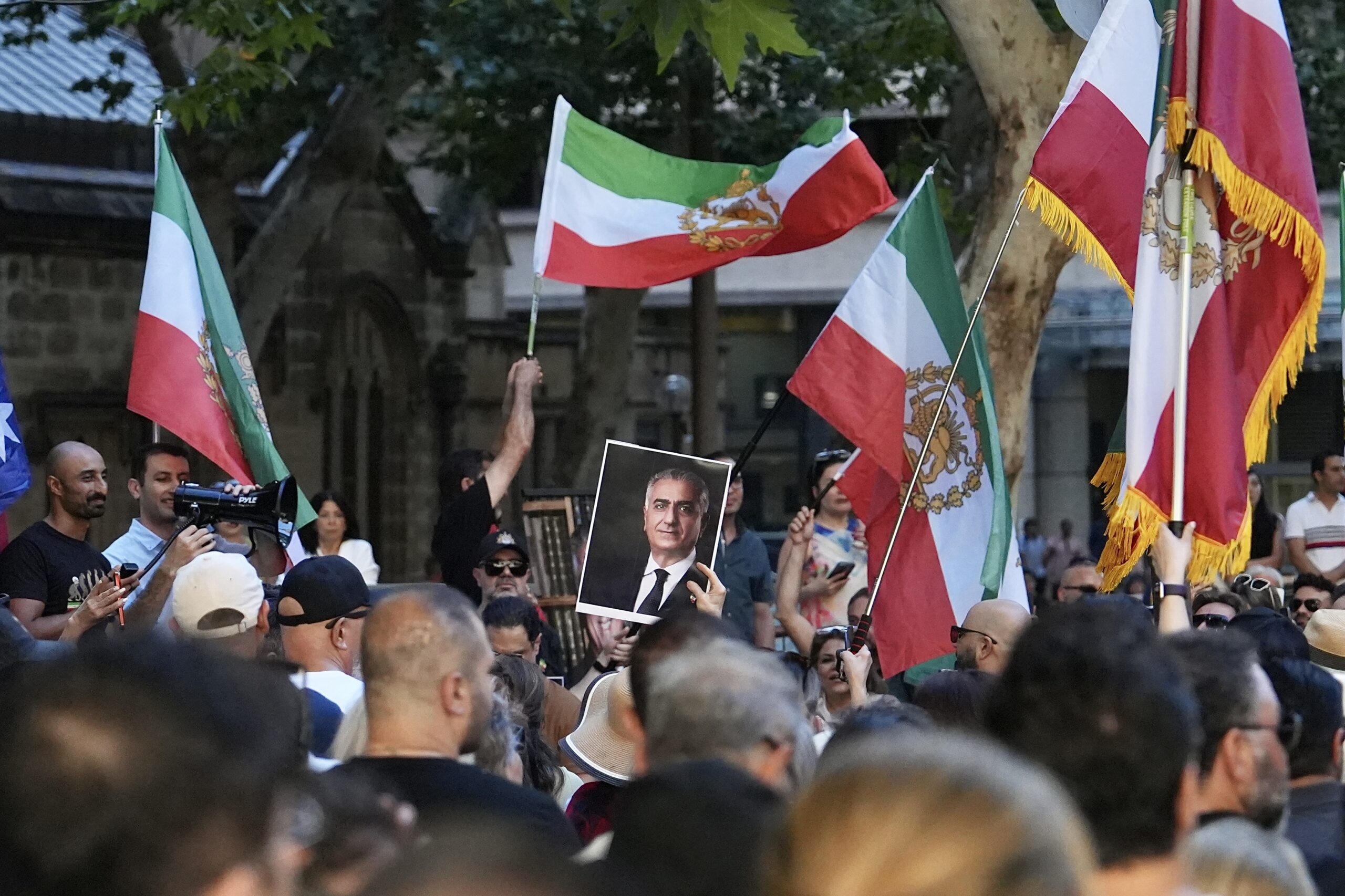
Iran’s Democratic Hopes Amid the Smoke of War |
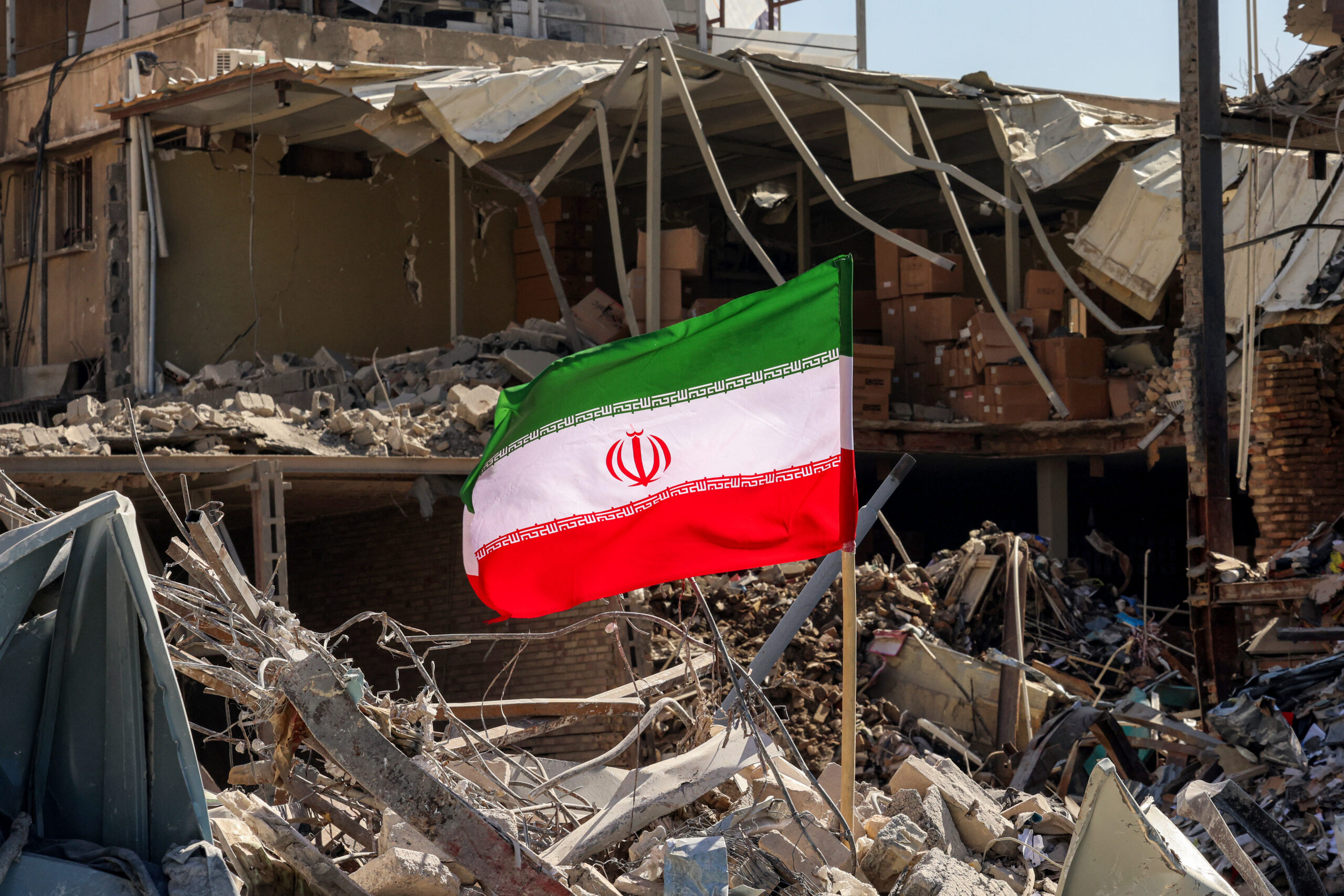
Why the Islamic Republic Still StandsAfter January’s mass protests, Iran seemed on the verge of revolutionary upheaval. How is it weathering the U.S.-Israeli assault? |
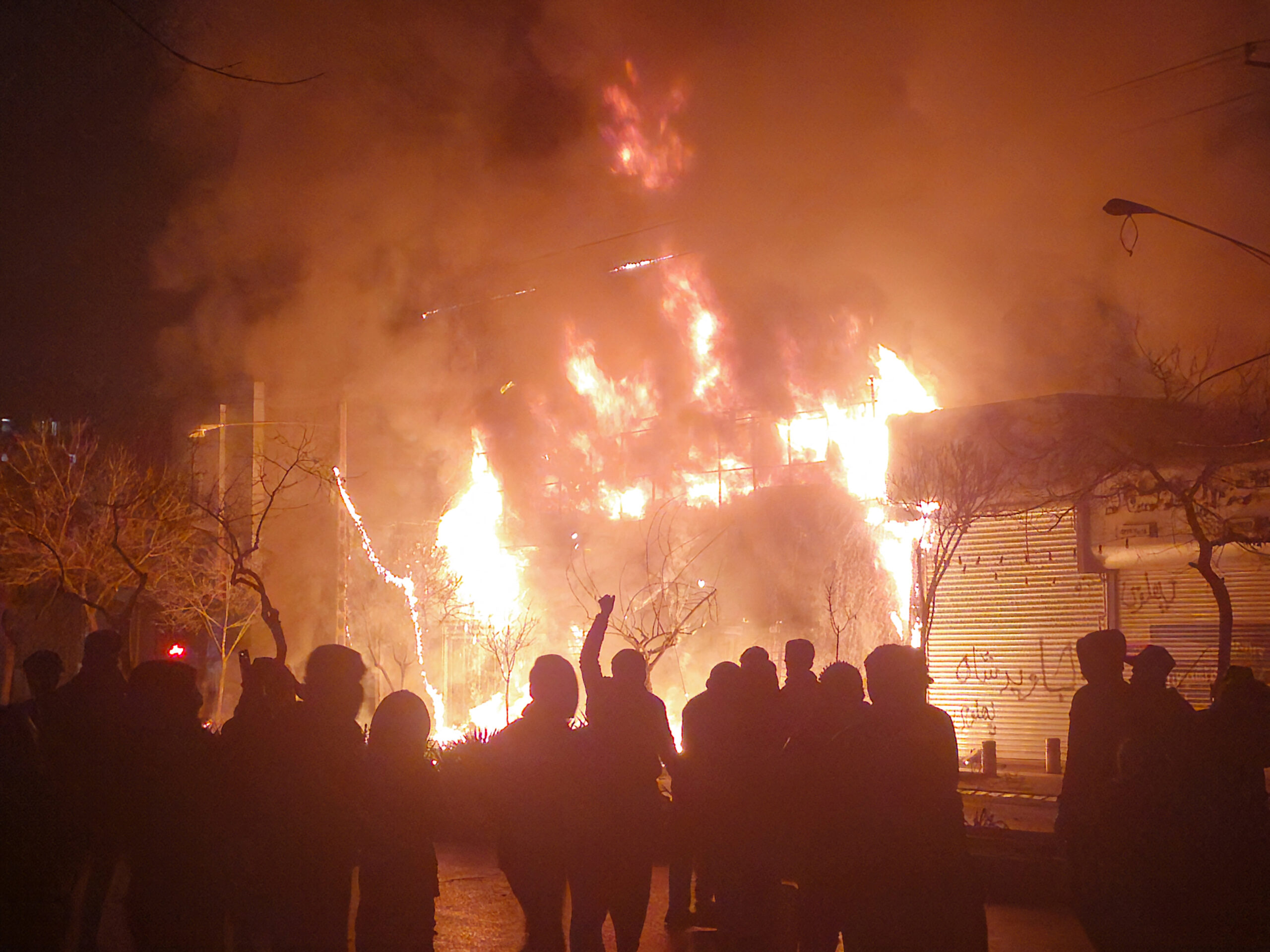
Iran’s Massacres Will Haunt the RegimeEhsan Habibpour, Sharan Grewal Iran’s hardline government responded to nationwide protests with horrific violence, killing thousands of Iranians in a matter of days. There is nothing the regime can offer its people to regain their support. |