
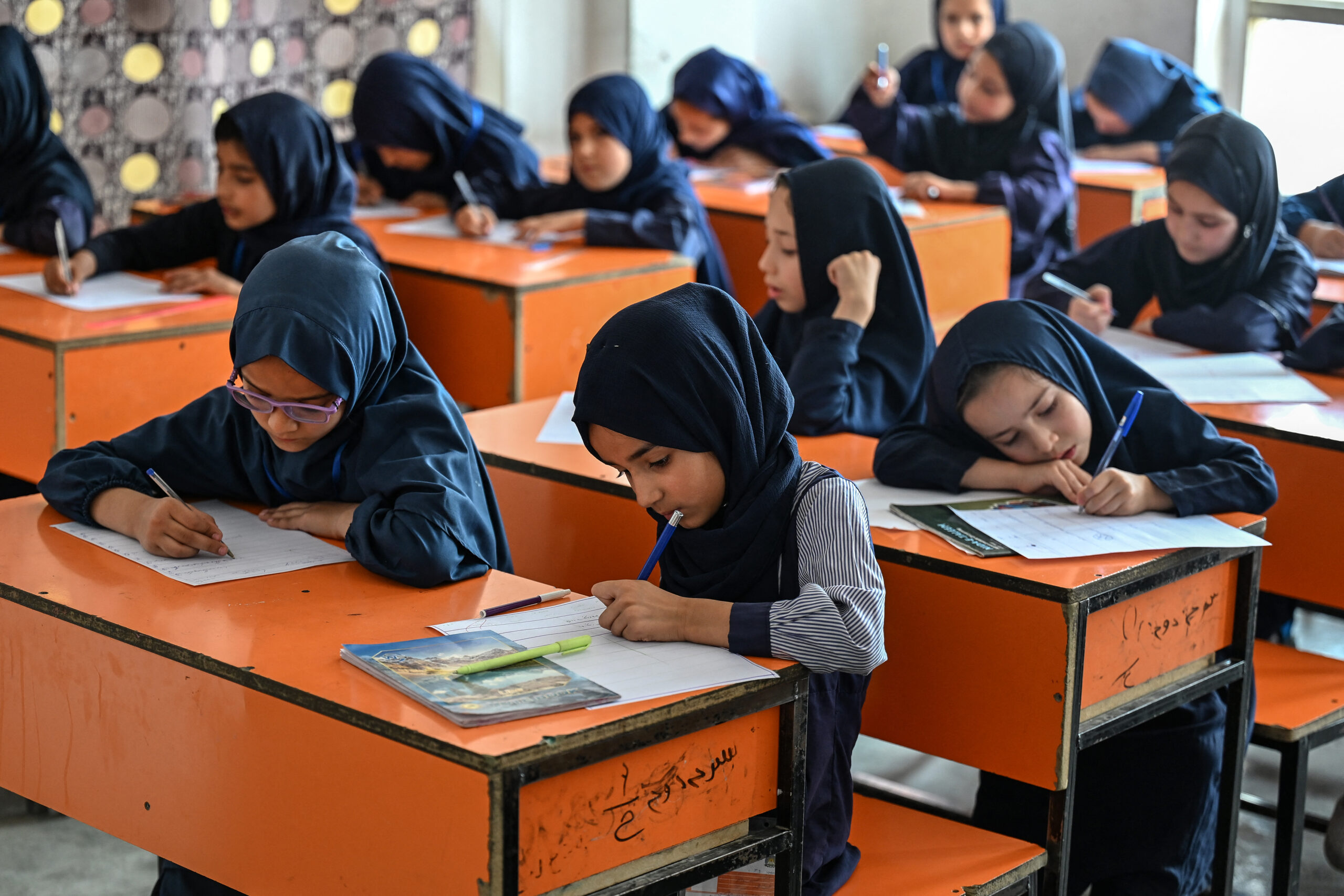
Five years of repressive Taliban rule has not extinguished Afghans’ determination to shape a freer future.
By Mariam Safi and Damon Wilson
August 2026
When the Taliban entered Kabul five years ago, Mariam watched colleagues scatter, programs built over years collapse, and women who had earned a place in Afghanistan’s public life disappear into hiding or exile.
She had founded the Organization for Policy Research and Development Studies because Afghan women were largely absent from the research and policy debates shaping their country. Now the Taliban intended to exclude them altogether.
Across Afghanistan, journalists, educators, artists, researchers, women’s rights advocates, and civic leaders faced the same danger. Many were being sought by name. The institutions they had built were shuttered or driven underground.
In Washington, the mobile phones and messaging apps of the National Endowment for Democracy (NED) team began ringing nonstop.
Staff who normally worked across more than ninety countries on democracy-related grantmaking focused on a single, urgent priority: helping as many Afghan partners as possible reach safety with Congressional support to do so. Colleagues across the organization responded at all hours, piecing together information from the ground, coordinating with contacts around the world, preparing and translating critical documents, and helping partners navigate rapidly changing security threats.
Behind every call was someone who had taken real risks because they believed their country could be different. In the end, NED was able to evacuate more than a thousand partners and their families. Many reached safety carrying deep grief for all they had left behind.
Five years on, much of the conversation about Afghanistan still revolves around the Taliban: their grip on power, their deepening repression, and whether outsiders can induce them to moderate.
The record offers little grounds for illusion. The Taliban have constructed a system designed to erase women from public life. They have barred girls from education beyond sixth grade, closed universities and medical institutes to women, and restricted women’s movement without a male guardian. In some provinces, women cannot be treated by male medical professionals; by denying women medical training, the Taliban are also destroying the future supply of doctors, nurses, and midwives able to care for them.
A decree issued this year strengthens male guardians’ authority over girls’ marriages and allows a girl’s silence upon reaching puberty to be treated as acceptance of the marriage’s continuation. Journalists and critics face detention, legal protections for women have been dismantled, and the remaining media operate under relentless pressure.
But a focus only on the Taliban accepts the story they want to tell: that they alone represent the country and control its future.
They do not.
Afghans continue teaching, researching, reporting, organizing, and defending one another—from exile and through discreet networks inside the country. Men are also helping create space for women to work and learn. Their efforts rarely make headlines, but with NED’s support they are preserving the human relationships, knowledge, and civic habits on which a different Afghanistan can eventually be built.
DROPS is part of that persistence. It trains young researchers, mentors Afghan women scholars, and ensures Afghan perspectives remain part of debates about the country’s future. Through the Women and Public Policy Journal, women continue producing research and policy recommendations despite the effort to exclude them from public and academic life. They are preserving ideas, evidence, and expertise Afghanistan will need when rebuilding becomes possible.
Others are also keeping civic life alive, by creating underground classrooms, online courses, and partnerships with universities abroad so girls and young women can continue learning. Networks of women lawyers provide advice by phone and through discreet home visits, helping women navigate marriage, inheritance, property, and family law after formal avenues for justice have largely disappeared. Women, both in Afghanistan and in exile and across ethnic communities, are coming together to voice their aspirations and forge a common vision for their future.
The appetite for reliable information also remains immense. Jan-e Gap, an independent call-in television program, has received as many as six-thousand calls from inside Afghanistan in a single hour. Afghans are still asking questions, seeking information, and trying to remain connected.
This persistence should shape how the United States and other democracies approach Afghanistan. Diplomacy, humanitarian assistance, and security concerns will remain necessary. But dealing with the Taliban is not the same as backing the Afghan civic and political leaders who are taking steps to shape a future where they live in peace and with dignity.
That requires patient support for Afghan-led institutions: from backing independent media, investing in initiatives that advance Afghan women’s rights, supporting education initiatives, strengthening legal aid networks, and sustaining civil society organizations both inside and outside the country. It means ensuring Afghan women and civic leaders have a voice in international discussions about their country.
Such support is not about imposing an outside model or pretending outsiders can determine Afghanistan’s political future. The past two decades should have taught us humility about both. It is about giving Afghans the tools, connections, and space to carry forward work they have chosen for themselves.
NED has supported Afghan civil society for more than forty years. We remain committed not because freedom’s victory is assured, but because Afghans continue to take risks to defend basic rights and keep the possibility of a more open future alive.
The Taliban can close schools, silence newsrooms, and drive civic leaders into exile. They cannot extinguish the aspirations of an entire people. Afghanistan’s next chapter will ultimately be written by Afghans. Our responsibility is to ensure that those preparing to write it do not stand alone. 
Mariam Safi is an Afghan researcher, peacebuilding practitioner, and founder and chief executive of the Organization for Policy Research and Development Studies (DROPS). Damon Wilson is president and chief executive of the National Endowment for Democracy.
Copyright © 2026 JoD Productions
Image Credit: AFP via Getty Images
|
FURTHER READING |
||
ONLINE EXCLUSIVE
Drowning Democracy |
The Collapse of Afghanistan |
What Can Constitutions Do? The Afghan CaseJanuary 2014 marks the tenth anniversary of Afghanistan’s constitution. In what areas has it succeeded or failed? Judging by its achievements with respect to four midrange goals, the document has a record that is decidedly mixed. |