
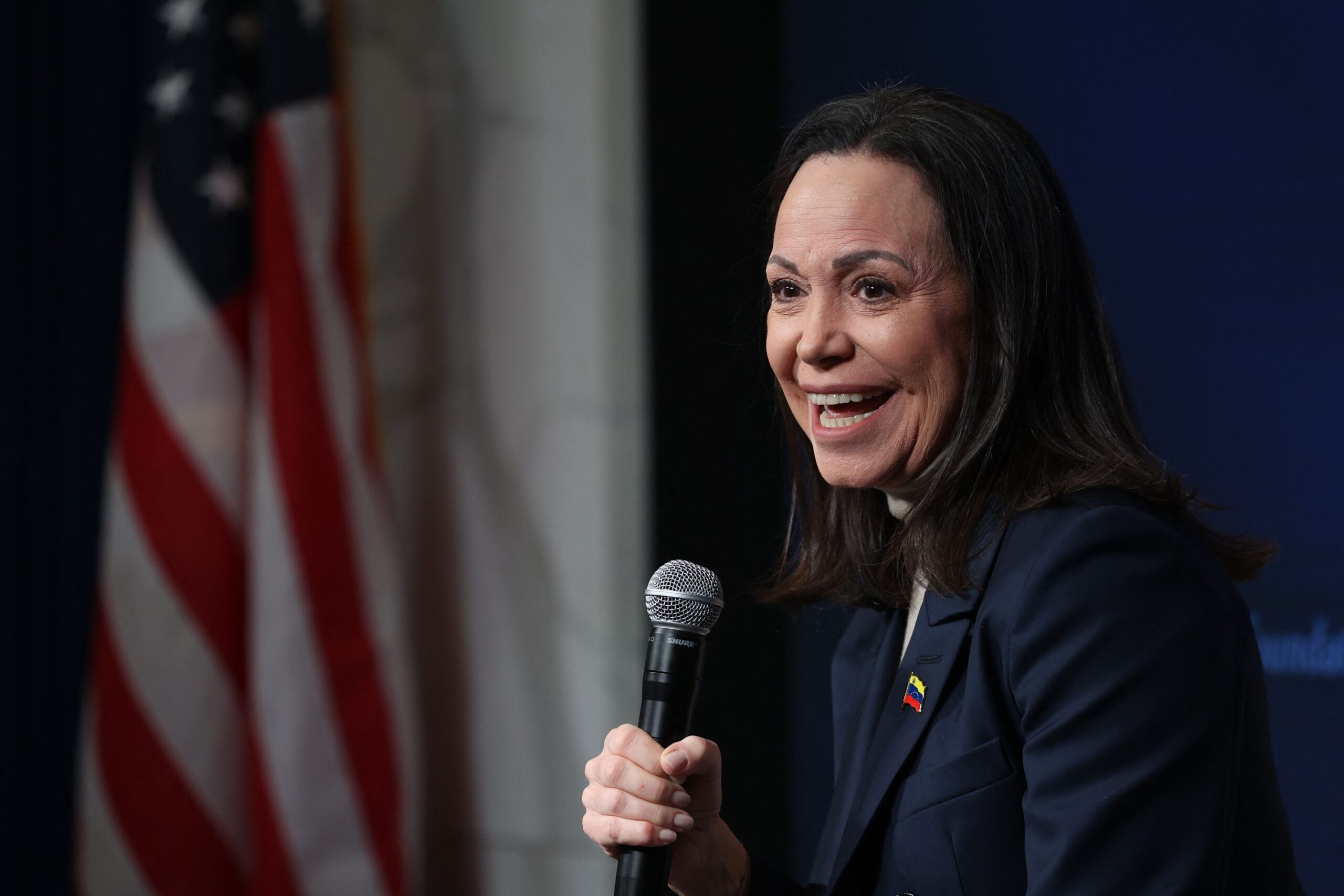
Whether the capture of Nicolás Maduro leads to democracy depends on Donald Trump — and María Corina Machado’s ability to make a democratic future the only attractive choice.
January 2026
Leer en español aquí.
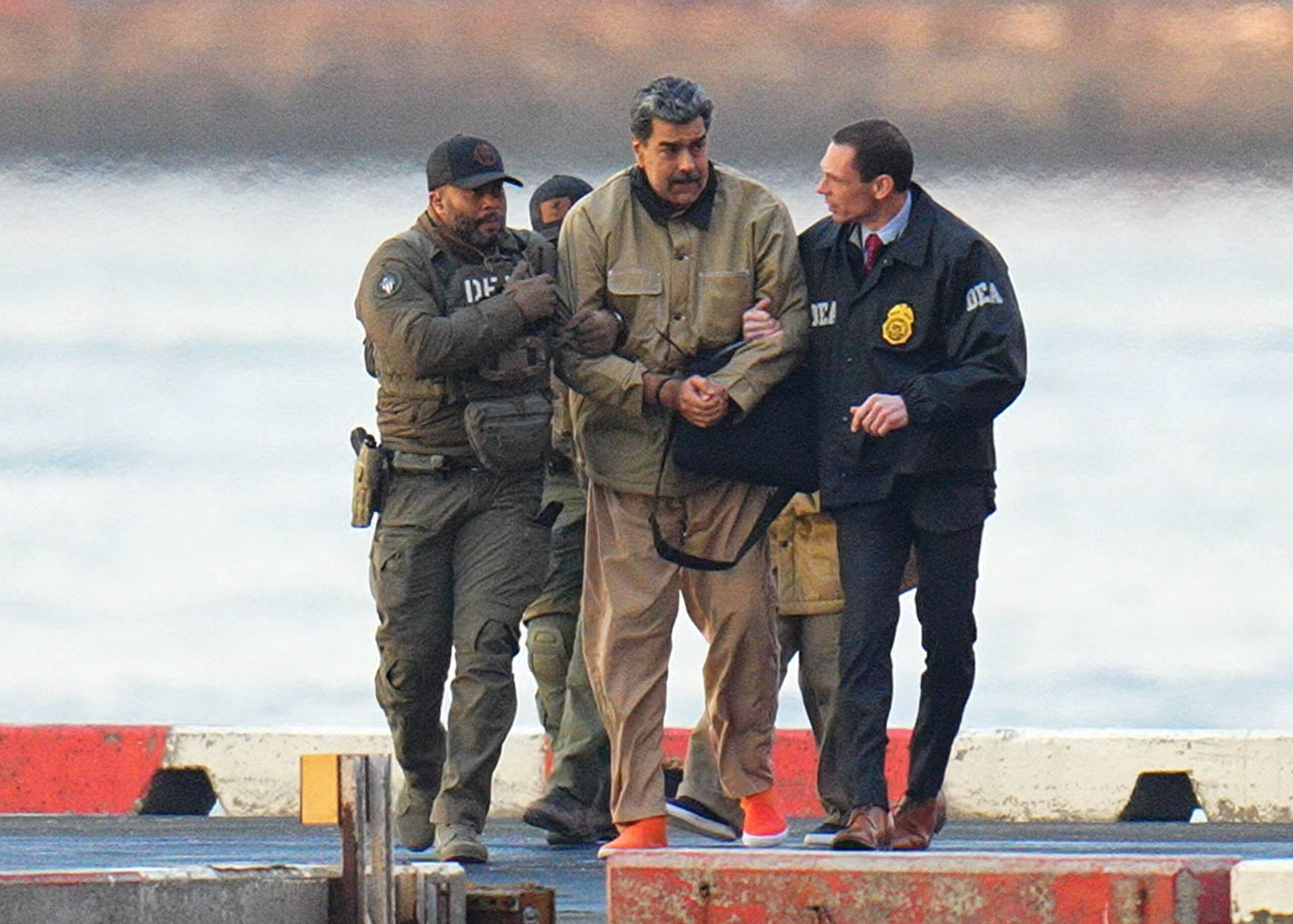
On 3 January 2026, U.S. special forces captured Nicolás Maduro in a dramatic overnight raid on his compound in Caracas. Within hours, the Venezuelan dictator who had presided over his country’s economic collapse and the exodus of nearly eight-million citizens was aboard the USS Iwo Jima, en route to face narcoterrorism charges in a Manhattan federal court. The operation, codenamed “Absolute Resolve,” succeeded in removing from power a leader whom elections, sanctions, diplomatic pressure, and international condemnation had failed to dislodge.
Yet what followed Maduro’s capture has confounded expectations. Rather than promoting the democratically elected president Edmundo González — who won the July 2024 election by a landslide margin of more than two to one — the Trump administration allowed Delcy Rodríguez, Maduro’s vice-president and longtime enforcer, to assume control as acting president. María Corina Machado, the opposition leader and 2025 Nobel Peace Prize laureate who had galvanized the democratic movement, was conspicuously sidelined. Machado has already traveled to the White House for high-stakes talks with the man who holds her country’s future in his hands.
Will the dramatic events of January 3 open a path to democracy, or merely reconfigure Venezuela’s authoritarian order? The intervention has sparked fierce debate over legality and legitimacy. International-law experts have widely condemned the action as a violation of Venezuelan sovereignty. Yet a Justice Department memo offered a different framework, citing Machado’s endorsement of military action against Maduro’s usurpation among several legal arguments justifying the operation. Indeed, the support of Venezuela’s president-elect for the operation and Maduro’s documented crimes against humanity in light of the UN’s Responsibility to Protect doctrine invite a more nuanced assessment of the operation’s legitimacy.
Venezuelans themselves have weighed in decisively. Polling by The Economist found that a majority of Venezuelans inside the country approve of the operation, and about 80 percent believe the political situation will improve in the next year. A Bloomberg survey similarly found majority support for the intervention and for Machado’s leadership. From Venezuelans’ perspective, the gap between the intervention’s legitimacy and narrow interpretations of international law emphasizing nonintervention is vast — widened further by the fact that the only constraint on Chavista brutality is the credible threat of further military action. This dilemma is far from unique to Venezuela, as thousands of Iranians have died in recent days at the hands of the country’s autocratic regime.
But however legitimate the intervention was from the perspective of Venezuelans, it was President Trump who pulled the trigger. Understanding where the Venezuelan situation goes from here requires answering two questions: What motivated Trump to act, and what strategies are available to Machado to steer this volatile situation toward democracy?
What Were Trump’s True Motives?
The administration’s public justifications have emphasized law enforcement: Maduro was an indicted narcoterrorist with a $50 million bounty, and U.S. forces were executing an arrest warrant. But this legalistic framing obscures more than it reveals. The Trump administration clearly had strategic objectives beyond bringing one drug trafficker to justice. Three possibilities merit consideration, and they have very different implications for Venezuela’s democratic prospects.
The first possibility is that President Trump cares about regional stability and American influence. In this view, Venezuela under Chavez and Maduro had become a source of instability throughout the Western Hemisphere: a narcostate with ties to Iran, Russia, and Cuba; a generator of the region’s largest refugee crisis; a failed economy threatening to destabilize its neighbors. A democratic Venezuela aligned with the United States would be a major geopolitical asset. If this is Trump’s primary motivation, we should expect sustained pressure for genuine democratization, since only a legitimate government can provide the stability that serves long-term American interests.
The second possibility is that Trump cares primarily about oil. The president has made no secret of his desire to see U.S. companies develop Venezuela’s vast oil reserves. If this is Trump’s priority, then his appetite for democratization will depend on whether it serves or hinders oil extraction. Here the calculus becomes complicated. Preventing disorder after Maduro’s removal probably meant collaborating with established government structures. However, meaningful investment in Venezuela’s decrepit oil infrastructure will require tens of billions of dollars and take decades to yield returns. Companies will not commit such sums under a government that might expropriate their assets once U.S. military pressure recedes. They need institutional guarantees that only a legitimate, stable government can provide — which means democratization. And while Chavismo expropriated oil companies’ assets in the mid-2000s, Machado’s background makes her a credible champion of private investment. In this scenario, Trump’s extractive interests may instrumentally align with Venezuelan democratization.
The third possibility is that President Trump cares, above all, about projecting power. In this view, the value of the Venezuelan operation was the operation itself — a dramatic demonstration of American military might that shocked the world and made clear that Trump will act decisively regardless of domestic and foreign constraints. If this was his primary motivation, then there is no particular interest in what comes afterward as long as Venezuela does not unravel into conflict. Democratization might even be counterproductive from this perspective, as Rodríguez has reportedly promised to meet whatever demands Trump makes — a compliance that requires her to maintain authoritarian control.
Machado’s Four Levers
The truth is likely some combination of these motives, and their relative weight may shift depending on circumstances. María Corina Machado cannot know which version of Trump she is dealing with. Her situation resembles that of Ukrainian president Volodymyr Zelensky: managing a strained relationship with an essential ally whose priorities may or may not align with her country’s aspirations. Like Zelensky, Machado must navigate between appeasement and assertion, between gratitude and demand. Her task is to influence Trump, no matter his motivation, in the direction of democracy — without alienating him irrevocably.
To accomplish this, Machado has four principal levers at her disposal:
Direct management of the relationship with Trump. This requires a delicate balance. She must express appreciation for the action that removed Maduro — and by all accounts, her appreciation and that of most Venezuelans is genuine — while direct communication allows her to learn about Trump’s true interests and emphasize how democratization serves them best. Her decision to flatter the president by presenting him with her Nobel Peace Prize medal can be understood from this perspective. Having built a direct communication channel, Machado can make the case that Rodríguez cannot deliver on her commitments. Investors lack confidence in a regime that historically expropriates assets and faces persistent opposition. Only a legitimate government with broad public support can create conditions for the massive, long-term investments that Trump seems to desire.
Affirming and rallying support for her democratic mandate. Venezuela’s 2024 presidential election gave the opposition an unambiguous mandate, and that mandate has not disappeared. Machado must mobilize the European Union, Latin American democracies, and bipartisan voices in the U.S. Congress to maintain pressure for a democratic transition. Her meeting with a bipartisan group of senators is a move in the right direction. There is genuine bipartisan appetite in Washington for Venezuelan democracy. Machado must leverage this support to raise the costs of accommodation with Rodríguez — something that already influenced Trump against accommodation with Maduro.
Eroding the stability of Rodríguez’s de facto presidency. This is the riskiest strategy, because it requires mobilizing Venezuelan civil society at a moment when the regime retains its — albeit weakened — repressive apparatus. But it is also potentially the most powerful. If Venezuelans take to the streets to demand the democracy they voted for, if they show that a settlement without a credible path to democratic transition is unsustainable, then the Trump administration’s calculation changes. It needs stability to extract oil and to present Maduro’s extraction as successful. If Rodríguez cannot provide that stability, democratization becomes necessary. The question is whether Machado will return to Venezuela to lead such a mobilization. While she has said repeatedly that she intends to return “as soon as possible,” the personal risks are obvious. Still, her return would throw a wrench in the Trump-Rodríguez arrangement: Trump cannot continue to publicly support Rodríguez if she puts Machado in jail, but Rodríguez cannot guarantee stability if she doesn’t.
Addressing objections from elites whose acquiescence is required. Trump’s dismissive comments about Machado — that she lacks “support or respect” within Venezuela — may reflect genuine assessments that the country’s military, bureaucratic, and economic establishment views her as a maximalist who would pursue vindictive justice. Indeed, Trump’s statements justifying his decision to work with Rodríguez to avoid “another Iraq” highlight the relevance of these concerns. A potential solution is for Machado to propose a credible framework for transitional justice. As I have argued in previous essays, such a framework must offer broad domestic amnesty for the vast majority of regime participants who did not engage in crimes against humanity and whose cooperation is essential for any new government. Announcing such a framework — ideally with endorsement from the Nobel Committee and Norwegian government officials who mediated previous negotiations with Chavismo and supported the Colombian peace process — would fundamentally alter how domestic elites calculate their prospects after a democratic transition occurs, and how Trump understands the merits of accusations of maximalism levied against her.
The Urgent Need for a Democratic Direction
Weeks after Maduro’s capture, the fundamental question of democratic transition remains unresolved. The Economist poll found that two-thirds of Venezuelans want a new presidential election, with 91 percent of those demanding that it occur within a year — far faster than the Trump administration has indicated publicly.
The worst possible outcome would be a continuation of Chavismo without Maduro — an authoritarian regime that has simply swapped figureheads while preserving its absolute grip on power. This outcome is not only possible, but its probability grows as time erodes the credibility of the threats that currently discipline the regime’s behavior. Machado understands that Rodríguez is just buying time, as Maduro did before her. For this reason, time is of the essence: Machado’s urgent calls for immediate concessions — the release of political prisoners, the return of political exiles, the dismantling of the regime’s repression apparatus — aim to make the transition process take an irreversibly democratic direction before pressure and attention dissipate.
Achieving a genuine transition leading to free elections will require all the skill and courage that Machado and the opposition can muster. It will require convincing the U.S. president that his own interests are best served by democracy in Venezuela. This will require mobilizing domestic and international pressure against accommodation. It will require individual risks that challenge Rodríguez and heighten the contradictions behind her promises to Trump. It will require compromises that secure the acquiescence of key elites for democratization. Most fundamentally, it will require keeping faith with the vast majority of Venezuelans, who want a different future — and who finally have reason to think that such a future is within reach.
José Ramón Morales-Arilla is a research professor at Tecnológico de Monterrey’s Graduate School of Government and Public Transformation. He received his PhD in public policy from Harvard University.
Copyright © 2026 National Endowment for Democracy
Image credit: Alex WROBLEWSKI / AFP via Getty Images
|
FURTHER READING |
||
Why the United States Shouldn’t Run Venezuela |
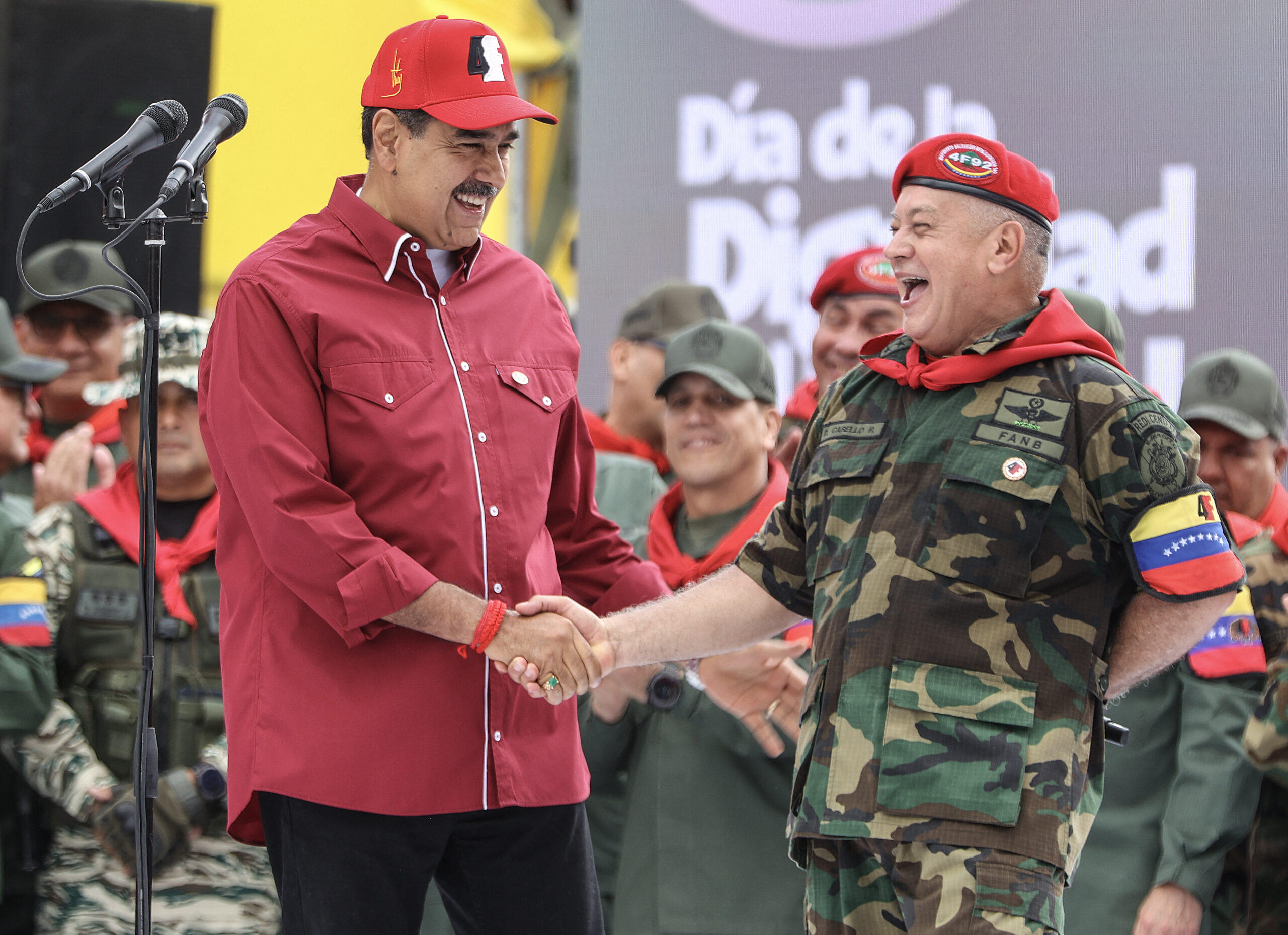
How Venezuela Became a Gangster StateNicolás Maduro is a mafia boss, not a president, and the Venezuelan government is now a criminal enterprise with the power of a state. It poses a threat to democracies everywhere. |
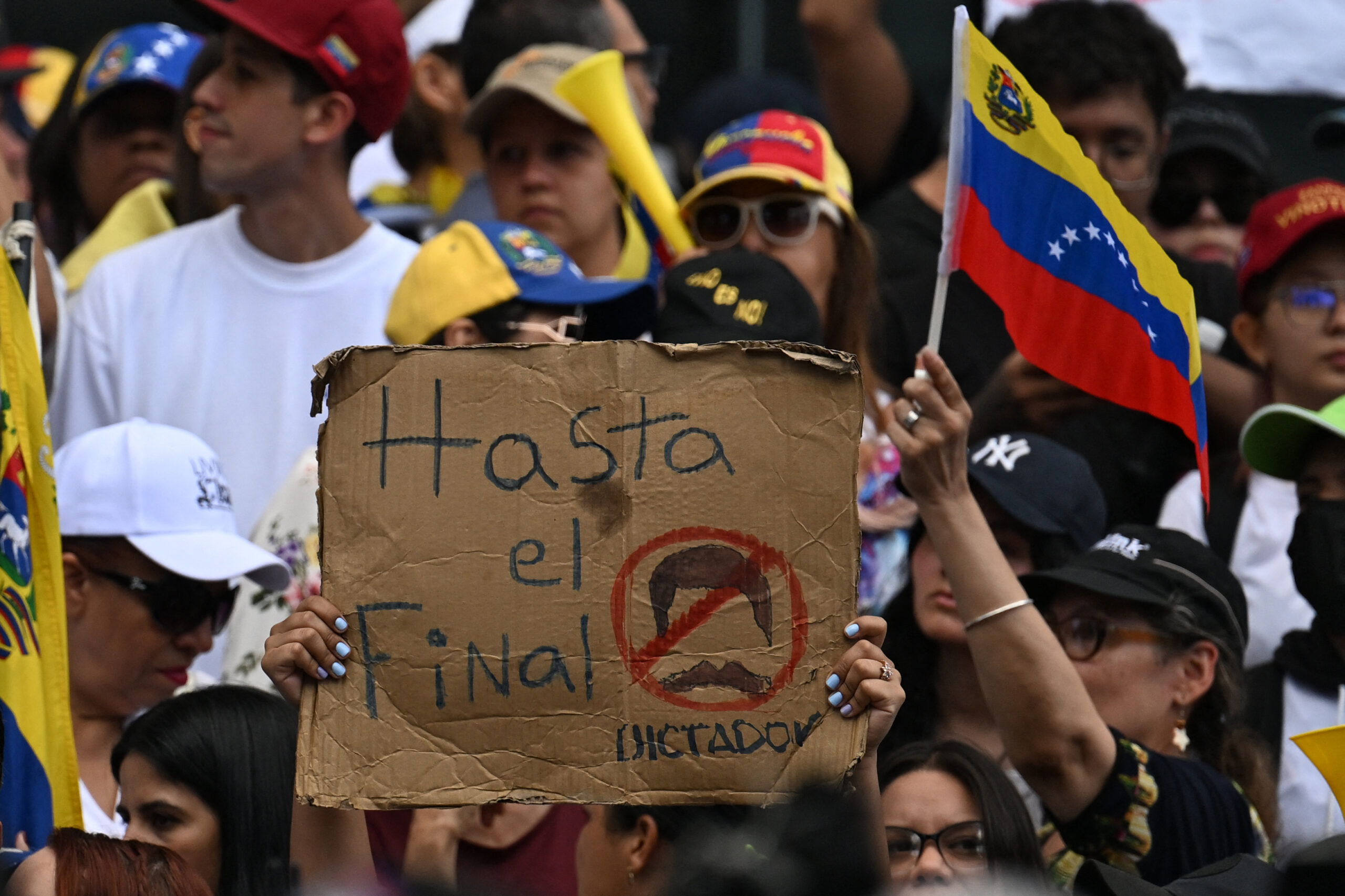
Venezuela’s Lost YearA year ago Nicolás Maduro stole Venezuela’s election and entrenched his power by jailing and killing those who opposed him. But the world’s democracies don’t need to sit on the sidelines. Here is how they can raise the costs for Maduro. |