
Turkey’s Make-or-Break Election
The forces that brought Erdoğan to power may be his downfall in Turkey’s May 14 elections. Here are a selection of key Journal of Democracy essays from the last two decades of his rule.
2036 Results
The forces that brought Erdoğan to power may be his downfall in Turkey’s May 14 elections. Here are a selection of key Journal of Democracy essays from the last two decades of his rule.
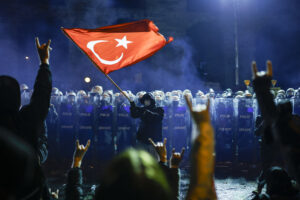
Turkish democracy is at a turning point: Will democratic forces be able to triumph at the ballot box in the next general election, or will the country devolve into full-blown authoritarianism?

July 2015, Volume 26, Issue 3
Favored by global conditions that lean their way, authoritarians have been busy over the last decade coming up with new and inventive ways to thwart the global advance of democracy and human rights.
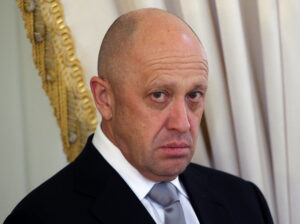
In the days ahead, the West must remain calm—and redouble its support for Ukraine.

When María Corina Machado was awarded the Nobel Peace Prize earlier this month, she made sure to emphasize that her accomplishments were not hers alone — they were shared with countless other activists agitating for democracy in Venezuela.

July 2022, Volume 33, Issue 3
The case of Hungary shows how autocrats can rig elections legally, using legislative majorities to change the law and neutralize the opposition at every turn, no matter what strategy they adopt.
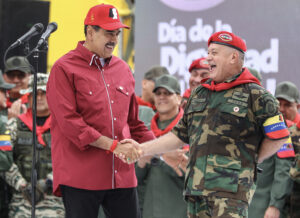
The newly aggressive U.S. policy toward Nicolás Maduro and his autocratic regime, including the recent sinking of alleged Venezuelan drug boats, did not come out of nowhere.

“Every opportunity must be used to speak out . . . I love Russia. My intellect tells me that it is better to live in a free and prosperous country than in a corrupt and impoverished one.”
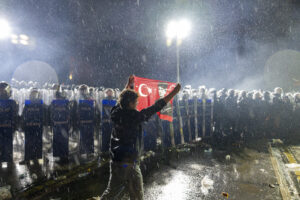
On March 19, Turkish authorities arrested opposition leader and Istanbul mayor Ekrem İmamoğlu on charges of corruption. Really, it was a drive by President Erdoğan to eliminate his main political rival. The following Journal of Democracy essays chronicle Erdoğan’s increasing efforts to undermine Turkish democracy, and the opposition’s efforts to fight back.
October 2018, Volume 29, Issue 4
A review of Tunisia: An Arab Anomaly by Safwan M. Masri.

The world’s liberal democracies are deeply polarized. Here’s how we could help rebuild the political center.

Our rising levels of inequality have put its ideals in crisis. These are the simple principles that can help bring it back from the edge.
July 2016, Volume 27, Issue 3
President Alvaro Uribe’s time in office was marked by disturbing trends that included a spike in extrajudicial killings and an attempt to overthrow term limits, but the country’s institutions of horizontal accountability proved remarkably resilient.
October 2012, Volume 23, Issue 4
The hardest work of the transition—negotiating political pacts—has not yet begun. Burma’s democrats must help to forge a system of mutual security that can allow democratization to proceed.
October 2015, Volume 26, Issue 4
Excerpts from: remarks by Nigeria's new president Muhammadu Buhari; statement by Azerbaijani investigative journalist Khadija Ismayilova; statements on abuses against lawyers and activists in China
Our just-released April issue, featuring “The Putin Myth” by Kathryn Stoner, is free through May 15.

The latest issue of the Journal of Democracy covers important and alarming global trends, including political polarization and rising illiberalism, as well the struggle between autocrats and democrats in Africa, Latin America, South Asia, and beyond. Read it before it goes behind a paywall.
Don’t miss these must-read essays from the Journal of Democracy, free for a limited time, on the Russia-Ukraine war, artificial intelligence, illiberalism, democracy’s ability to deliver, and more.
April 2020, Volume 31, Issue 2
Sub-Saharan African governments are clamping down on media freedom. More surprising is how many of their citizens appear to support this attack on the press.