
Why Sanctions Don’t Work Against Dictatorships
From Putin’s invasion to Kim’s nuclear saber rattling, the West has punished the world’s worst regimes. But have sanctions missed their targets? | Agathe Demarais
741 Results
From Putin’s invasion to Kim’s nuclear saber rattling, the West has punished the world’s worst regimes. But have sanctions missed their targets? | Agathe Demarais

April 2023, Volume 34, Issue 2
There have been numerous waves of protest against the country’s corrupt theocracy. This time is different. It is a movement to reclaim life. Whatever happens, there is no going back.
April 2019, Volume 30, Issue 2
Globalized authoritarian regimes are increasingly abusing Interpol’s notice system to go after political opponents based abroad. These regimes seek not only to punish their critics, but also to legitimate their own acts of repression.
April 2018, Volume 29, Issue 2
Across the West, economic, demographic, and cultural shifts have spurred the rise of populists who embrace majoritarianism and popular sovereignty while showing little commitment to constitutionalism and individual liberty.
April 2010, Volume 21, Issue 2
How do democracies deal with the deep divisions created by race, ethnicity, religion, and language? The cases of Canada, India, and the United States show that democratic institutions—notably, competitive elections and independent judiciaries—can bridge divides and build stability, but they must find a way to manage the tension between individual and group equality.
July 2020, Volume 31, Issue 3
Liberal democracy has drawn its share of false indictments. But like any form of government, it has genuine weaknesses that can at best be managed. How well liberals navigate these inherent tensions may help determine the future of freedom.
October 2022, Volume 33, Issue 4
Democracies are under stress, but they are not about to buckle. The erosion of norms and other woes do not spell democratic collapse. With incredibly few exceptions, affluent democracies will endure, no matter the schemes of would-be autocrats.

Establishment parties are flagging. They should learn from political disruptors.
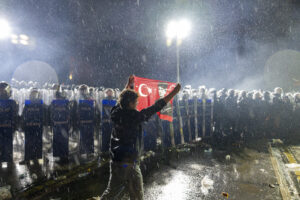
Turkey’s president would rather turn his country into a full autocracy than give up power. But the Turkish people are clinging to what remains of their democracy, and they are ready to fight for it.
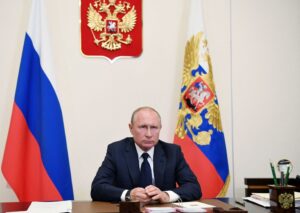
While widespread violence or civil war was averted, the consequences for Russia—and Putin—could be grave.
July 2023, Volume 34, Issue 3
Activist Xu Zhiyong on the Imperative for a Democratic China; Historian Timothy Snyder on “Russophobia”; Fadzayi Mahere on why Zimbabwe is a tragedy; a call for the release of the speaker of Tunisia’s parliament, Rached Ghannouchi; a Burmese student recounts her experience as a strike leader following the 2021 military coup.
July 2014, Volume 25, Issue 3
Excerpts from: the inaugural address of Ukrainian president Petro Poroshenko; “My Ideals and the Career Path I Have Chosen,” an autobiographical essay by by Ilham Tohti; a speech given by Chinese lawyer and civil-rights activist Chen Guangcheng to mark the impending twenty-fifth anniversary of the massacre at Tiananmen Square.
April 2016, Volume 27, Issue 2
Excerpts from: the inaugural address of Argentine president Mauricio Macri; victory speech by Taiwanese president Tsai Ing-Wen
July 2003, Volume 14, Issue 3
Excerpts from: Kenyan president-elect Emilio Mwai Kibaki’s inaugural speech; statement by the International Movement of Parliamentarians for Democracy condemning the crackdown on Cuban dissidents; Organization of American States (OAS) secretary-general César Gaviria’s speech at a conference entitled “Financing Democracy: Political Parties, Campaigns and Elections.”
April 2003, Volume 14, Issue 2
Excerpts from: Václav Havel’s last two addresses as president of the Czech Republic; Nicaraguan president Enrique Bolaños’s speech accepting the National Endowment for Democracy’s Democracy Service Medal; speech by Turkish Justice and Development Party chairman (now prime minister) Recep Tayyip Erdoğan; inaugural address of Brazilian president Luiz Inácio Lula da Silva.
Summer 1990, Volume 1, Issue 3
Excerpts from: the statement of Chai Lin, a leader of the Beijing University Independent Student Union; Cameroon Bar Association president Bernard A. Muna’s speech on behalf of detained political activists; the final document of the Conference on Security and Cooperation in Europe’s session.
July 1996, Volume 7, Issue 3
Excerpts from: Taiwanese president Lee Teng-hui’s inaugural address; a ten-point declaration of a summit of more than a dozen Nigerian prodemocracy groups; an “Inter-American Convention Against Corruption”; resolutions adopted by Burma’s National League for Democracy.
January 1998, Volume 9, Issue 1
Excerpts from: Chinese dissident Wei Jingsheng’s opening statement; Chinese president Jiang Zemin’s statement; Organization of American States Charter amendment; Iranian president Mohammad Khatami’s inaugural address; National Endowment for Democracy president Carl Gershman’s keynote conference speech.
January 2023, Volume 34, Issue 1
McKinsey’s work is bankrolled by major corporations and governments around the world. How should the famous consulting firm choose the clients it represents and the projects it takes on?
July 2010, Volume 21, Issue 3
A review of China's Long March to Freedom: Grassroots Modernization by Kate Zhou.