
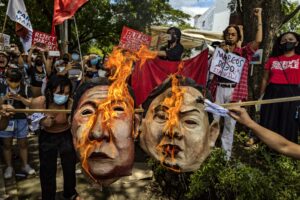
How the Duterte Clan Is Remaking the Marcos Playbook
Strongman nostalgia, conspiracy theories, and lies. It’s a powerful blend that keeps populists in power. In the Philippines, political clans have weaponized these messages against each other.
1985 Results
Strongman nostalgia, conspiracy theories, and lies. It’s a powerful blend that keeps populists in power. In the Philippines, political clans have weaponized these messages against each other.

The Venezuelan strongman lost the election and everyone knows it. He has nothing left to offer but violence and repression. It will be his undoing.
Deo Pondu Maheshe, director of the Centre d'Etudes et d'Encadrement pour la Participation au Developpement Endogene, comments on David Peterson's essay, "Burundi's Transition: A Beacon for Central Africa," which appeared in the January 2006 issue of the Journal of Democracy.
January 30, 2006
Venezuela’s opposition defeated Nicolás Maduro in the country’s July presidential election, but the Venezuelan strongman refuses to relinquish power. The Journal of Democracy essays below, free for a limited time, chronicle Venezuela’s struggle against Maduro’s authoritarianism — and what makes this election different.

Authoritarians weaponize LGBT+ rights to undermine pluralism and cement their rule. Can democracy still protect and advance these rights? Read about how LGBT+ rights have been both expanded and resisted around the world, and offer ideas for how democracies can defend them.

Authoritarians can manipulate the law to rationalize their rule, but the law can equally serve to check authoritarian power. The Journal of Democracy essays below explore the dynamics between leaders and the law. Read for free now.

Syria is at a critical juncture. It’s up to the new government — and the people — to chart a more inclusive, transparent, and prosperous way forward. The Journal of Democracy essays below examine the challenges and opportunities Syria now faces.

In the July issue of the Journal of Democracy, Stanley Bill and Ben Stanley unpack the trilemma that post-illiberal leaders face and explain why illiberals stand to benefit.
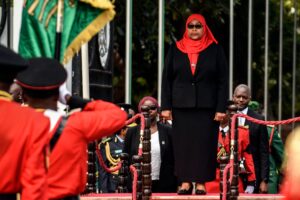
After years of increasingly authoritarian rule, Tanzanian president Samia Suluhu Hassan was hailed as a democratic reformer. But as Dan Paget and Aikande Clement Kwayu write in the July issue of the JoD, the president is more performer than reformer, relying on theatrics to delay real reform while sharpening her tools of repression.
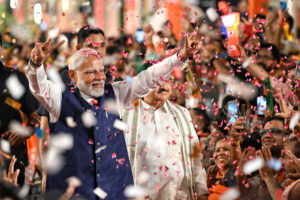
For all the warning signs, India held the line after a decade of backsliding.
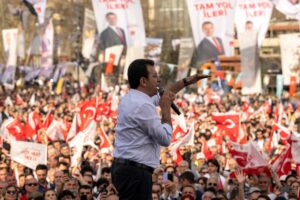
Don’t miss your chance to read the Journal of Democracy’s July issue for free through the 31.
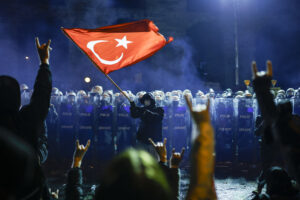
The latest issue of the Journal of Democracy answers some of today’s most pressing questions about democracy, and features essays on Iran, Turkey, Tanzania, the Philippines, and more. But it all goes behind a paywall after July 31. Don’t miss your chance to read the entire issue for free!
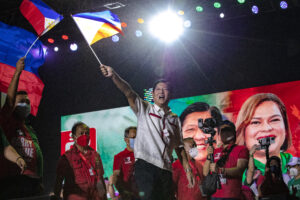
The struggle between the Marcos and Duterte clans isn’t just a battle between two houses. It is becoming a proxy fight between the United States and China for the future of the Indo-Pacific.
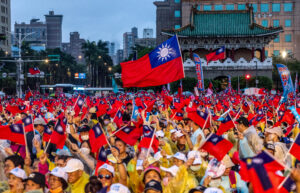
The drama of the country’s divided government just played out in a failed, high-stakes vote to recall two-dozen opposition legislators. How both sides respond could determine the fate of Taiwan’s democracy.
Our just-released April issue, featuring “The Putin Myth” by Kathryn Stoner, is free through May 15.
Reports on elections in India, Marshall Islands, and Netherlands.
The ten most-read online exclusives this year focused on the Russia-Ukraine war as well as events in China, Iran, Western Europe, and Latin America.
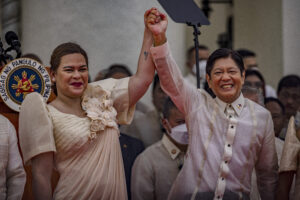
Want to distract the public? Little works better than family feuds ripped from soap opera plotlines. That’s how the Marcos and Duterte clans keep people glued to the drama while crowding out democratic reform.

Don’t let the Hungarian prime minister’s globe-trotting and grandstanding fool you. Behind the posturing and attempts to steal the spotlight is a strongman who feels his position slipping.
Francis Fukuyama, one of the world’s leading scholars of democracy, has written for the Journal of Democracy more than two-dozen times over the last thirty-two years. The following essays include some of his most incisive, offering bold insights into the relationship between democracy, modernization, and political culture.