
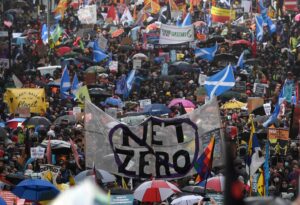

January 2025, Volume 36, Issue 1
Resisting the Authoritarian Temptation
Democracy’s unique, flexible, and substantial resources make it better than authoritarianism at confronting climate change.
2024 Results
January 2025, Volume 36, Issue 1
Democracy’s unique, flexible, and substantial resources make it better than authoritarianism at confronting climate change.
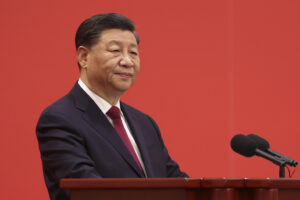
April 2018, Volume 29, Issue 2
After Mao, Deng Xiaoping tried to institutionalize collective leadership, but this did not stop Xi Jinping from grasping all the levers of power.
October 2001, Volume 12, Issue 4
Excerpts from: writings by Human rights activist Elena Bonner on the situation in Chechnya; the first state address of Indonesian president Megawati Sukarnoputri; the African Union’s New Africa Initiative; Organization of American States General Assembly Resolution 1753.
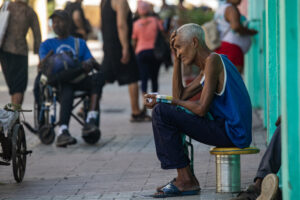
The Cuban regime has created a narrative of victimhood as a smoke screen for its gross incompetence and corruption. I should know. I once believed it, too.
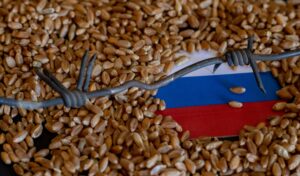
July 2022, Volume 33, Issue 3
The Kremlin wields food as a weapon and a shield against Western interference. But Putin’s push for food autarky could backfire, driving up prices and turning Russians against the regime.
April 2022, Volume 33, Issue 2
Excerpts from: letter from the Editors of Novaya Gazeta; Speech by Ukraine’s UN Ambassador, Sergiy Kyslytsya; statement by former Lithuanian president Dalia Grybauskaitė; statement by the Russian Anti-War Committee; transcript of an interrogation of an antiwar protester by Russian police; speech by Ukrainian president Volodymr Zelensky to the U.K. Parliament
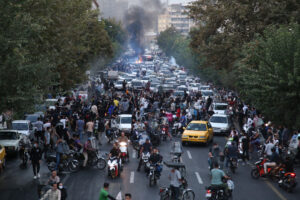
There have been numerous waves of protest against the country’s corrupt theocracy. This time is different. It is a movement to reclaim life. Whatever happens, there is no going back. | Asef Bayat
Summer 1990, Volume 1, Issue 3
Reports on elections in Algeria, Bulgaria, Burma/Myanmar, Colombia, Czechoslovakia, Dominica, Dominican Republic, the German Democratic Republic, Hungary, Peru, Romania, the Union of Soviet Socialist Republics, Yugoslavia, Zimbabwe.
October 2025, Volume 36, Issue 4
A tribute in remembrance of Leonardo Morlino (1947–2025).
April 2002, Volume 13, Issue 2
Reports on elections in Chile, Costa Rica, Gabon, The Gambia, Honduras, Madagascar, Singapore, the Solomon Islands, Trinidad and Tobago, and Zambia.
April 2025, Volume 36, Issue 2
A Ukrainian human-rights lawyer on moral responsibility during war; Nilofar Shidmehr’s poem “Say Her Name: Mahsa Jina Amini”; a Cuban prodemocracy activist vows to never give up; Sviatlana Tsikhanouskaya on Belarus’s sham election; a Zimbabwean journalist turns himself in to police; the frontlines of the protests in Georgia; and an open letter to Xi Jinping.
July 2009, Volume 20, Issue 3
Due to weak opposition parties and presidential dominance, many African countries have not reaped the full benefits of regularly held elections.
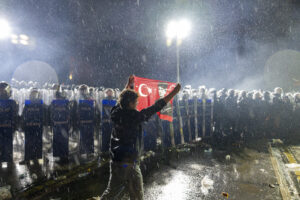
Turkey’s president would rather turn his country into a full autocracy than give up power. But the Turkish people are clinging to what remains of their democracy, and they are ready to fight for it.
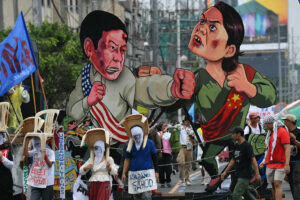
The ICC arrest of former Philippine president Rodrigo Duterte is a shocking blow for the Duterte clan, and the Marcos family isn’t letting up. Is this the political last stand for the Dutertes?
July 2002, Volume 13, Issue 3
Reports on elections in Algeria, Bahamas, Burkina Faso, Chad, Colombia, the Comoros, Congo-Brazzaville, Costa Rica, Dominican Republic, East Timor, Hungary, Lesotho, Madagascar, Mali, São Tomé and Príncipe, Sierra Leone, Ukraine, Vanuatu, and Zimbabwe.
July 2009, Volume 20, Issue 3
In March 2008, Malaysian voters dealt the long-ruling National Front coalition an enormous shock—pushing that party closer to losing power than it has ever been in Malaysia’s entire history as an independent country.
October 2003, Volume 14, Issue 4
For about a century after 1850, the Middle East enjoyed an imperfect yet real "Liberal Age." The roots of some of the key institutions of that era remain today. Can they be nurtured into a second spring?
nt VPN systems.” Telecom giants such as China Unicom can cut connections when they identify a VPN in use. Some limited internal use of VPNs by companies is permitted, but a usage record is required. Moreover, only specially licensed vendors may supply the necessary systems.10 Enforcement of the restrictions on VPN usage has been tightened…
January 1993, Volume 4, Issue 1
Excerpts from: Organization of American States resolutions on the “presidential coup” in Peru; the report of the Argentinian National Commission of Disappeared Persons.