
July 2009, Volume 20, Issue 3
Democratization by Elections? Competitive Clientelism in the Middle East
Legislative elections in the Middle East often become contests over patronage and wind up reinforcing authoritarian regimes.
2785 Results
July 2009, Volume 20, Issue 3
Legislative elections in the Middle East often become contests over patronage and wind up reinforcing authoritarian regimes.
July 2008, Volume 19, Issue 3
For years Kenya was regarded as one of Africa’s sturdiest democracies. The fraudulent 2007 presidential election, however, exposed the fragility of Kenya’s democratic framework.
January 2008, Volume 19, Issue 1
Attitudes toward democracy in Latin America vary from country to country, and within countries between left and right. Public opinion is strongly affected by the success or failure of political leaders in delivering social and economic change.
October 2005, Volume 16, Issue 4
The May 2005 presidential election capped a process of conservative reentrenchment, but with a surprising populist twist.
July 2004, Volume 15, Issue 3
Vladimir Putin aspires to be a classic authoritarian modernizer, but in today's globalized world Russia faces challenges that bureaucratic centralization and a traditional strong hand cannot meet.
April 2004, Volume 15, Issue 2
Constitution writers in ethnically or otherwise divided countries should focus on designing a system of power-sharing rules and institutions. Studies by political scientists point to a set of basic recommendations that should form a starting point for constitutional negotiations.
April 2004, Volume 15, Issue 2
East Timor, which emerged from a tragic and bloody past to gain full independence in 2002, offers a factinating case of democratization in a small developing country with a shallow history of democracy.
October 2003, Volume 14, Issue 4
Is the EU an international organization, an emerging federal state, something in between, or something altogether different? So far it has managed to survive and prosper depite all the disagreements about its true nature, but for how long can it continue to do so?
October 2003, Volume 14, Issue 4
The famed former dissident reflects on the lessons learned from Poland’s transformation, the anxieties that continue to beset his country, and the hopes and fears that attend its return to Europe.
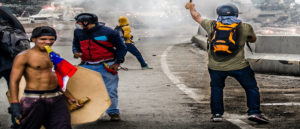

July 2020, Volume 31, Issue 3
His regime has hung onto power despite setbacks that would have toppled most democratic governments. Besides pure repression, Maduro has developed new autocratic tools that have kept Venezuela’s authoritarian state afloat.

January 2025, Volume 36, Issue 1
Even as Georgia lurches toward autocracy, the country’s pluralism and democratic culture are deepening. What can Georgia’s contradictory trends reveal about democratic resilience?
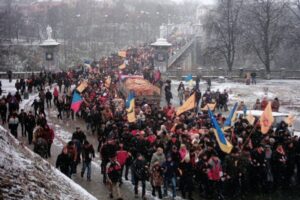
July 2005, Volume 16, Issue 3
What made the “color revolutions” of the early 2000s possible? There were 7 factors that allowed for these democratic breakthroughs. Today, Venezuela has 6 of them, and it may soon have the last one it needs.

April 2025, Volume 36, Issue 2
Propaganda is autocrats’ weapon of first resort, allowing them to rely on persuasion rather than violence to achieve their ends. But citizens have grown savvy, so autocrats are taking a new tack: spreading their messages via private news outlets indirectly controlled by regime proxies.
April 2025, Volume 36, Issue 2
Democracy across the world is being undermined by the very forces that once made it possible: the liberal economic order and political competition. The global concentration of wealth has made democratic governance less effective and stripped the people of their power.
January 2019, Volume 30, Issue 1
Since their transitions, the democracies of the “third wave” have followed a range of trajectories beyond simple survival or breakdown. Many have stagnated at low levels of democracy and some have suffered democratic erosion, but there also have been cases of democratic deepening against the odds.
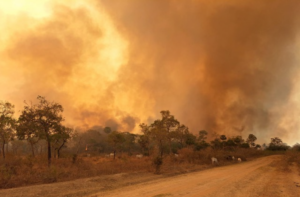
July 2025, Volume 36, Issue 3
Bolivia’s Amazon forests are becoming scorched earth, with millions of acres lost each year to raging fires. Worse, this disaster is being caused by a government more interested in corrupt profits than protecting its people and wildlife.

October 2004, Volume 15, Issue 4
Since most of the world’s sovereign states are now democracies, there is a growing scholarly focus on “good” or “better” democracy, and on how improvements can not only be measured, but encouraged.

April 2024, Volume 35, Issue 2
For a time, Hungary looked like it was on the road to democracy. Viktor Orbán’s success derailing it may teach us how to spot a failing democracy before it is too late.
January 2009, Volume 20, Issue 1
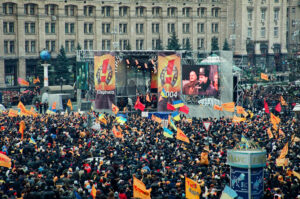
Change may be caused more by the frailty of the regime than the strength of the opposition, but in such cases the outcome is often less democratic.
July 2020, Volume 31, Issue 3
A review of MBS: The Rise to Power of Mohammed bin Salman, by Ben Hubbard.