
January 1998, Volume 9, Issue 1
Consolidation and Public Opinion in South Africa
Read the full essay here.
1068 Results
January 1998, Volume 9, Issue 1
Read the full essay here.
July 1997, Volume 8, Issue 3
Read the full essay here.
July 1997, Volume 8, Issue 3
Read the full essay here.
July 1997, Volume 8, Issue 3
Read the full essay here.

October 2022, Volume 33, Issue 4
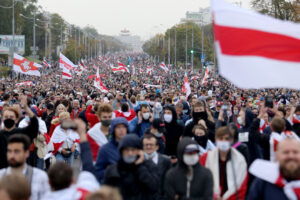
Opposition movements often boycott rigged polls rather than risk legitimizing an autocrat. It is usually a mistake. Here is the playbook for how one opposition seized the advantage.
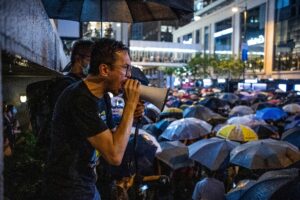
This is the darkest moment for freedom in half a century. Whether democracy regains its footing will depend on how democratic leaders and citizens respond to emboldened authoritarians and the fissures within their own societies.
July 2016, Volume 27, Issue 3
A review of Pax Technica: How the Internet of Things May Set Us Free or Lock Us Up by Philip N. Howard
April 2020, Volume 31, Issue 2
Out of power and with promises to jumpstart a lagging economy, the fractured Peronists reunified and reclaimed the presidency. Now they must deliver what voters want.
April 2020, Volume 31, Issue 2
In 2019, the global democratic recession deepened, while protest movements proliferated around the world, fighting largely without leaders or support from major democracies.
April 2020, Volume 31, Issue 2
Algeria’s massive wave of protesters wanted to put an end to sham elections. While the leaderless movement succeeded for a time, its failure showcased the lengths to which a country’s ruling elite will go to maintain its hold on power.
October 2019, Volume 30, Issue 4
Beyond the commonly cited economic and cultural anxieties afflicting many Europeans, a key factor enabling the rise of populism across Europe has been the failure of mainstream parties on both the left and the right to offer clear and credible policy alternatives.
July 2019, Volume 30, Issue 3
Within Ukraine, Russia’s 2014 invasion has generated unprecedented pressures to impose restrictions on speech. While international norms allow some censorship during wartime, some of Ukraine’s new media and cultural policies raise risks not only for its democracy, but for its security as well.
July 2019, Volume 30, Issue 3
The norm of ballot secrecy, although widely accepted in principle, is often downplayed and loosely defined in practice. As policy makers weigh new electoral options such as postal and internet voting, a better understanding is needed of secrecy’s many aspects and requirements.
July 2019, Volume 30, Issue 3
Stymied in his effort to secure a third term, President Joseph Kabila manipulated the electoral process in order to secure a compliant successor.
April 2019, Volume 30, Issue 2
The Chinese Communist Party wields highly effective means to quash dissent, but Chinese intellectuals and interest groups continue to push for change.
April 2019, Volume 30, Issue 2
It was the impact of Tiananmen that made the democracy movement in Hong Kong a mass phenomenon. Today, the democratic cause in Hong Kong remains linked to the democratic cause in China as a whole.
April 2019, Volume 30, Issue 2
The historical record since 1945 gives us a picture of how populists operate once they hold political power. The record shows that populism is inimical to liberal democracy, and not a corrective to some of its failings.

April 2019, Volume 30, Issue 2
In 2018, a peaceful protest movement brought down Armenia’s semiauthoritarian government and ushered in a new political era, the culmination of a long struggle for national pride, self-determination, and democracy.
April 2019, Volume 30, Issue 2
Spain’s system of Autonomous Communities had functioned fairly smoothly for decades following the country’s democratic transition, but events in Catalonia are putting it under unprecedented strain.
April 2019, Volume 30, Issue 2
Europe has seen a proliferation of laws governing historical memory, but they sometimes threaten to inflame social tensions and undermine liberal values.