

October 2021, Volume 32, Issue 4
Russia’s Road to Autocracy
Thirty years after the Soviet Union collapsed, Russia is firmly in the grip of an autocrat. Where did Russia’s path go wrong?
837 Results
October 2021, Volume 32, Issue 4
Thirty years after the Soviet Union collapsed, Russia is firmly in the grip of an autocrat. Where did Russia’s path go wrong?
January 2006, Volume 17, Issue 1
Excerpts from: the Damascus Declaration for Democratic National Change; the preamble of the Declaration of Principles for International Election Observation; the Taipei Declaration on Democracy in Asia.
October 2018, Volume 29, Issue 4
Report on Nicaragua by the Office of the United Nations High Commissioner for Human Rights (OHCHR); inaugural address of Ethiopia's new prime minister Abiy Ahmed; remarks by Peruvian president Martín Vizcarra at the Eighth Summit of the Americas; inaugural address of Colombian president Iván Duque
April 2018, Volume 29, Issue 2
After Mao, Deng Xiaoping tried to institutionalize collective leadership, but this did not stop Xi Jinping from grasping all the levers of power.

July 2022, Volume 33, Issue 3
The Kremlin wields food as a weapon and a shield against Western interference. But Putin’s push for food autarky could backfire, driving up prices and turning Russians against the regime.
January 2022, Volume 33, Issue 1
The Afghan republic’s destruction was sewn into its founding. The international community’s missteps are more responsible for its failure than the country’s supposedly endemic corruption.

July 2019, Volume 30, Issue 3
In both Eastern and Western Europe, social-democratic parties have shifted to the center on economic policy, not only sapping the electoral strength of these parties, but also opening up political space for the populist right.
January 2019, Volume 30, Issue 1
At present, the key struggle for the future of liberal democracy appears as if it will be unfolding among parties and thinkers on the right.
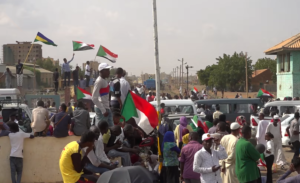
October 2019, Volume 30, Issue 4
Amid mass protests, the personalist autocracy of longtime Sudanese president Omar al-Bashir fell to an April 2019 coup. With the country now being governed by a council composed of both opposition leaders and powerful security-service coupmakers, prospects for democratization remain uncertain.
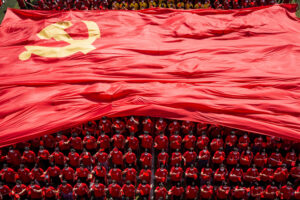
October 2024, Volume 35, Issue 4
The People’s Republic of China has entered a new age, abandoning the ideological openness of the reform era and the socialist legacy of the revolutionary period. Under Xi Jinping, regime stability trumps all — and the PRC is weaker and less stable as a result.
January 2012, Volume 23, Issue 1
Morocco was not immune to the 2011 upheavals in the Arab world, but the country’s monarchy deftly managed the crisis through cosmetic constitutional reform.
April 2008, Volume 19, Issue 2
In Africa today, investment flows in and civil societies grow stronger, yet many of the continent's leaders continue to behave autocratically, defending their privileges against the spread of law-based rule.
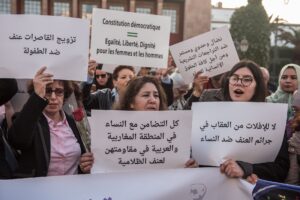
April 2022, Volume 33, Issue 2
Why are authoritarian regimes championing gender equality? Modern dictators want to appear progressive, liberal, and democratic, while distracting from their worst abuses.
October 2020, Volume 31, Issue 4
Hyperlocalized U.S. policing both upholds and corrodes democratic principles. Although some aspects of Europe’s model are nonstarters in the United States, Americans crave centralized enforcement of rules against abusive policing.
July 2019, Volume 30, Issue 3
The norm of ballot secrecy, although widely accepted in principle, is often downplayed and loosely defined in practice. As policy makers weigh new electoral options such as postal and internet voting, a better understanding is needed of secrecy’s many aspects and requirements.
July 2018, Volume 29, Issue 3
When nonviolent mass protests occur under authoritarian regimes, the military plays a key role in determining the outcome: the hardening of the dictatorship, a new authoritarian regime, or a transition to democracy.
April 2018, Volume 29, Issue 2
In 2017, the state of political rights and civil liberties around the world sunk to its lowest point in more than a decade. While the democratic powers grappled with their own internal problems, leading autocrats expanded their global efforts to undermine democratic institutions.
April 2017, Volume 28, Issue 2
This small West African country voted a longtime dictator out of the presidency. This victory for democracy was seemingly snatched away by his refusal to leave power—yet a breathtaking reversal lay in store.
October 2015, Volume 26, Issue 4
Once widely celebrated, civil society today is regarded as a threat by many governments, leading them to restrict its funding and activities.
July 2015, Volume 26, Issue 3
Nonpartisan election monitoring has helped to foster democratization over the last thirty years, but now dictators are trying to sabotage it, often by spreading lies and confusion.