
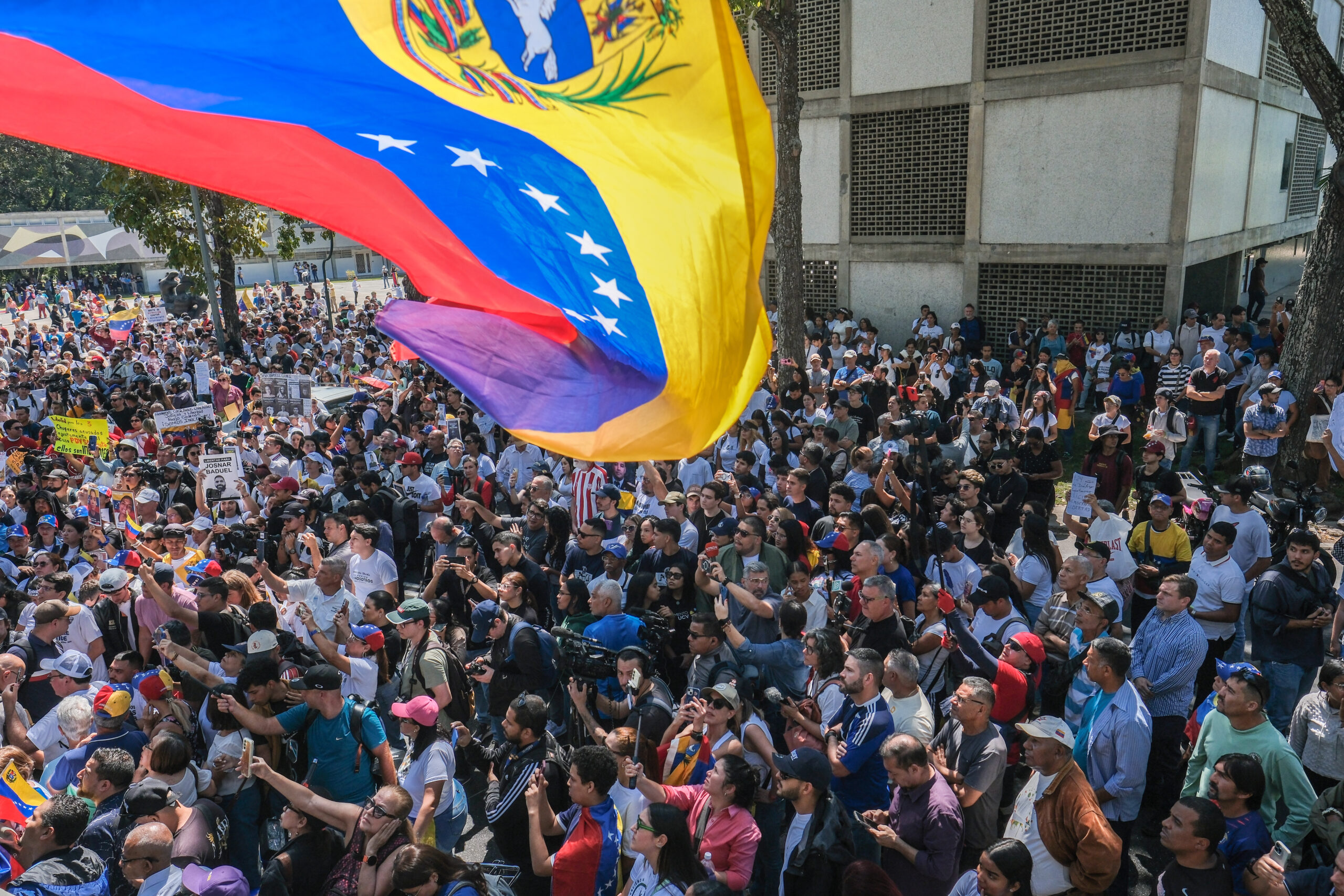
The country’s civil society is reemerging, opposition leaders are returning, and activists are taking to the streets. Even more, Washington has the leverage to bring about real change. Will it seize the moment?
February 2026
More than a month after the U.S. military raid that captured Venezuela’s dictator Nicolás Maduro, the country’s trajectory remains hard to predict. The Trump administration’s leverage over the regime now led by Maduro’s former deputy, Delcy Rodríguez, is extraordinary — derived from the credible threat of force and U.S. control over Venezuela’s oilfields, the country’s main source of income. The central question remains whether that leverage will be used to secure a genuine democratic transition after nearly three decades of authoritarian rule.
There have been positive signs. Civil society is reawakening after the brutal 2024 crackdown that followed the country’s fraudulent presidential elections. Opposition leaders are emerging from hiding. Students and activists have taken to the streets in a show of dissent unimaginable just two months ago, with some media outlets defying censorship to cover the protests. Hundreds of political prisoners have been freed, including a number of high-profile figures, though many remain detained. The National Assembly passed legislation opening the oil sector to foreign firms, and U.S. pressure is leading Cuban intelligence agents to leave the country. Surveys point to growing public optimism.
Still, some fear that Rodríguez is buying time by yielding to U.S. economic demands while slow walking political reform, as the newly approved amnesty law suggests — a narrowly passed measure that leaves many dissidents jailed on political grounds. She may be consolidating power by demonstrating to U.S. president Donald Trump that she can deliver whatever he desires — something no other leader, especially one subject to democratic constraints, could guarantee.
If Trump falls for this trap, the United States could become yet another foreign government outmaneuvered by Chavismo. The alternative for Trump — positioning himself as a decisive force behind Venezuela’s democratization, and perhaps Cuba’s as well — would be a historic achievement. Most importantly, the leverage and tools to make that outcome real are already at his disposal.
Mixed Signals from Washington
Within the Trump administration, there have been mixed signals about its ultimate goals in Venezuela. Secretary of State Marco Rubio has articulated the clearest vision, outlining a three-stage plan: stabilizing the country through U.S. supervision of Venezuelan oil sales and revenues; a recovery phase that shifts from emergency measures to a transparent energy industry sustaining long-term growth; and finally, a democratic transition.
Other actors, though, emphasize only certain aspects of this plan or altogether different priorities. It is clear, for example, that some officials and investors would be content with, and may even prefer, a Rodríguez-led arrangement — a continuation of the old order with a leader more open to American business — over the instability that could accompany a messy transfer of power. It is also clear that some trading firms granted confidential U.S. licenses to handle Venezuelan oil operate within an opaque framework that limits transparency and oversight, creating incentives to prioritize commercial access over democratization.
Even so, the final stage of Rubio’s plan is not without influential supporters. Economic interests are not a monolith. Many oil companies’ reluctance to make large, long-term investments in Venezuela reflects the country’s political uncertainty and skepticism that such commitments make sense under the current arrangement. In the event of a real democratic opening, these companies would likely be interested in investing substantial sums, and some have conveyed this directly to Trump — challenging the assumption that economic pragmatism necessarily favors regime continuity.
The prodemocracy camp also has important allies on Capitol Hill, including Republicans who, like Rubio, emerged from Florida’s political culture of staunch anticommunism and opposition to left-wing dictatorships in Latin America. In the past, they have succeeded in pressuring the administration on Venezuela.
Where does Trump stand in this debate? So far, he has downplayed elections and prioritized exploiting Venezuela’s oil reserves for American economic gain — a focus aligned with his broader aim, outlined in the 2025 National Security Strategy, to reassert U.S. preeminence in the Western Hemisphere by curbing the growing regional military and economic footprint of its adversaries. This inclination has led him repeatedly to praise Rodríguez for her willingness to accommodate U.S. demands, especially on energy.
At the same time, Trump placed Rubio in charge of his Venezuela policy and has never publicly disavowed the secretary of state’s plan or his statements denouncing Rodríguez’s illegitimacy. Moreover, Secretary of Energy Chris Wright, during his recent visit to Venezuela, was explicit in stating that the United States would use its leverage until the country had a representative government.
Whether by accident or design, the administration’s public messaging has been broad enough that it still appears open to very different futures for the Venezuelan people.
Chavismo Under Pressure
Inside the regime, the situation is no less complex, with powerful forces also pulling in different directions. Rodríguez finds herself in a precarious position, exposed to threats on all sides. In the wake of Maduro’s jailing, and knowing that she could end up in the same shackles, she has decided there is no alternative but to cave to the White House’s demands.
But a subservient relationship with the United States, led by a president who relishes flaunting his dominance over adversaries, carries significant risks. Venezuela’s ruling clique has tried to camouflage the self-debasement of kowtowing to Trump with a tough public discourse riddled with half-truths or outright lies. They have insisted, for example, that key concessions to Washington — such as the release of political prisoners — were already in the works before Maduro’s extraction.
Yet this posture is politically untenable and internally divisive, which explains their erratic behavior: conciliatory one hour, defiant the next; bowing to U.S. pressure only to backtrack, then concede again. The release of opposition leader and political prisoner Juan Pablo Guanipa, followed by his rearrest and subsequent rerelease, is clear evidence of these tensions, as well as the quarrels within Chavismo over the scope of the amnesty law. A movement cannot sustain itself on the single imperative of preserving power at all costs, especially if doing so requires cynically abandoning everything it once claimed to stand for, including defiance to U.S. imperialism.
The burden of reconciling these contradictions falls to Rodríguez. She must convince members of her ruling coalition that they should, for now, renounce certain elements of Chavismo to keep it alive: cede power to preserve power. She must also convince the White House that it should, for now, tolerate certain elements of the regime even if it aspires eventually to dismantle it. Otherwise, she could be overthrown — and any chance of benefiting from Venezuela’s vast oil reserves would vanish with her.
Rodríguez is therefore likely deceiving either her own coalition or Trump, with past behavior pointing to the latter.
In previous crises, Chavismo has repeatedly bought time by entering negotiations in which it feigned goodwill until the threat subsided. Given this record, it is reasonable to assume that Rodríguez is trying to manipulate Trump by, first, running out the clock — temporarily conceding to Washington’s demands while hoping that circumstances shift in her favor and U.S. leverage weakens. Such a shift could occur if Republicans lose the U.S. midterm elections later this year and Trump faces tighter domestic constraints on his war powers, or if he becomes entangled in a major conflict elsewhere.
Second, she may accept Washington’s economic demands while resisting reforms that could lead to a transfer of power. The calculation is that if Trump is showered with business deals, he will be less inclined to exert sustained pressure for a competitive electoral process.
It is a shrewd strategy — one that could well succeed over time.
Extraordinary Leverage
If Venezuela is making concessions to the White House that were once considered non-negotiable, it is for a simple reason: The regime sees them as its only option — at least in the short term — to reduce the risk of a second U.S. Delta Force operation.
It’s not only Rodríguez and her brother Jorge Rodríguez, the president of the National Assembly, who have reached that conclusion, but also other regime heavyweights, such as Defense Minister Vladimir Padrino, and Interior Minister Diosdado Cabello, a powerful figure who controls the security apparatus responsible for arresting, torturing, and disappearing political opponents.
Cabello is widely seen as the most hardline member of the ruling elite, unwilling to cede ground to his adversaries and ruthless in his methods to crush them. Still, he now appears to be begrudgingly following Rodríguez’s strategy.
Why? Of all the regime’s bigwigs, Cabello may be the most vulnerable: reviled by the Venezuelan opposition and a top U.S. law-enforcement target, with a multimillion-dollar bounty on his head on drug-trafficking charges. With reports that Washington views him as a potential source of chaos and rumors that Rodríguez might have double-crossed Maduro, he would be right to fear that she might turn him in to U.S. authorities. But he must live with that threat of betrayal, since moving against her could trigger a U.S. response — effectively making Trump both Rodríguez’s boss and protector.
In theory, this puts the White House in a strong position to convince Cabello that he cannot trust those around him and that exile is his only viable way out. More broadly, it exposes a structural vulnerability: Cabello’s predicament mirrors that of the regime’s inner circle, similarly constrained by internal and external pressures. That narrowing room for maneuver gives Washington extraordinary negotiating power over the leadership as a whole. Trump can compel them to take steps to unwind their system of control — steps they would never have taken otherwise.
A Path to Democratic Transition
This gradual dismantlement of the regime requires a careful balancing act from the United States: It should be fast enough to exploit leverage that may not last, yet slow enough to prevent a Chavista backlash against Rodríguez that could demand deeper American involvement in the country, perhaps even boots on the ground.
It also requires focusing on concessions that are not merely cosmetic. Securing the release of political prisoners, for example, is an urgent goal that must be pursued. But it is not enough: If the repressive apparatus and corrupt justice system remain intact, the regime will still possess the capacity to imprison opponents for political reasons. The White House and the Venezuelan opposition should demand reforms that open up space for real institutional transformation.
An important objective should be sidelining Diosdado Cabello, ideally forcing him into exile. The problem with Cabello is his awareness that he is too toxic a figure to survive a post-Chavista government. With no viable path outside power, he has no choice but to dig in, making meaningful progress toward political reform far more difficult. That’s the reason he now appears to be resisting some U.S. demands, at times seemingly approaching open confrontation with Rodríguez.
Without Cabello in the picture, the road ahead becomes clearer. In coordination with the opposition leadership, the White House could help craft a credible amnesty offer to the Rodríguez siblings and Defense Minister Padrino — generally regarded as more pragmatic than Cabello — laying the groundwork for a transitional-justice process. This would require complex bargaining over a broader amnesty framework for the vast majority of rank-and-file regime officials who did not commit serious crimes and whose collaboration will be essential for the survival and stability of a new order.
It would also entail the gradual re-institutionalization of the state — restoring the independence of bodies meant to operate autonomously but captured by Chavismo, including the judiciary, the legislature, the electoral authorities, the military, and the police.
The priority here must be to create the conditions for holding, as soon as possible, a fair presidential election, an effort that hinges on pressing hard to lift bans on disqualified candidates, legalizing political parties, depoliticizing the Electoral Council, and guaranteeing access to the media, freedom of movement, and other basic voting rights.
Chavismo will no doubt resist some of these reforms and deploy its usual array of tricks to tilt the playing field in its favor. But this effort need not be perfect to be effective, given the precedent of the 2024 presidential elections. On that occasion, the opposition not only won by a wide margin under extremely unfavorable conditions but also gathered and preserved the tallies to prove its victory, prompting Maduro to resort to outright fraud to remain in power. This time, the opposition would compete on far more level ground, and it is difficult to imagine the regime attempting an overt subversion of the vote if the United States maintains its current leverage.
It is important to recognize that, daunting as the task of dismantling authoritarian structures may seem, the process could unfold more swiftly than we now imagine. History has shown that the shift from inconceivable to inevitable can happen with remarkable speed. Small changes can quickly cascade into larger ones, generating momentum that becomes difficult to reverse. Cabello’s exit could imbue the movement toward change with a sense of inevitability. However deeply institutions in Venezuela may be penetrated, an opposition electoral victory — backed by a firm U.S. commitment to uphold the result — could accelerate institutional transformation. At that point, halting the transition would require Chavismo to launch a coup and risk military confrontation with the world’s most powerful military.
The push for a presidential election is now gaining significant support. It is coming not only from Republican members of the U.S. Congress, but also from Democrats, who are increasingly urging the administration to prioritize democracy over oil, as well as from major American companies that view political change as a prerequisite for large-scale investments.
Many stars have aligned to create this unique opening for change in Venezuela. Opportunities like this are rare — and often brief. The chance to end Venezuela’s suffering must not be wasted.
Alejandro Tarre is a Venezuelan writer and journalist, and the author of a newsletter on politics and literature.
Copyright © 2026 National Endowment for Democracy
Image credit: Diko Betancourt/Anadolu via Getty Images
|
FURTHER READING |
||
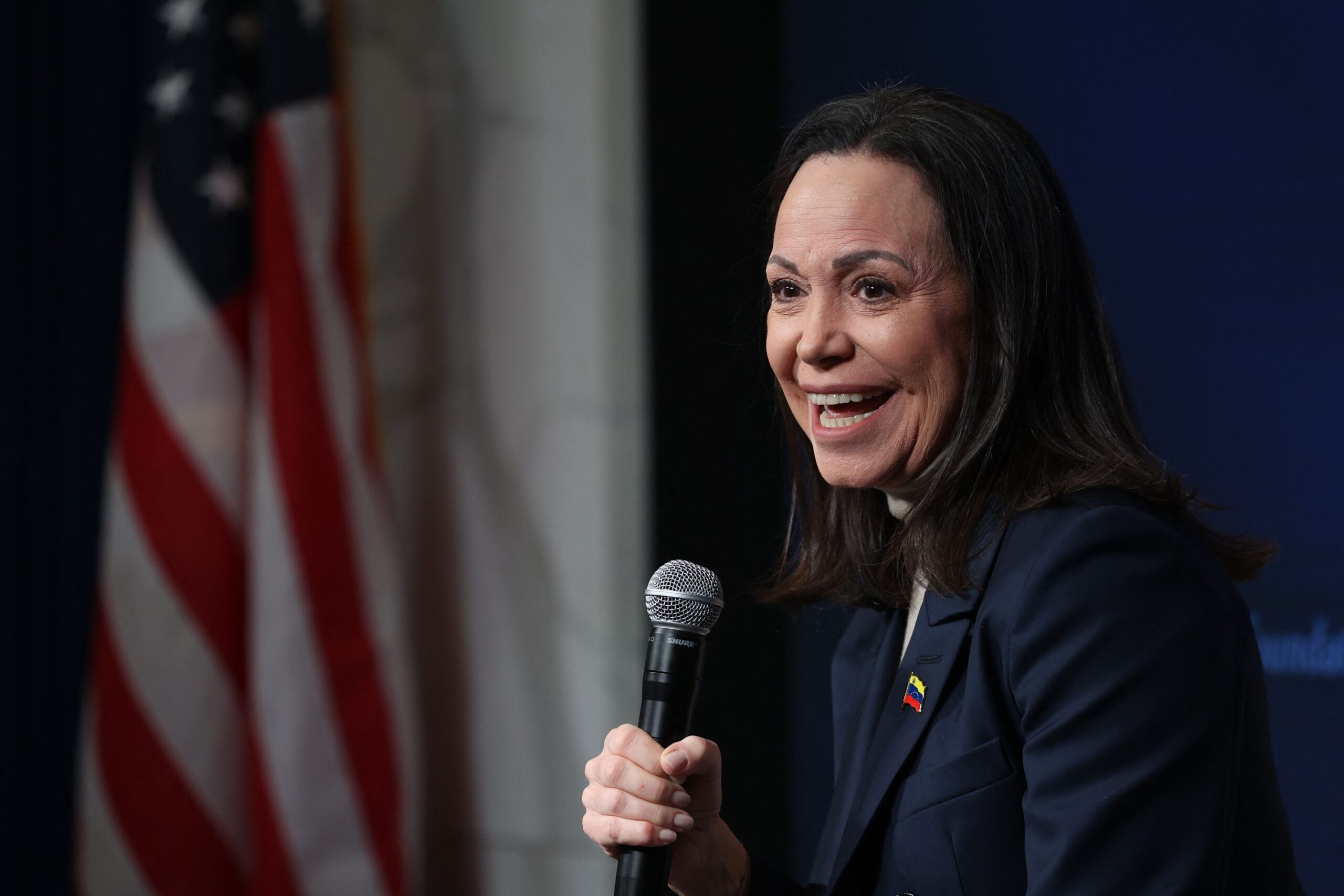
How Machado Can Steer Venezuela Toward DemocracyWhether the capture of Nicolás Maduro leads to democracy depends on Donald Trump — and María Corina Machado’s ability to make a democratic future the only attractive choice. |
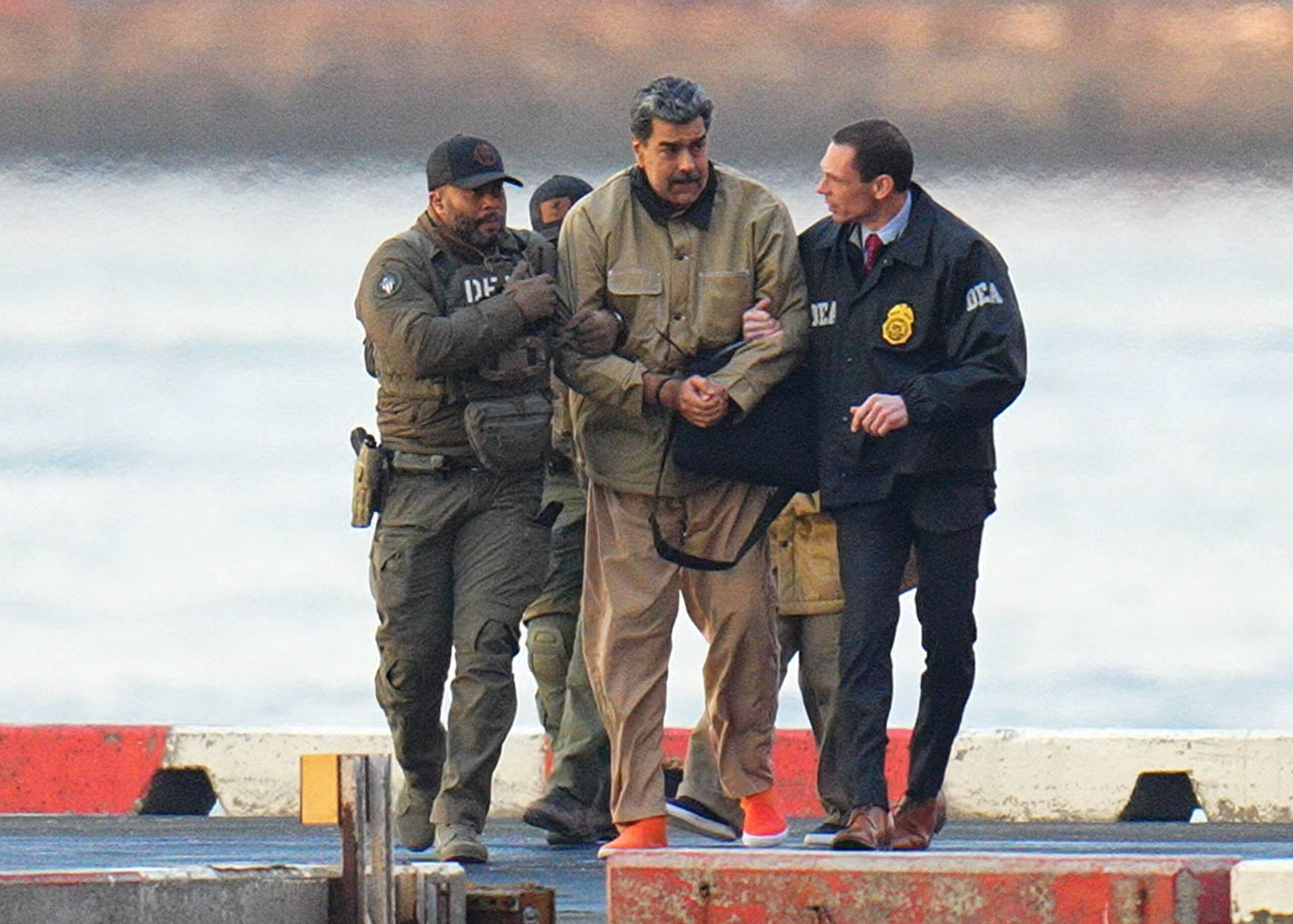
Why the United States Shouldn’t Run Venezuela |
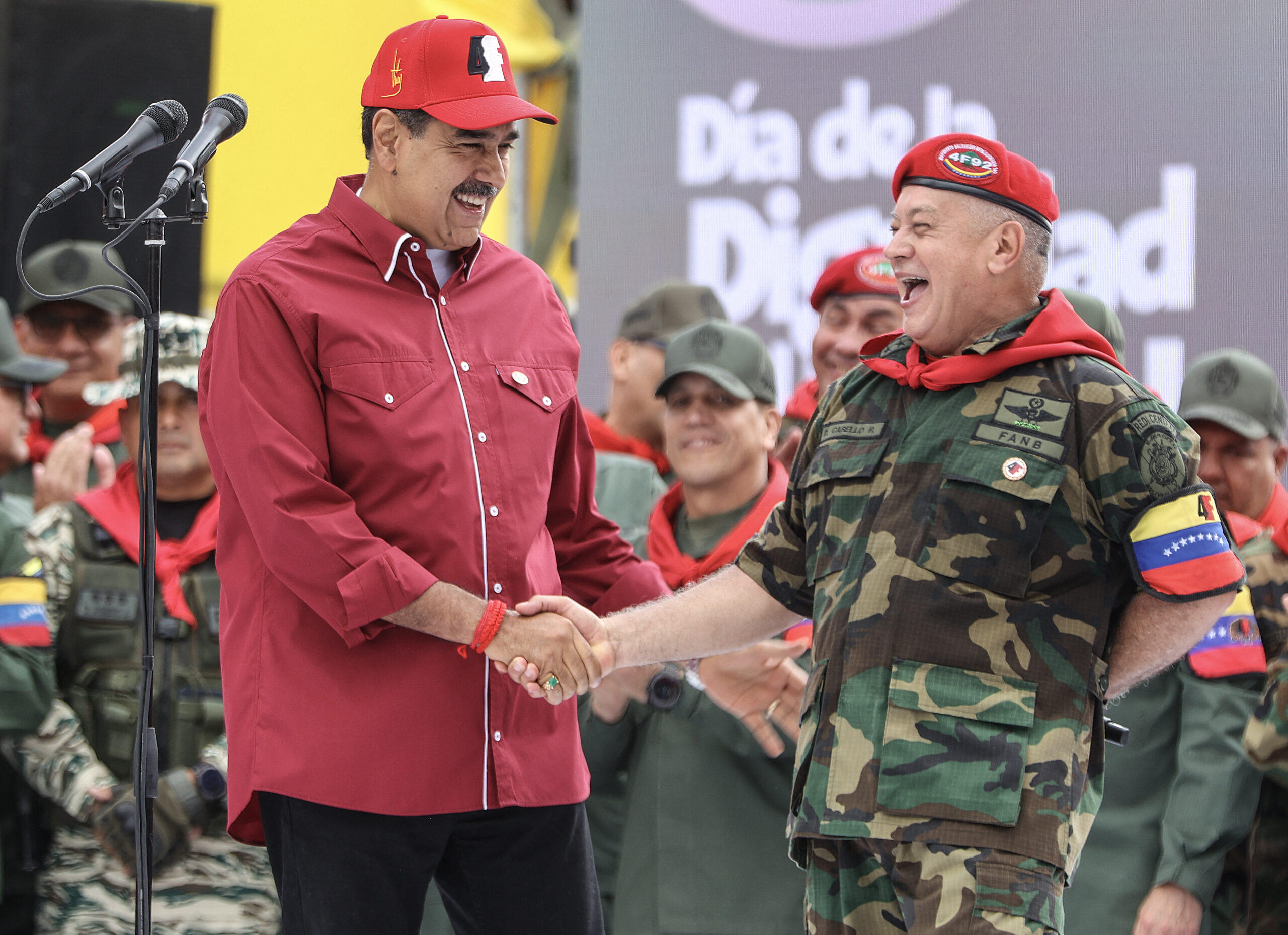
How Venezuela Became a Gangster StateNicolás Maduro is a mafia boss, not a president, and the Venezuelan government is now a criminal enterprise with the power of a state. It poses a threat to democracies everywhere. |