
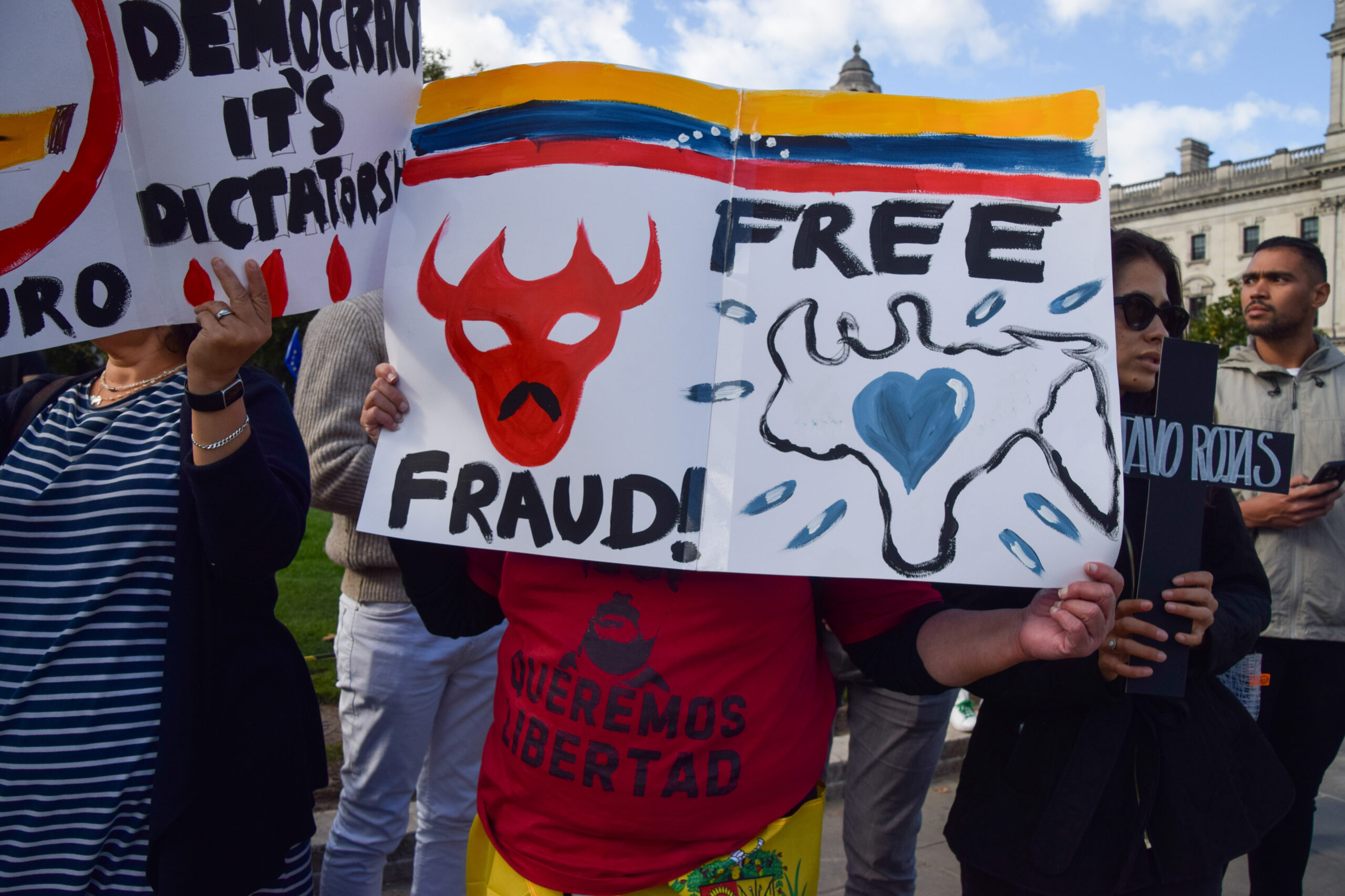
Nowadays some politicians cry “fraud” even before the election. Too often the accusation has nothing to do with electoral manipulation. It has become a weapon to attack institutions, justify antidemocratic measures, and reject election results.
March 2026
When it comes to elections nowadays, the most contagious word of all is perhaps “fraud.” Once the idea of election fraud takes hold within a segment of the electorate, there is rarely an effective antidote. Allegations of fraud tend to become self‑reinforcing — social viruses that mutate faster than institutional immune systems can respond, producing durable perceptions even in the absence of substantiating evidence.
In 2017, I described this phenomenon as dangerous but manageable. Today, that diagnosis appears almost optimistic. Increasingly, fraud narratives are articulated before election day, embedded in campaign messaging, and sustained beyond electoral resolution. In some contexts, even the victors invoke fraud claims to delegitimize oversight institutions or justify antidemocratic structural reforms. This transformation represents more than a change in rhetoric. It signals a broader erosion of confidence in electoral governance and, by extension, in democratic legitimacy itself.
What Fraud Is — And What It Isn’t
Any serious discussion of electoral fraud must begin with conceptual clarity. Not all electoral problems are fraudulent, and not all irregularities compromise the integrity of an election. Yet in public discourse, these distinctions are frequently collapsed, creating fertile ground for the misuse of fraud allegations.
To understand the contemporary misuse of the concept of fraud, we must distinguish between at least three categories of electoral problems: procedural error, structural manipulation, and fraudulent action.
All electoral systems, regardless of institutional maturity, experience technical imperfections. The existence of administrative error is not synonymous with fraud; rather, it reflects the inherent complexity of large-scale electoral administration. Similarly, some distortions can occur prior to election day through institutional design. Examples would be gerrymandering, malapportionment, biased electoral-management bodies, exclusionary candidacy rules, and unequal media access; any of these might skew competition without necessarily violating formal law. Such structural biases may undermine democratic fairness even in the absence of overt criminal fraud.
Fraud, properly defined, requires both intent and magnitude. An election becomes fraudulent only when irregularities are deliberate, widespread, and consequential enough to distort the genuine expression of the people’s will. Yet in public discourse, these distinctions are routinely ignored. Procedural mishaps are treated as proof of conspiracy, and electoral defeat is increasingly explained not through political accountability but through allegations of systemic fraud. The failure to distinguish among these categories enables the indiscriminate use of the term “fraud” as a political weapon.
The Fraud Narrative as Political Strategy
Fraud narratives follow identifiable strategic patterns. They are rarely spontaneous reactions to isolated irregularities; rather, they function as political instruments embedded within broader strategies.
First, allegations of fraud are frequently instrumentalized — whether by politicians, parties, or political partisans — to mobilize supporters, delegitimize opponents, or weaken oversight institutions. Second, minor or routine irregularities are reframed as evidence of systemic collapse. Third, digital-communication environments amplify and entrench claims within ideologically homogeneous networks. And finally, electoral authorities themselves are portrayed as partisan actors, preemptively undermining their credibility.
Taken together, these elements form a recognizable script. While the specific claims may vary, the underlying strategy remains consistent: to replace institutional adjudication with narrative dominance. The success of the fraud narrative does not depend on proving manipulation, but on persuading a sufficient portion of the electorate that democratic procedures can no longer be trusted.
Why It Works: Technology and Psychology
The contemporary fraud narrative does not gain traction solely because it is strategically deployed. It succeeds because it operates within an information environment and cognitive landscape that are uniquely conducive to its spread and persistence. The interaction between digital technologies and human psychology explains not only how fraud narratives circulate, but why they endure even in the face of contrary evidence.
The Digital Ecosystem
Technological change has radically altered the speed, scale, and form of political communication. AI-driven tools now enable the rapid production and dissemination of persuasive content designed to exploit attention and emotion rather than accuracy, often reaching large audiences before electoral authorities can respond.
The scale of dissemination is compounded by social-media-platform architectures that prioritize engagement, often amplifying emotionally charged or conspiratorial material. Microtargeted messaging deepens polarization by delivering tailored narratives to segmented audiences. In this environment, virality becomes a proxy for credibility, and repetition substitutes for verification.
In addition, synthetic media technologies have blurred the boundary between authentic documentation and fabricated evidence. Deepfakes and manipulated recordings complicate real-time verification efforts by electoral authorities and journalists.
The result is a structural asymmetry: falsehoods circulate instantly and widely, while corrections require time, institutional authority, and public trust — resources increasingly under strain.
The Cognitive Ecosystem
Technology alone, however, does not explain the resilience of fraud narratives. Their durability is rooted in well-documented features of human cognition. Individuals do not process political information as neutral observers; they engage in motivated reasoning, accepting claims that align with their identities and rejecting those that threaten them.
Fraud narratives provide a psychologically protective explanation to group identity and collective self-conceptions when defeat is attributed to manipulation rather than rejection of ideas. In polarized societies, these narratives persist not because institutions fail to provide empirical evidence, but because information alone is insufficient to overcome emotionally and cognitively entrenched beliefs. Any effective response must therefore address not only the technological channels through which narratives spread, but the psychological mechanisms that make them persuasive.
From Narrative to Damage: Institutional Erosion
The sustained deployment of fraud narratives has significant institutional consequences. Electoral institutions across the Americas now face converging pressures: political aggression, institutional undermining, and a steady erosion of public trust. Attacks against electoral authorities have become increasingly personalized. Senior officials and frontline election workers are subjected to harassment, defamation, and threats, often amplified by political leaders using digital platforms to target individuals rather than institutions.
Simultaneously, institutional autonomy is challenged through budgetary restrictions, legislative reforms, or politically motivated investigations. Repeated attacks reduce public willingness to accept electoral outcomes, even when independently verified.
The paradox of the contemporary fraud narrative is that it is now weaponized not only by electoral losers, but increasingly by winners. Newly elected leaders have accused election authorities of bias even after benefiting from the very institutions that administered their victory. In this inversion, the fraud narrative no longer ends with election day — it becomes a tool of governance.
When confidence in elections declines, the legitimacy of democratic alternation of power is undermined. Electoral competition, rather than resolving conflict, becomes a catalyst for persistent instability.
The Narrative Becomes Crisis
Election-observation missions, such as those of the Organization of American States (OAS), have developed methodologies to differentiate between isolated irregularities and systemic manipulation. They rely on methodological observation, statistical analysis, and direct engagement with stakeholders to assess the impact of irregularities rather than their mere occurrence. The reports issued by the OAS in several countries of the western hemisphere illustrate how fraud narratives have evolved and operate across varied political environments.
Peru’s 2021 elections demonstrate how unsubstantiated allegations can escalate rapidly from postelectoral contestation into a direct attack on electoral authorities, which may persist independently of formal legal outcomes. Political actors questioned tally sheets without filing formal legal challenges, while the National Elections Board faced an unprecedented wave of harassment. Hundreds of annulment requests were ultimately rejected, yet claims of “systematic fraud” persisted, fueling mobilization and sporadic violence.
Brazil’s 2022 elections show how fraud narratives can be driven from the highest levels of government, illustrating how incumbents can weaponize distrust against the very institutions administering elections. Then-President Jair Bolsonaro and his party repeatedly questioned the integrity of the voting system, with baseless allegations. Moreover, the OAS election-observation mission documented a deliberate ecosystem of disinformation aimed at eroding trust in Brazil’s electronic-voting system.
Paraguay’s 2023 elections highlight a newer and particularly destabilizing trend: the deployment of fraud narratives even before ballots are cast. Following election day, candidates rejected results via social media and called supporters into the streets, triggering violent protests despite the absence of formal complaints.
Guatemala’s 2023 election gave rise to an equally damaging dynamic, illustrating how fraud narratives may be embedded within state institutions themselves. The courts, the attorney general’s office, and the election commission made claims of fraud without evidence, seeking to annul the election. When this failed, they attempted, unsuccessfully, to retroactively ban the winning party, current president Bernardo Arévalo’s Seed Movement, which would have voided the votes cast.
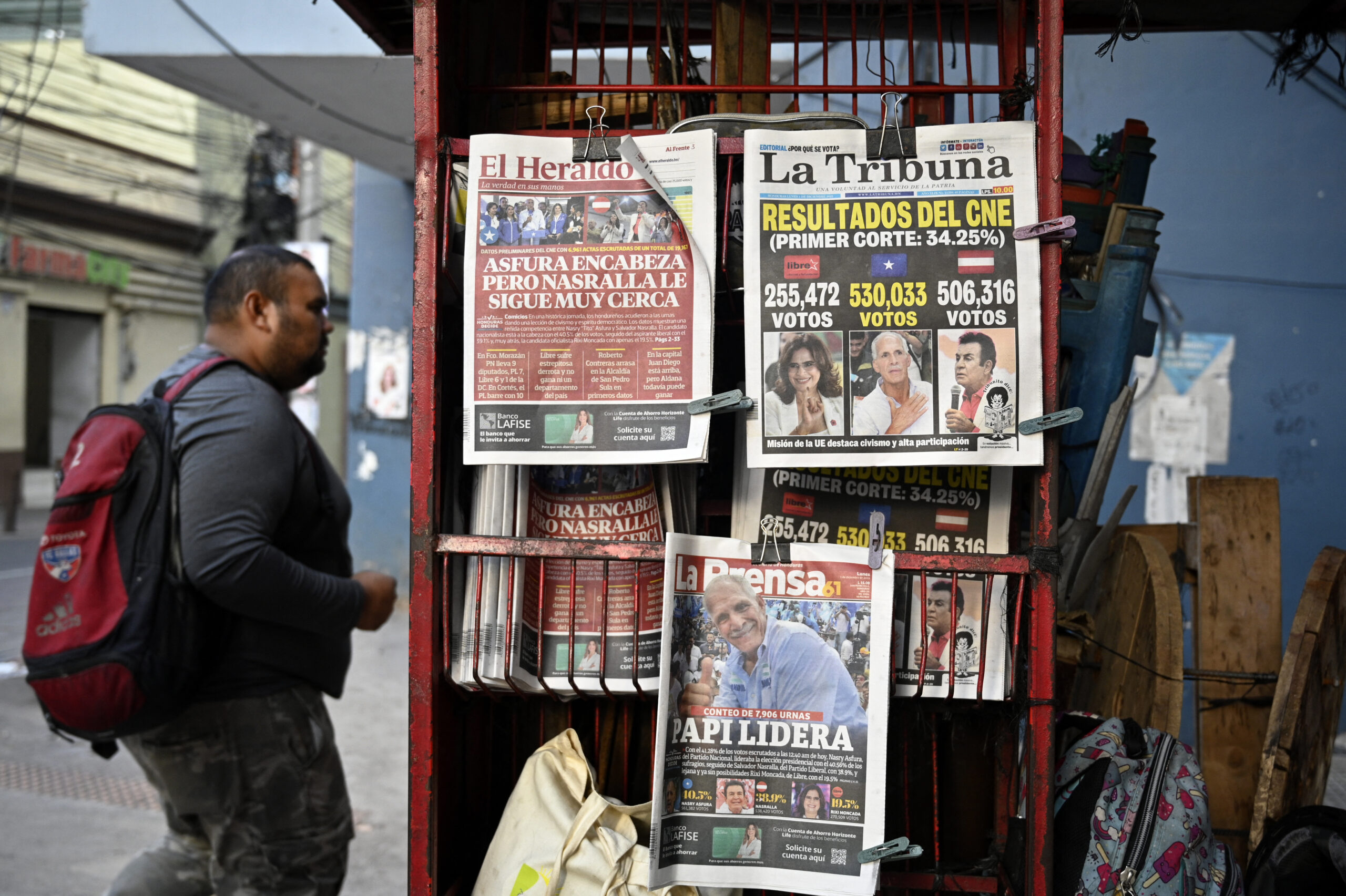
The most extreme case observed was Honduras in 2025. Although the electoral process was widely recognized as deeply flawed, the OAS election-observation mission concluded that it was not fraudulent. This particular case exemplifies how genuine imperfection can be transformed into systemic delegitimization absent proof of coordinated manipulation. What made the fraud narrative uniquely damaging was that it was actively promoted not only by politicians, but by a member of the electoral authority itself. Persistent, unsupported allegations, combined with harassment of fellow commissioners, severely undermined the institution’s credibility.
Countering the Fraud Narrative
Reversing the erosion of electoral trust requires coordinated action across institutional, informational, and normative dimensions. There are seven policy priorities that, if adopted, should make a difference:
1) Institutional safeguards must protect the autonomy of electoral-management bodies (EMBs). Examples include preestablished EMB budgets for elections that establish immunity for EMB members for their election-related decisions, and EMB term limits that go beyond one election cycle.
2) Civic- and digital literacy-initiatives should equip citizens to evaluate information critically.
3) Strategic communication frameworks must anticipate and address disinformation proactively. Media campaigns should be ready and in place to counteract regular and repeated fraud narratives — for example, claims of pre-marked ballots or machines that don’t count votes correctly —as soon as, or even before, they begin.
4) Cooperation with digital platforms is necessary to mitigate the amplification of demonstrably false claims during electoral periods. Given the possible reputational and economic damage from not collaborating, platforms are usually willing to work with EMBs, which often have powers to levy fines or to order posts spreading false allegations to be taken down.
5) Protection mechanisms for election officials should be enhanced to counter harassment and intimidation.
6) Regional peer-learning mechanisms can support coordinated responses to cross-border disinformation. The OAS, for example, provides regional workshops, meetings, and exchanges where EMB representatives from the different member states share their experiences dealing with false fraud narratives around elections, learning from one another as well as from outside experts.
7) Perhaps most important, normative reinforcement of concession practices — that is, accepting defeat — remains central to democratic stability. Thus election disputes without verifiable evidence should be called out by other political parties, the media, the international community, and civil society.
These measures cannot eliminate political conflict, but they can strengthen institutional resilience.
From Contagion to Cure
In 2017, I argued that the perception of fraud could be as damaging as fraud itself. Nearly a decade later, that observation understates the challenge that democracies now face. Today, the narrative of fraud has become a weapon — used to delegitimize institutions, justify antidemocratic reforms, and normalize the rejection of election outcomes.
Democracies must therefore confront a dual challenge: preventing genuine manipulation while inoculating societies against imagined fraud. This requires technically competent institutions, politically independent authorities, responsible media ecosystems, and leaders willing to place democratic norms above short-term advantage.
Ultimately, democracy rests on a shared belief that election outcomes reflect the will of the electorate — even when imperfect. Disagreement is not conspiracy. Legitimacy derives not from the absence of error, but from the presence of good faith.
If the fraud narrative is contagious, then truth, transparency, and integrity must serve as the vaccine.
Gerardo de Icaza is director of the Department for Electoral Cooperation and Observation at the Organization of American States. The views expressed are those of the author and do not necessarily reflect the positions of the OAS or its member states.
Copyright © 2026 National Endowment for Democracy
Image credit: Vuk Valcic/SOPA Images/LightRocket via Getty Images
|
FURTHER READING |
||
Why Honduras Is Facing Election Chaos |
Is Central America Doomed?
|
Democracy’s Frontline Defenders
|