
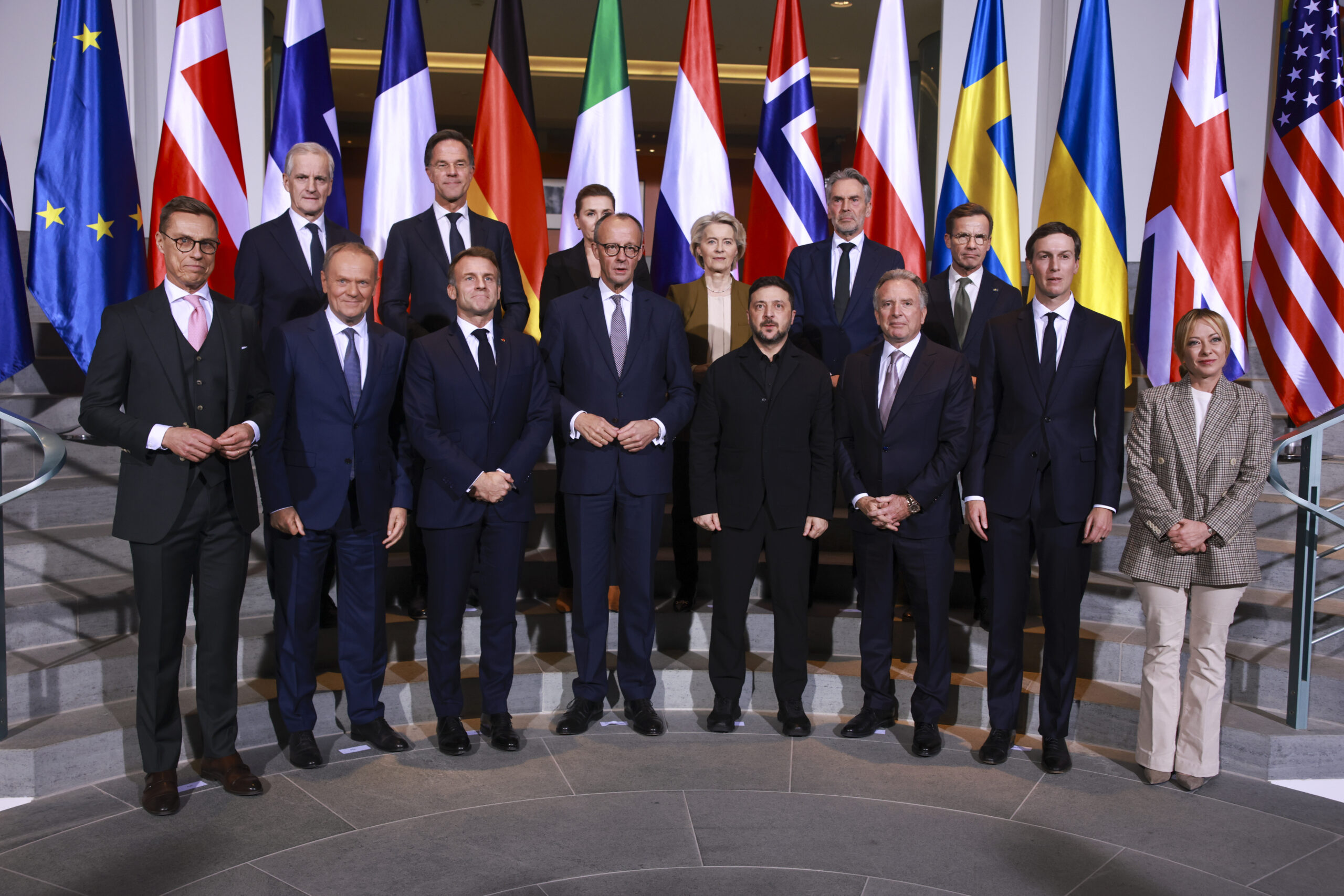
It certainly should be. But the reality is that Europe’s newfound autonomy isn’t producing the stalwart defense of democracy that the world now requires.
February 2026
At this year’s Munich Security Conference, European leaders faced up squarely to the fact that they can no longer reflexively count on the United States. In the same vein, there has been a growing sentiment in recent months that the continent must “step up” to counterbalance America’s retreat from democracy promotion. While European diplomats, analysts, and journalists have celebrated the EU’s newfound firmness in pushing back against U.S. strong-arming, it isn’t clear that this assertiveness is actually accomplishing much to bolster democracy’s prospects.
The European narrative is that the EU now stands as the primary beacon of the international liberal order and key defender of democratic norms. The EU, according to official statements, is filling the breach left by an increasingly erratic and illiberal United States. And a growing number of European leaders — including French president Emmanuel Macron and EU Commission president Ursula von der Leyen — are touting the continent’s emerging leadership role in upholding democratic values.
The reality has been far more mixed. The European Democracy Hub has just published its fifth annual review of European democracy-support policies, and the record in 2025 was far from stellar. While European leaders insist that U.S. democratic backsliding represents a dramatic geopolitical inflection point, the substance of EU democracy policies has changed relatively little. These policies have not registered any decisive upgrade commensurate with the EU’s claim to now be leading the defense of global democracy. If anything, EU democracy policies have continued on the slightly downward trajectory that was already evident before the start of the second Trump administration. Most European donors, including France, Germany, the Netherlands, Sweden, and the United Kingdom, have cut democracy assistance in the last two years.
The EU’s one significant new democracy initiative last year was the European Democracy Shield, which focuses on online influence and manipulation coming into Europe from other countries. The EU had Russian and Chinese operations in mind when first proposing this effort, but U.S. threats are now on its agenda as well.
Some on the American far right claim that European governments are among the world’s worst infringers of freedom of speech. Such accusations make little sense — most European governments score better than the United States on freedom of expression. Yet European governments have hunkered down against mounting illiberal threats in a way that has made them more reticent to implement reforms to improve the quality of democratic governance, civic pluralism, citizen engagement, and the way political parties work. The prominence of new security priorities in EU decisionmaking points toward a less open and more executive-heavy governance style. Some European governments — most prominently, Germany — evince a growing spirit of liberal hardball, contemplating more confrontational measures to contain illiberal forces that sometimes skirt the edges of liberal democracy.
A good example of this is the EU’s directive on foreign lobbying, debated in the European Parliament in late 2025, to prevent funding or sponsored activities from outside the bloc from influencing EU policy in support of illiberal causes. While the EU insists this effort meets democratic standards, to many observers it has eerie similarities with authoritarian foreign-agent laws that have spread like a plague across the world.
Internationally, the European commitment to democracy support has weakened, not strengthened. The EU in its quest for “European autonomy” — now the guiding leitmotif of most of the body’s policy developments — has reduced defense, technology, and trade dependencies on the United States. But it has not similarly upgraded its support for democracy. In fact, it seems that European autonomy might further weaken rather than strengthen Europe’s global democracy commitments.
On the one hand, the EU is aware that it will need to play a more pivotal role if international democracy support is to have any future, and much debate in Brussels revolves around this conviction. On the other hand, the EU now has less scope and heft to focus on democracy support given the urgency of these other policy priorities. The profound shift in Washington has in some sense pulled European policies in a more Realpolitik direction. The United States’ visceral realism is pushing European governments to double down on protecting their own power and well-being. Some European leaders have openly called for the EU to drop its commitment to democratic universalism. This is an increasingly standard line among European think-tank analysts, too.
The European Commission’s proposed new EU budget removes the ringfenced funding allocation to external democracy support that has existed for more than thirty years. European democracy funding is now miniscule compared to the beefed-up spending on defense and the flagship Global Gateway infrastructure initiative, now the EU’s main vehicle for external aid. In 2025, the body added only nineteen individuals to its global human-rights sanctions regime. The European Democracy Shield mentions the need to support democracies outside the EU, but its proposed actions include nothing concrete in this regard.
The EU has focused more effort on encouraging democratic reform in candidate states — its effort to safeguard Moldovan democracy was the star achievement of 2025. Yet the more global dimensions of European democracy support have atrophied. The EU has signed a clutch of security and defense partnerships with other powers, but these are mainly concerned with traditional security cooperation and not democracy coordination. Many EU trade deals in recent years have been with nondemocratic regimes. Even more, the EU and its member states didn’t offer clear support to the many democratic protests that broke out across the world in 2025.
While a more assertive Europe is much needed and overdue, the EU mistakenly conflates defending itself with defending liberal-democratic values. These do not automatically go hand in hand, and the record in 2025 shows they may even be at odds. If Europe hopes to take America’s place in defending democratic norms, it needs to become far more serious about the pro-democracy work that needs to be done.
Richard Youngs is a senior fellow in the Democracy, Conflict, and Governance Program at Carnegie Europe, professor at the University of Warwick, and co-founder of the European Democracy Hub.
Copyright © 2026 National Endowment for Democracy
Image credit: Clemens Bilan Pool/Getty Images
|
FURTHER READING |
||
Why Democracy Promotion Is as Vital as Ever |
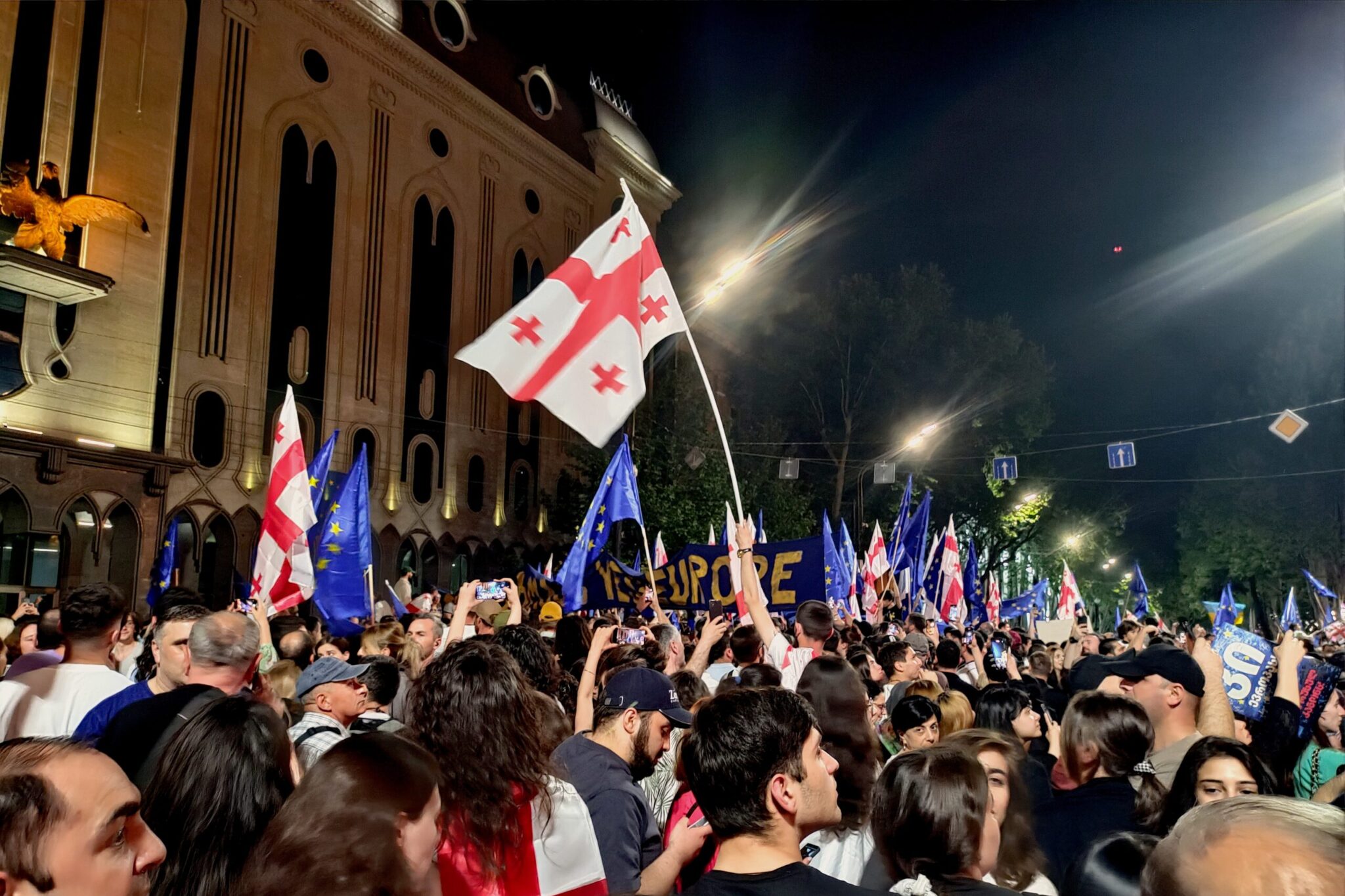
The Source of Georgia’s Democratic ResilienceElene Panchulidze and Richard Youngs Even as Georgia lurches toward autocracy, the country’s pluralism and democratic culture are deepening. What can Georgia’s contradictory trends reveal about democratic resilience? |
Why the European Elections Will Test DemocracyThe danger is greater than the rise of far-right parties. In fact, there is a risk that in their eagerness to contain the far right, European leaders may do greater damage to democracy itself. |