
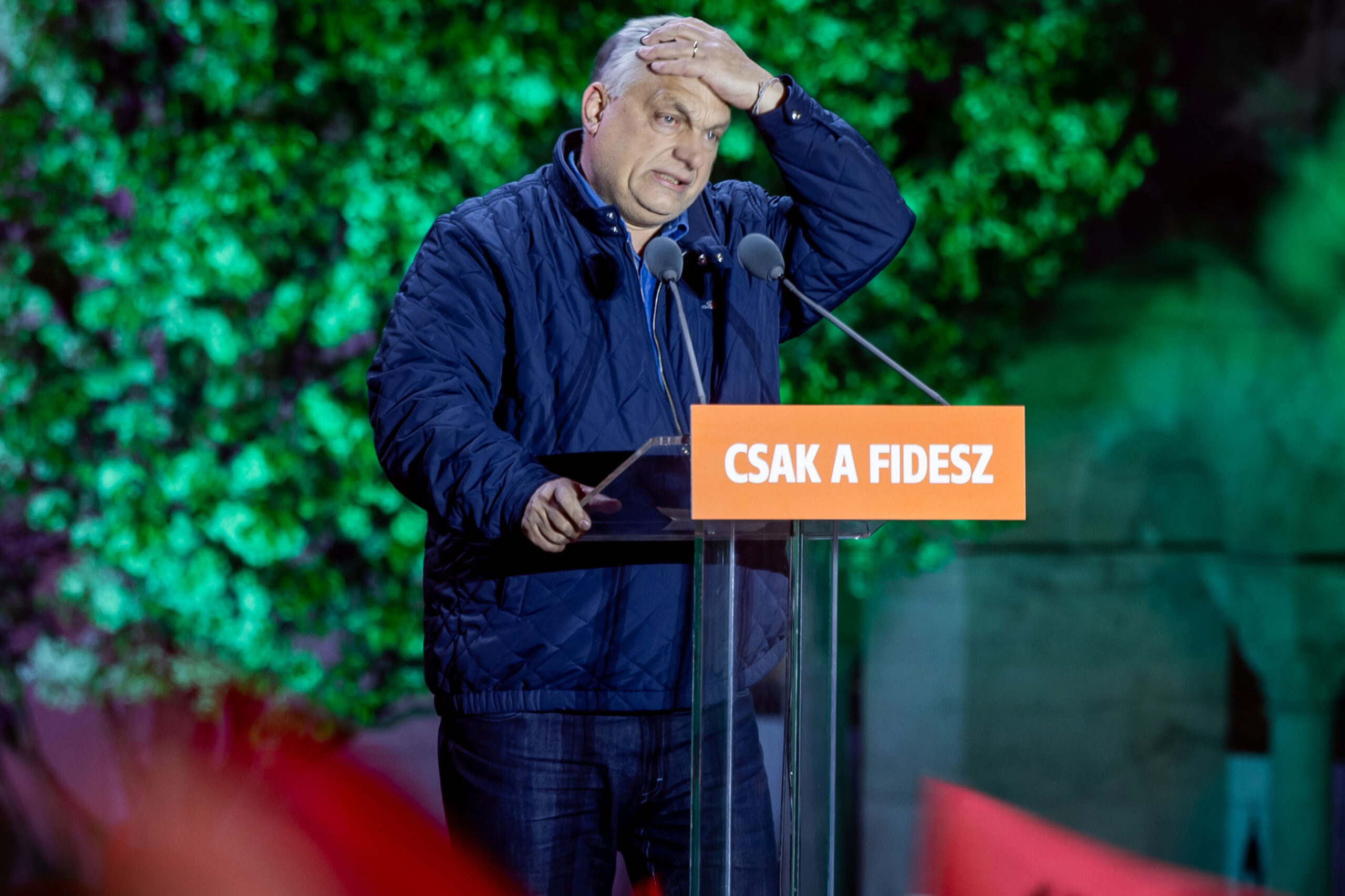
Viktor Orbán’s election defeat last month stunned many people. But in truth it’s not uncommon for would-be autocrats to lose at the ballot box. It’s a more hopeful picture than many people realize.
By Javier Corrales and Susan Stokes
May 2026
Viktor Orbán’s election loss last month was greeted as a stunning event, given his sixteen years in power and his degradation of Hungarian democracy. But how unusual is it for democracy-eroding leaders to be forced from office? Our research shows that it is not unusual: The majority of democracy-eroding presidents and prime ministers do stand down, mostly because they fail to be reelected or are barred by term limits from running again. And the majority of those who leave office are replaced by others who respect and hope to rebuild their democracies’ institutions.
Our research identifies 27 instances of democratic erosion that occurred across 22 countries since 1999. In twenty instances, leaders left office and did so without completing a transition to authoritarianism. Of these twenty, fifteen were replaced by leaders who either stopped the backsliding or delivered a clear U-turn toward redemocratization.
The most common exit route is shockingly simple (and old-fashioned): elections. Voters — directly or indirectly — continue to be the most important actors in determining whether backsliders stay or leave.
The worst-case scenario of full autocratization has been rare. Only two presidents — those of Nicaragua and Venezuela — turned their countries into consolidated authoritarian systems. (Russia traveled a similar path, but is not generally considered to have become sufficiently democratic in the 1990s to qualify as an instance of backsliding democracy.) Whether the U.S. removal of Nicolás Maduro will eventually lead to the redemocratization of Venezuela remains an open question.
That said, the backsliding leaders on average spent nine years in office, leaving them plenty of time to degrade their countries’ institutions. The leaders who replace them face enormous challenges in undoing the damage done.
History shows us that there are five ways autocrats will be replaced:
Losing Elections. Viktor Orbán is one of six leaders to have lost at reelection. Presidents and prime ministers were also voted out in Poland, Brazil, the United States, Botswana, and Zambia.
It is worth emphasizing that elections matter, since many voters come to think that elections are hopeless tools against autocratizing leaders and may choose to stay home on election day. But in these six cases, the opposite happened. Voting surged. This surge tends to favor the opposition. The key takeaway is that, even if the rules are unfavorable, it pays for opposition leaders to invest in getting the vote out.
Term Limits. Another election-related obstacle for would-be autocrats are term limits. In six instances, presidential term limits brought an end to a backsliding leader’s tenure. Some leaders, including Vladimir Voronin of Moldova and Andrés Manuel López Obrador of Mexico, were under term limits and did not run again. In Mexico, that a handpicked copartisan would succeed the president persuaded him to adhere to term limits. But sometimes, as in Ecuador in 2017, successors defy expectations and redemocratize. Term limits remain an important opportunity for regime change.
That is the reason backsliding leaders have tried to weaken or eliminate term limits. This too can backfire. The public is often skeptical about relaxing term limits. In a 2007 referendum, Chávez failed to get Venezuelans to agree to abolishing term limits. He eventually succeeded in ending term limits in a 2009 referendum. But he prevailed only after offering to end term limits for all posts, not just the presidency, and after launching a concerted campaign to mobilize his voters, many of whom had abstained in 2007. In 2016, Evo Morales in Bolivia ran for reelection despite having lost a referendum that would have allowed him to run again, leading to an electoral crisis and Morales’s unseating.
Party Removal. Another, indirect way in which electoral pressures bring backsliders down is when their own party induces them to resign. The one clear instance of party removal was when the African National Congress forced the resignation of Jacob Zuma in 2018. The U.K.’s Boris Johnson — not quite a backsliding leader but on the path to becoming one — was removed from office in 2022 by his own party’s leaders, worried about his becoming a burden in future elections.
In at least one presidential system party removal was a factor. That was in Ecuador.
Leaders in Rafael Correa’s Alianza PAIS party were worried that Correa would lead them to defeat if he pursued a fourth term and encouraged him to step aside.
Protests. Aspiring autocrats’ attacks on democracy never go unchallenged. One response to them is popular protest. Protests have been widespread in eroding democracies from Serbia to the United States, and from Mexico to Senegal.
Though they can challenge the narrative of inevitability of autocratization and energize the opposition, rarely have protests outside the electoral calendar led directly to the removal from office of a backsliding leader. There are exceptions. In Ukraine in 2013–14, after weeks of Euromaidan protests, Viktor Yanukovich abandoned the presidency. Street demonstrations were also an element in the exits of backsliders in Bolivia and in Senegal. But very often, protests give backsliding presidents more opportunities to repress and concentrate power, as happened in Turkey after the 2013 Gezi Park protests. Citizens-as-voters play a more frequent role than citizens-as-protesters in the removal of would-be autocrats.
Impeachment. In the twenty-first-century wave of democratic backsliding, one tool has been less successful in removing autocratizing leaders: impeachment. No doubt, congressional opponents play key roles in resisting autocratization, giving voice to their constituents’ discontent, shining a spotlight on executive misbehavior, and stopping some bills. But formal proceedings for the removal of the president have not been effective in ending backsliders’ careers.
This absence is not surprising. Impeachment is a dramatic action; those who pursue it have to contend with the sense among some of the public that their action amounts to a virtual coup. Furthermore, most aggrandizing executives lead parties that hold majority control of legislatures, and congressional co-partisans rarely oppose their president.
Our research shows, then, that electoral pressures, even when elections have been degraded, are a powerful force for bringing them down. The key is to get voters motivated to vote and to build party coalitions, that is, to reduce the effective number of parties running for office. The next task is, of course, to restore the rule of law. When these leaders depart, they leave a cumulus of undemocratic practices that need to be reversed. Elections don’t guarantee that democracy will follow, but they are unrivaled as opportunities for regime reset.
The general election, set for June 2026, is likely to follow this same path, but the situation is more precarious than ever.
Prime Minister Abiy Ahmed, the 2019 Nobel Peace Prize winner who was once hailed as a beacon of democratic reform, now leads a nation deeply divided along various fault lines. As the government, led by his Prosperity Party (formed in 2019 as the successor to a dismantled EPRDF), prepares for the upcoming election, Ethiopia is grappling with internal strife, widespread insurgencies, and the looming threat of conflict with Eritrea.
The growing disconnect between how the government presents the situation and the harsh realities faced by many Ethiopians has never been clearer.
Javier Corrales is Dwight W. Morrow 1895 Professor of Political Science at Amherst College. His most recent book is Autocracy Rising: How Venezuela Transitioned to Authoritarianism (2022). Susan Stokes is Tiffany and Margaret Blake Distinguished Service Professor and director of the Chicago Center on Democracy. She is the author, most recently, of The Backsliders: Why Leaders Undermine Their Own Democracies (2025).
Copyright © 2026 JoD Productions
Image credit: Janos Kummer/Getty Images
|
FURTHER READING |
||
Turkey’s Hard Road to Democratic Renewal |

How to Fight Turkey’s Authoritarian TurnAs President Erdoğan’s grip on power is slipping, his regime is turning more repressive. But Turkey may still avoid becoming a full-blown autocracy. The opposition is increasingly popular, and there remains a way to tilt the playing field to their advantage. |
Secularism, Islamism, and the Future of TurkeyThe political struggle between President Erdoğan and opposition leader Ekrem İmamoğlu is a fierce battle for the country’s democracy. But it goes deeper than that. It is also a struggle between Islamist and secularist visions of Turkey. |