
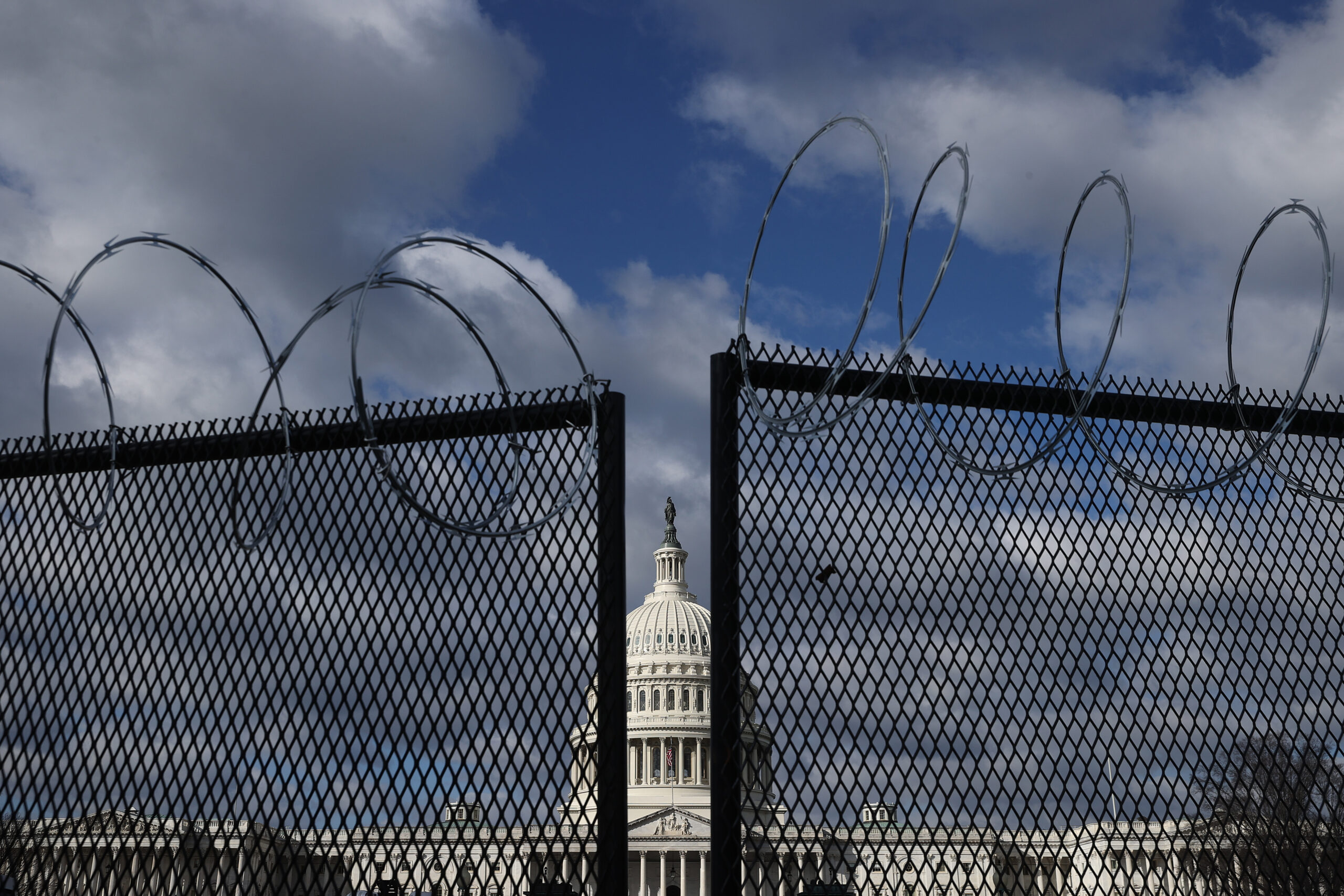
Democratic government — ideally — provides channels for resolving conflict among competing groups and interests, defusing hostilities before they explode into physical violence. It has never worked perfectly. But in today’s more fractured and more polarized societies, political grievances are increasingly being settled outside the bounds of law and government, with ordinary citizens, politicians, poll workers, government officials, and others becoming casualties.
The following Journal of Democracy essays examine the drivers of political violence and what democracies can do to contain it. Free to read for a limited time.
The Rise of Political Violence in the United States
From a plot to kidnap Michigan’s governor to the 6 January 2021 attack on the U.S. Capitol, acts of political violence in the United States have skyrocketed—and grown harder to stop as they’ve become less organized.
By Rachel Kleinfeld
When Polarization Turns Violent
Polarization does not lead naturally to political violence. But it turns deadly when affective hostility fuses with fears of demographic change, when groups see control of the polity as a matter of collective survival, and when the state retreats from equal protection.
By Jeffrey S. Kopstein
How to Prevent Political Violence
Polarization convinces some people that violence is acceptable, extreme parties normalize it, and the disillusioned use violence instead of votes. There are proven ways to turn it around.
By Rachel Kleinfeld and Nicole Bibbins Sedaca
When Democracy Is on the Ballot
In times of political crisis, polarization can become lethal to the very system both sides claim to defend. It is our institutions, not just the players, that need changing.
By Michael Ignatieff
When democratic competition turns into a battle between existential foes, the whole democratic project is at risk.
By Michael Ignatieff
Subscribe here to have curated collections like this one and other Journal of Democracy news delivered directly to your inbox.
Image Credit: Chip Somodevilla/Getty Images