
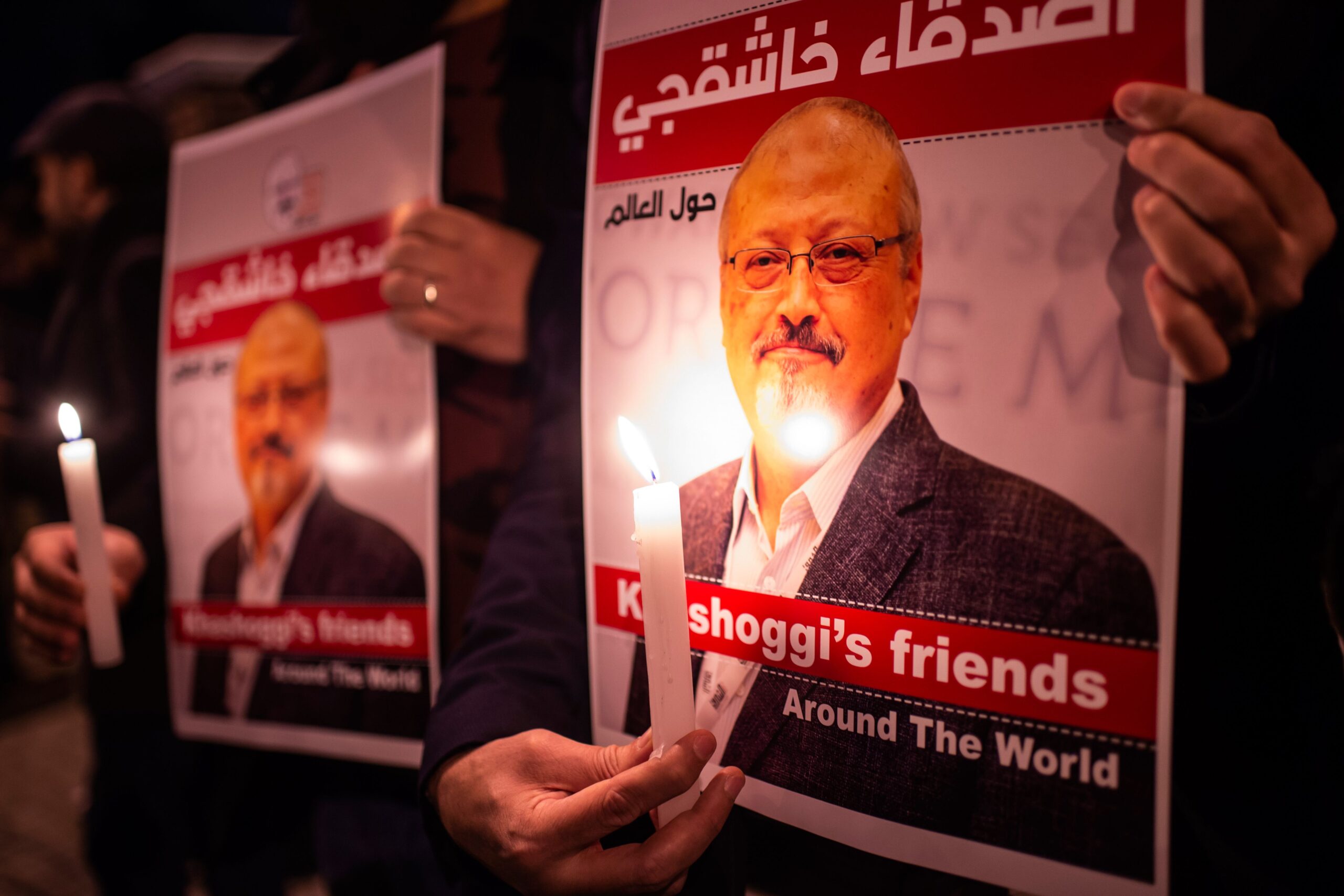
Gulf monarchies are exerting influence all over the world — in sports, media, entertainment, and politics. Where their human-rights records once drew censure, these oil-rich kingdoms are now being courted and their leaders welcomed in Western halls of power.
How have these countries remained bastions of repression while white-washing their reputations? The following Journal of Democracy essays explore how the Gulf monarchies have not just held on to power but become international powerhouses in the years since the Arab Spring.
The Golden Age of Transnational Repression
Authoritarian regimes are targeting exiles and diaspora communities in more places than ever before. Activists, journalists, and regular people living abroad must watch their backs, because these governments now have the power to suppress dissent even outside their borders.
Nate SchenkkanThe Prince
Before the murder of Jamal Khashoggi, Saudi Arabia’s crown prince seemed determined to modernize the economy and allow at least limited personal liberties. But appearances are deceiving, as Ben Hubbard details in MBS: The Rise to Power of Mohammed bin Salman.
Tarek MasoudGulf States and Sharp Power: Allies to Adversaries
The UAE, Saudi Arabia, and Qatar are spreading their influence across borders. A new dangerous chapter between the Gulf monarchies and the West has begun.
Christopher DavidsonThe Rise of Sportswashing
The staggering global popularity of soccer makes it a prime target for regimes that worry about the negative press they get for their undemocratic practices. The Gulf monarchies have led the way in getting into the wide world of sports as a means of cleaning their image.
Sarath K. GanjiResilient Royals: How Arab Monarchies Hang On
The “Arab Spring” has been very hard on autocratic presidents but so far has left the Arab world’s monarchies intact. How and why have Arab royals been able to resist the tide of protest?
Sean L. Yom and F. Gregory Gause IIIThe Arab Spring at 10: Kings or People?
A decade ago, Arab peoples stood up and sought to replace their rulers with a more democratic political project. But Arab autocrats have a project of their own. Can the people gain ground in the struggle for self-government, or will their rulers bear it away?
Tarek MasoudDemocracy’s Past and Future: Why Are There No Arab Democracies?
Democracy has held its own or gained ground in just about every part of the world except for the Arab Middle East. Why has this crucial region remained such infertile soil for democracy?
Larry Diamond
Subscribe here to have curated collections like this one and other Journal of Democracy news delivered directly to your inbox.
Image credit: YASIN AKGUL/AFP via Getty Images