
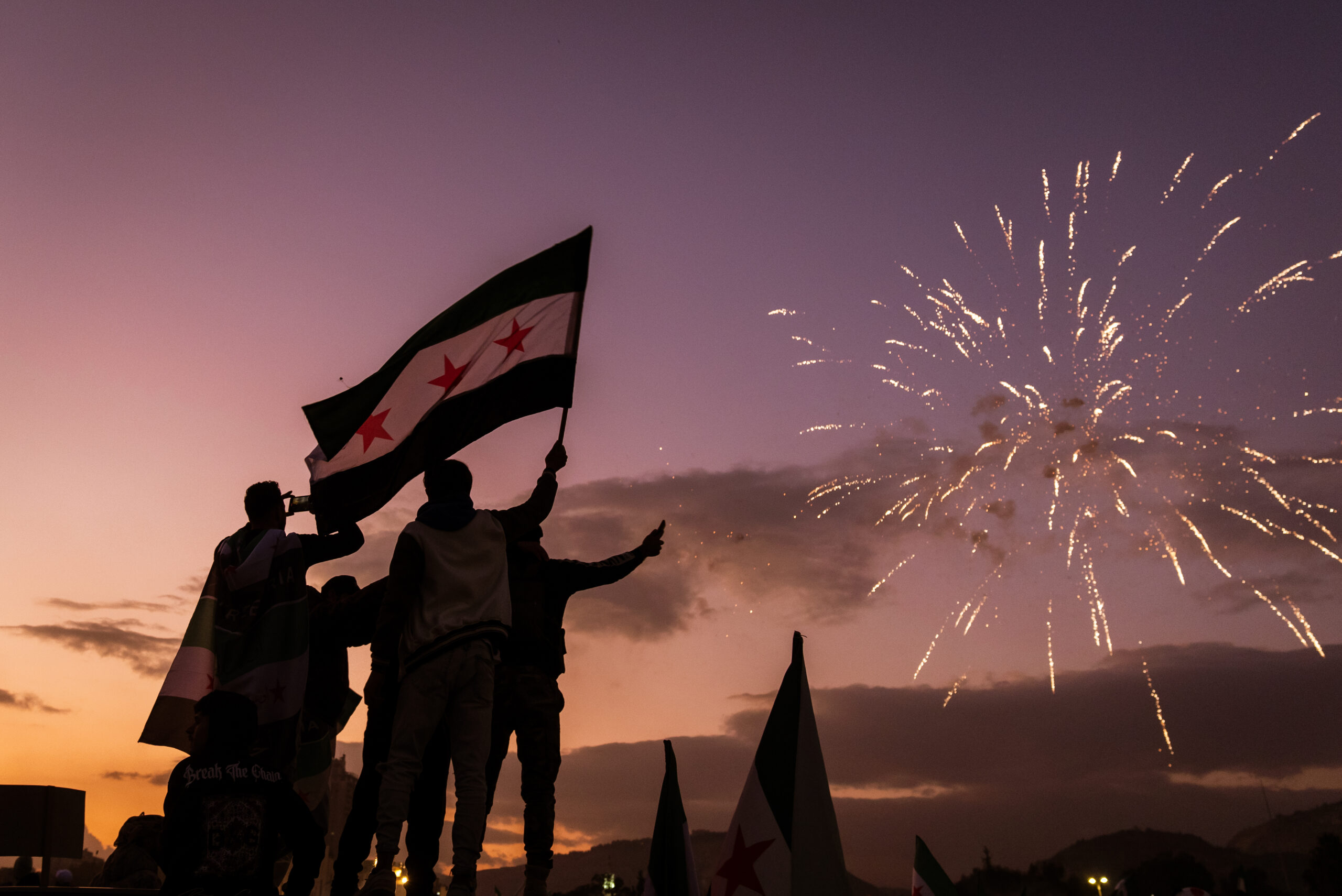
On 8 December 2024, a coalition of Islamic militants toppled the brutal Syrian dictator Bashar al-Assad, whose family had ruled the country for more than half a century. After thirteen years of civil war and amid sectarian strife, Syria’s new leadership has had to navigate a complicated landscape while trying to rebuild a county in ruins—from the state to the military to the economy.
The following Journal of Democracy essays examine the challenges and opportunities Syria has faced since Assad’s ousting one year ago.
Divining Syria’s Future
Everything we know about getting and keeping democracy suggests we should be, at best, cautious about the prospects for Syria’s democratic future. But, as this collection of essays suggests, there are reasons for hope.
Tarek Masoud“Forever Has Fallen”: The End of Syria’s Assad
Syrians rejoiced when Bashar al-Assad’s regime fell. After decades of dictatorship and civil war, Syrians must now rebuild their country while seeking justice for the victims of authoritarian rule.
Lisa WedeenRebuilding the State in Post-Assad Syria
Despite a brutal thirteen-year civil war, Syrians are not building from scratch. In fact, Syria has a long and rich history of state-building to guide them.
Daniel NeepWhy Syria’s Civil Society Is the Key
After the collapse of the Assad regime, Syria stands at a crossroads. Nothing is assured, but the country’s civil society is its best hope for charting a democratic future.
Rana B. Khoury and Wendy PearlmanWhat Kind of State for Syria?
Syria is a rare case. A state being governed by a new elite that is committed to Islamic thought but open to a wide range of intellectual influences. While it is early, we may see the rise of a novel brand of Islamic presidentialism in the works.
Andrew F. March
Subscribe here to have curated collections like this one and other Journal of Democracy news delivered directly to your inbox.
Image credit: Emin Sansar/Anadolu via Getty Images