
April 2024, Volume 35, Issue 2
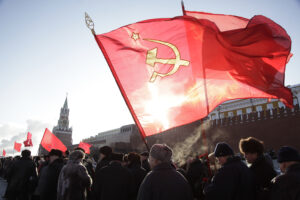
What Went Wrong in Hungary
For a time, Hungary looked like it was on the road to democracy. Viktor Orbán’s success derailing it may teach us how to spot a failing democracy before it is too late.
April 2024, Volume 35, Issue 2
For a time, Hungary looked like it was on the road to democracy. Viktor Orbán’s success derailing it may teach us how to spot a failing democracy before it is too late.

July 2023, Volume 34, Issue 3
People obsess over where Russia’s democracy went wrong. The truth is it did not fail: Russia’s democratic transition never got off the starting blocks.
April 2023, Volume 34, Issue 2
Oppositions in monarchies don’t have to stage revolutions to win freedom: Monarchies are as compatible with democracy as they are with autocracy. The challenge for those who would remove a king is not to fall for the promises of reform that never come.
April 2023, Volume 34, Issue 2
Iraq today is more of a democracy than most people think, but still less of a democracy than it could be. While its future is uncertain, one thing is not: It will be determined by Iraqis.
January 2023, Volume 34, Issue 1
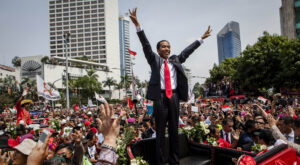
Indonesia is a leading example for fledgling democracies navigating tough transitions. But it is imperiled, and if it gives way, the loss for the democratic world will be enormous.
January 2022, Volume 33, Issue 1
Despite a turbulent history and rampant corruption, Panama has emerged as one of Latin America’s richest and most stable democracies. How can this be?
October 2021, Volume 32, Issue 4
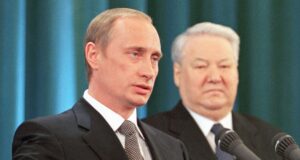
Thirty years after the Soviet Union collapsed, Russia is firmly in the grip of an autocrat. Where did Russia’s path go wrong?
October 2021, Volume 32, Issue 4
Mass uprisings toppled dictators in both Sudan and Algeria in 2019, but only Sudan was able to secure a transition to democracy due to important differences in their protest movements, militaries, and the role of the international community.
April 2021, Volume 32, Issue 2
Democracies rarely begin with a blank slate. Relics of authoritarian rule typically persist after democratic transitions, and these vestiges are not always harmful to people’s newfound freedom.
January 2021, Volume 32, Issue 1
Like the “transition paradigm” before it, the concept of democratic backsliding threatens to flatten our perceptions of complex political realities. Examples from East-Central Europe illustrate the ambiguous dynamics at play in many troubled democracies.
January 2021, Volume 32, Issue 1
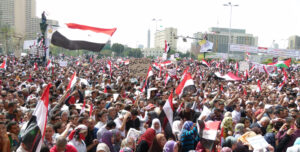
A decade ago, Arab peoples stood up and sought to replace their rulers with a more democratic political project. But Arab autocrats have a project of their own. Can the people gain ground in the struggle for self-government, or will their rulers bear it away?
April 2020, Volume 31, Issue 2
A grim narrative of the years since 1989 has buoyed Eastern and Central Europe’s populist parties in their rise to power. To win back voters, liberals must tell a more compelling story of the postcommunist era—and offer a stronger vision of the years to come.
April 2020, Volume 31, Issue 2
A domestic pact may be needed to end a dictatorship, but what happens when that pact itself becomes one of the chief obstacles to deeper democratization?
January 2020, Volume 31, Issue 1
Lacking any ideas for shoring up Russian society, Putin has settled on picking a fight with Ukraine.
October 2019, Volume 30, Issue 4
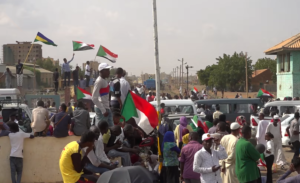
Amid mass protests, the personalist autocracy of longtime Sudanese president Omar al-Bashir fell to an April 2019 coup. With the country now being governed by a council composed of both opposition leaders and powerful security- service coupmakers, prospects for democratization remain uncertain.
July 2019, Volume 30, Issue 3
Three decades after sub-Saharan Africa joined the “third wave,” democracy’s ability to endure has been established in many countries, but its quality remains a grave concern.
April 2019, Volume 30, Issue 2
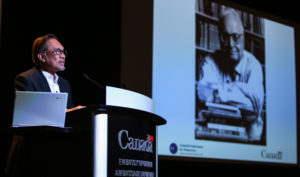
In May 2018, the people of Malaysia transcended distinctions of class, religion, and ethnicity in order to vote for democracy and reform against a long-ruling party riddled with corruption.
April 2019, Volume 30, Issue 2
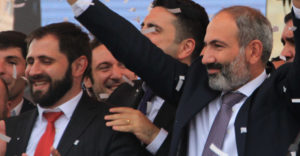
In 2018, a peaceful protest movement brought down Armenia’s semiauthoritarian government and ushered in a new political era, the culmination of a long struggle for national pride, self-determination, and democracy.
April 2019, Volume 30, Issue 2
Key democratic norms remained under threat in 2018, but there were also unexpected breakthroughs in Armenia, Malaysia, and Ethiopia.
January 2019, Volume 30, Issue 1
Since their transitions, the democracies of the “third wave” have followed a range of trajectories beyond simple survival or breakdown. Many have stagnated at low levels of democracy and some have suffered democratic erosion, but there also have been cases of democratic deepening against the odds.
October 2018, Volume 29, Issue 4
In Malaysia’s May 2018 general election, a grand bargain between ex–prime minister Mahathir Mohamad and reform leader Anwar Ibrahim produced a political earthquake that ended 61 years of rule by the United Malays National Organization (UMNO).
October 2018, Volume 29, Issue 4
A review of Tunisia: An Arab Anomaly by Safwan M. Masri.
July 2018, Volume 29, Issue 3
For countries emerging from communism, the post-1989 imperative to “be like the West” has generated discontent and even a “return of the repressed,” as the region feels old nationalist stirrings and new demographic pressures.
January 2018, Volume 29, Issue 1
The worldwide popularity of runoff rules for presidential elections has grown strikingly in recent decades. In Latin America, contrary to scholarly expectations, this shift has had important benefits for democracy.
January 2018, Volume 29, Issue 1
Tunisia is now one of the Arab world’s most democratic countries, but it has also been producing worrisome numbers of recruits for groups such as ISIS. How can this paradox be explained?
January 2018, Volume 29, Issue 1
A review of Democracy: Stories from the Long Road to Freedom by Condoleezza Rice.
October 2017, Volume 28, Issue 4
Liberal democracy can never put down truly firm roots in Asia unless and until the fundamentals of democratic constitutionalism take hold. There are seven practical imperatives that friends of constitutionalism in the region must pursue.
April 2017, Volume 28, Issue 2
This small West African country voted a longtime dictator out of the presidency. This victory for democracy was seemingly snatched away by his refusal to leave power—yet a breathtaking reversal lay in store.
October 2016, Volume 27, Issue 4
Evidence from social science and history suggests that China is entering a “transition zone” that will threaten its capacity to maintain both authoritarian rule and high levels of economic growth.
October 2016, Volume 27, Issue 4
Tunisia is a small country, but its influential Islamist party has taken a big step by separating its political wing from its religious activities.
October 2016, Volume 27, Issue 4
What political consequences can we expect when aging dictators die while in power? A fifth of the world’s autocracies are facing such a possibility, but the evidence shows that this may not augur well for democracy.
April 2016, Volume 27, Issue 2
Seymour Martin Lipset argued that economic development would enlarge the middle class, and that the middle class would support democracy. To what extent will this general proposition prove true of China?
April 2016, Volume 27, Issue 2
Aung San Suu Kyi’s National League for Democracy swept Burma’s November 2015 elections. Will the new NLD-led government be able to live up to high expectations that it will deliver better governance, national reconciliation, and some form of federalism?
April 2016, Volume 27, Issue 2
Even though Burma’s military seems to have accepted the NLD’s stunning election victory, it can still use an array of constitutional provisions to hamstring the incoming NLD government.
April 2016, Volume 27, Issue 2
What does public opinion tell us about Burma’s longer-term prospects for democracy? The Asian Barometer Survey reveals contradictory attitudes regarding democracy and democratic values among the citizens of Burma.
April 2016, Volume 27, Issue 2
A review of Making Waves: Democratic Contention in Europe and Latin America Since the Revolutions of 1848 by Kurt Weyland.
January 2016, Volume 27, Issue 1
Across East-Central Europe, the political center ground has long been characterized by the uneasy cohabitation of liberal and illiberal norms, but the latter have been gradually overpowering the former.
January 2016, Volume 27, Issue 1
Is democracy in East-Central Europe suffering because of a lack of liberal zeal among elites, as Dawson and Hanley contend, or is it because liberal policies have failed to deliver on their promises?
January 2016, Volume 27, Issue 1
A review of Democratic Transitions: Conversations with World Leaders, edited by Sergio Bitar and Abraham F. Lowenthal.
October 2015, Volume 26, Issue 4
The Arab experience shows that the same media that facilitate the toppling of dictators can make it harder to build democracy.
July 2015, Volume 26, Issue 3
How are trends in global democratization likely to be shaped by the distribution of such key structural factors as income, ethnic or religious diversity, and the quality of the state?
January 2015, Volume 26, Issue 1
The failure to establish modern, well-governed states has been the Achilles heel of recent democratic transitions, as democratization without state modernization can actually lower the quality of governance.
January 2015, Volume 26, Issue 1
Can democracy prosper when democratic countries are in geopolitical retreat? History cautions against the notion that democracy will inevitably prevail.
January 2015, Volume 26, Issue 1
In contrast to the conventional wisdom that democracy is in retreat worldwide, the evidence tells a different story: The state of global democracy has been stable over the last decade and is actually better than it was in the 1990s.
January 2015, Volume 26, Issue 1
A review of An Uncanny Era: Conversations Between Václav Havel and Adam Michnik, translated and edited by Elzbieta Matynia.
October 2014, Volume 25, Issue 4
Levitsky and Way’s account of linkage and leverage leaves out the key role of “gatekeeper” elites.
October 2014, Volume 25, Issue 4
Advancing the democratic cause is threatening to autocrats, and they will fight back.
October 2014, Volume 25, Issue 4
Linkage and leverage largely reflect long-term structural factors, and only in certain situations can they be affected by policy choices.
July 2014, Volume 25, Issue 3
Regime change will always be a feature of political life, but we are unlikely to see again transitions to democracy on the scale of the “third wave.”
July 2014, Volume 25, Issue 3
The Editors’ introduction to “The Maidan and Beyond.”
July 2014, Volume 25, Issue 3
The events surrounding the EuroMaidan cannot be understood apart from the preceding five years of increasingly corrupt and authoritarian rule.
July 2014, Volume 25, Issue 3
Despite the spirit of participation that characterized the Maidan, organized civil society groups were not a key factor.
July 2014, Volume 25, Issue 3
Media, both new and traditional and both Russian and Ukrainian, played a major role in the EuroMaidan story from the very outset.
July 2014, Volume 25, Issue 3
Russian propagandists—echoed by some Western commentators—portray Ukraine as a hotbed of nationalist extremism. The truth is quite different.
July 2014, Volume 25, Issue 3
The regime of Vladimir Putin has been a key driver of the crisis in Ukraine. Under challenge at home for several years now, it turned to Ukraine in part to firm up its own grip on power in Russia.
July 2014, Volume 25, Issue 3
Ukrainians flocked to the Maidan to express a “choice for Europe,” but they may also have forged the beginnings of a new Ukrainian identity.
July 2014, Volume 25, Issue 3
The hegemonic-party systems of Taiwan and Mexico began to loosen in the 1980s, eventually yielding to democracy. Malaysia’s ruling party, by contrast, has tightened the reins of power in the face of increasing opposition.
April 2014, Volume 25, Issue 2
In severely divided societies, ethnic cleavages tend to produce ethnic parties and ethnic voting. Power-sharing institutions can ameliorate this problem, but attempts to establish such institutions, whether based on a consociational or a centripetal model, face formidable difficulties.
April 2014, Volume 25, Issue 2
Nelson Mandela, who died in late 2013, fought for freedom for all the people of South Africa and masterfully guided his country’s transition to a nonracial democracy. His record on foreign policy is more ambiguous, but also instructive.
January 2014, Volume 25, Issue 1
Four leading experts on democracy discuss the relevance of the “transition paradigm” in light of the “Arab Spring” and other developments in the world today.
October 2013, Volume 24, Issue 4
The July 2013 military takeover has squashed democratic hopes in Egypt, at least for now. How did things go so wrong, and what lessons are to be drawn from this lamentable episode? Listen to the podcast with Author Nathan Brown [mp3]
October 2013, Volume 24, Issue 4
A long-ruling strongman president has been unseated by popular unrest and a negotiated transition is under way, but to many Yemenis this all appears to be a change more of appearance than of substance.
October 2013, Volume 24, Issue 4
Qadhafi is gone after subjecting his country to a brutal dictatorship for more than four decades, but the devastated institutional landscape that he left behind bodes ill for Libya’s democratic prospects.
October 2013, Volume 24, Issue 4
A review of The Promise of Power: The Origins of Democracy in India and Autocracy in Pakistan by Maya Tudor.
July 2013, Volume 24, Issue 3
The Arab world’s old autocracies survived by manipulating the sharp identity conflicts in their societies. The division and distrust that this style of rule generated is now making it especially difficult to carry out the kind of pact-making often crucial to successful democratic transitions.
April 2013, Volume 24, Issue 2
In light of the “Arab Spring,” how should students of democratic transition rethink the relation between religion and democracy; the nature of regimes that mix democratic and authoritarian features; and the impact of “sultanism” on prospects for democracy?
January 2013, Volume 24, Issue 1
Egypt’s liberals, though they do not dominate political life and perhapsnever will, remain a crucial force in shaping the country’s politics.
January 2013, Volume 24, Issue 1
How should we define the stages of democracy and their sequencing? Although some scholars argue that the rule of law should come first, today it should be viewed as the final piece of the liberal-democratic puzzle.
October 2012, Volume 23, Issue 4
A political system in which power is formally divided among ethnic or sectarian groups may seem like a good idea in conflict-ridden societies, but it bears a high price and makes true democratic transition harder to achieve.
July 2012, Volume 23, Issue 3
The recent protests in Russia raise the question of whether the Putin regime could fall to a “color” or electoral revolution like those that have ousted other autocratic regimes in postcommunist Europe and Eurasia over the past decade and a half.
July 2012, Volume 23, Issue 3
Although Senegal has often been regarded as a democracy, its regime should more properly have been classified as competitive authoritarian. Will the 2012 election of a new president prove to be a turning point?
July 2012, Volume 23, Issue 3
A review of The Lady and the Peacock: The Life of Aung San Suu Kyi by Peter Popham.
April 2012, Volume 23, Issue 2
The upheavals that have been shaking the Arab-Muslim world are revolutions in discourse as well as in the streets. Arabs are using not only traditional and religious vocabularies, but also a new set of expressions that are modern and represent popular aspirations.
April 2012, Volume 23, Issue 2
The strong state in Malaysia and Singapore best explains why their authoritarian regimes have proved so stable and enduring. That is also the reason why democratization would go smoothly in both countries—yet, paradoxically, might never happen there at all.
April 2012, Volume 23, Issue 2
Of all the “Arab Spring” countries, so far only Tunisia has managed to make a transition to democracy. Tunisians now have a chance to show the world a new example of how religion, society, and the state can relate to one another under democratic conditions.
April 2012, Volume 23, Issue 2
Does recourse to the ballot box spur violence and instability in the world’s poorest countries? Despite the worries of modernization theorists such as Paul Collier, the evidence indicates that, over time, elections are not associated with higher levels of political violence.
January 2012, Volume 23, Issue 1
If there is going to be a great advance of democracy in this decade, it is most likely going to emanate from East Asia.
January 2012, Volume 23, Issue 1
If the PRC moves toward democracy, it is likely to be in some part due to the influence of Taiwan.
January 2012, Volume 23, Issue 1
Morocco was not immune to the 2011 upheavals in the Arab world, but the country’s monarchy deftly managed the crisis through cosmetic constitutional reform.
October 2011, Volume 22, Issue 4
The Arab events of 2011 may have some similarities to the wave of popular upheavals against authoritarianism that swept the Soviet bloc starting in 1989, but the differences are much more fundamental.
July 2011, Volume 22, Issue 3
Having thrown out a corrupt, authoritarian president for the second time, this Central Asian republic has gained a new chance at securing a real democratic transition.
April 2011, Volume 22, Issue 2
A review of Witness to Transformation: Refugee Insights into North Korea by Marcus Noland and Stephan Haggard.
October 2010, Volume 21, Issue 4
A review of Victorious and Vulnerable: Why Democracy Won in the 20th Century and How It Is Still Imperiled by Azar Gat.
July 2010, Volume 21, Issue 3
Democratization is never easy, smooth, or linear, but as Indonesia’s experience in building a multiparty and multiethnic democracy shows, it can succeed even under difficult and initially unpromising conditions.
July 2010, Volume 21, Issue 3
After almost ten years of complex and costly efforts to build democracy in these two countries, where do things stand? What lay behind the critical choices that shaped events in these places, and what are their current prospects for success?
July 2010, Volume 21, Issue 3
A tribute to Václav Havel, Czech playwright and former dissident, who became not only president but the symbol of the “velvet revolutions.”
July 2010, Volume 21, Issue 3
Despite its historic 2006 elections, the Democratic Republic of Congo still lacks competent governance, leaving its democratic promise unfulfilled.
April 2010, Volume 21, Issue 2
Indonesia is widely lauded as a democratic success story for rolling back the military, keeping radical Islam in check, and institutionalizing democratic freedoms. But this success has had costs in terms of democratic quality.
April 2010, Volume 21, Issue 2
Although the overall state of freedom in the world has clearly improved over the last two decades, more recent trends are worrisome. In 2009, declines in freedom outnumbered gains for the fourth consecutive year.
January 2010, Volume 21, Issue 1
A coauthor of the pathbreaking study Transitions from Authoritarian Rule reflects on the lessons that he has learned about democratic transition and consolidation since the publication of this work nearly 25 years ago.
January 2010, Volume 21, Issue 1
Another coauthor of Transitions from Authoritarian Rule questions whether his former collaborator is underrating the current dangers to democracy.
January 2010, Volume 21, Issue 1
In some countries, democratic competition is undermined less by electoral fraud or repression than by a skewed playing field—unequal access to state institutions, resources, and the media.
January 2010, Volume 21, Issue 1
The new electoral authoritarian regimes of the post–Cold War era have formally adopted the full panoply of liberal-democratic institutions. Rather than rejecting or repressing these institutions, they manipulate them.
January 2010, Volume 21, Issue 1
Democracy has held its own or gained ground in just about every part of the world except for the Arab Middle East. Why has this crucial region remained such infertile soil for democracy?
January 2010, Volume 21, Issue 1
In the twenty years since 1989, acute excitement over democratic transition and consolidation gave way to symptoms of “democracy fatigue” and elite exhaustion; successful economic transition away from state socialism fell victim to a crisis of the free-market model; and the EU’s transformative power has reached its geopolitical limits. The nations of Central and Eastern…
January 2010, Volume 21, Issue 1
Today, twenty years after the fall of the Berlin Wall, there is a growing ambiguity about the historical significance of 1989 and about the state of democracy in Europe (particularly Central Europe).
January 2010, Volume 21, Issue 1
The recent history of Eastern Europe can best be understood as a transition to a new social contract between the postcommunist state that emerged from its communist predecessor and the postcommunist citizen who evolved from the communist subject. It is the relationship between state and society under communism that best explains the divergent paths taken…
January 2010, Volume 21, Issue 1
The 1989 revolutions in Central and Eastern Europe were the triumph of civic dignity over Leninism. The first decade of postcommunism saw the project of an open society strongly challenged by ethnocratic temptations. The most important new idea brought about by the revolutions of 1989 was the rethinking and the restoration of citizenship.
January 2010, Volume 21, Issue 1
The author analyses the confluence of several elements that helped to set Russia’s course: the influence of history; the challenges of the transformation process itself; the importance of leadership; and the role of the West.
January 2010, Volume 21, Issue 1
By any measure, democratization has achieved remarkable advances over the past twenty years. Why, then, have so many of the leading works written on the topic during this period been so full of gloom?